The Nigeria Referees Association (NRA) has explained the reasons behind the absence of Nigerian referees from the Confederation of African Football (CAF) list for the 2025 Africa Cup of Nations (AFCON) in Morocco.
Last Friday, CAF named 94 referees, assistant referees, instructors, assessors, and technical officials for its pre-AFCON preparatory course, but no Nigerian referee was included extending the country’s long wait for representation at Africa’s biggest football event.
19 years without a Nigerian referee at AFCON
Nigeria’s omission means the country’s absence will stretch to 19 years since a referee from the nation last officiated at the AFCON. The last Nigerian centre referee to handle a game at the tournament was Emmanuel Imiere, who took charge of the Group B match between Zambia and Guinea at the 2006 edition in Egypt.
In 2015, Peter Edibi served as an assistant referee at the AFCON in Equatorial Guinea, marking Nigeria’s most recent appearance among CAF’s officiating crew. Since then, the nation has had no representation in any AFCON officiating team.
CAF’s official list for the 2025 preparatory course features 51 referees, 11 Video Match Officials (VMOs), 7 instructors, 1 VAR technician, 6 CAF staff, and 3 committee members.
Those selected include Mustapha Ghorbal and Youcef Gamouh from Algeria, Jean-Jacques Ndala Ngambo of DR Congo, Daniel Nii Ayi Laryea from Ghana, Amin Mohamed Omar of Egypt, and Abongile Tom from South Africa.
Video match officials include Lahlou Benbraham (Algeria), Mahmoud Ashour (Egypt), and Jean Claude Birumushahu (CAF). Alaa Nabil, also from Egypt, is listed as the camp’s VAR technician.
NRA admits referees didn’t meet CAF standards
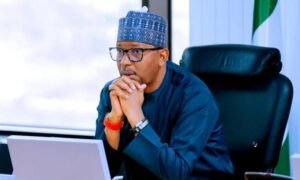
Speaking on the development, NRA President Sanni Zubair admitted that Nigeria’s officials failed to meet CAF’s technical, fitness, and VAR requirements for the tournament.
“It is because we are not qualified to be there,” Zubair told The Punch.
“Being a FIFA referee doesn’t mean you are qualified. The only elite referee that we have, when they went for the tests, he didn’t pass the test.”
READ MORE:nff-president-confirms-super-eagles-itinerary-for-world-cup-playoffs
According to Zubair, CAF’s criteria placed significant emphasis on fitness levels, theoretical assessments, and hands-on experience with the Video Assistant Referee (VAR) system.
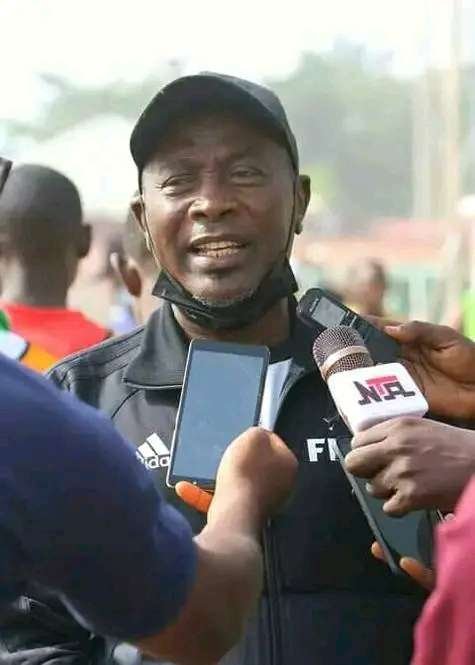
NRA President speaking to the press. Photo Credit: X
Zubair revealed that the NRA, in collaboration with the Nigeria Football Federation (NFF), is working to help more referees attain elite status.
“Yes, we have referees in the country, but it is like being in a university where we have different levels,” he explained.
“Every year we have courses and exams, and hopefully, they will be invited for elite tests soon. We have so many FIFA referees; when they invite them for the elite course and they pass it, we will be back on track. That is what we are waiting for.”
In February 2025, the NFF decorated 30 FIFA referees including 11 referees, 11 assistant referees, four futsal referees, and four beach soccer referees. Only three Emmanuel Omada (assistant referee), John Tope Ojeleye (futsal referee), and Noah Adejoh (beach soccer referee) were new additions.
Most have held the badge since 2014 to 2017, highlighting a lack of fresh progression.
Referees urge more exposure and political backing
A Nigerian FIFA-badged referee, who spoke on condition of anonymity, said local officials still receive CAF assignments outside AFCON but stressed the need for stronger advocacy at the top level.
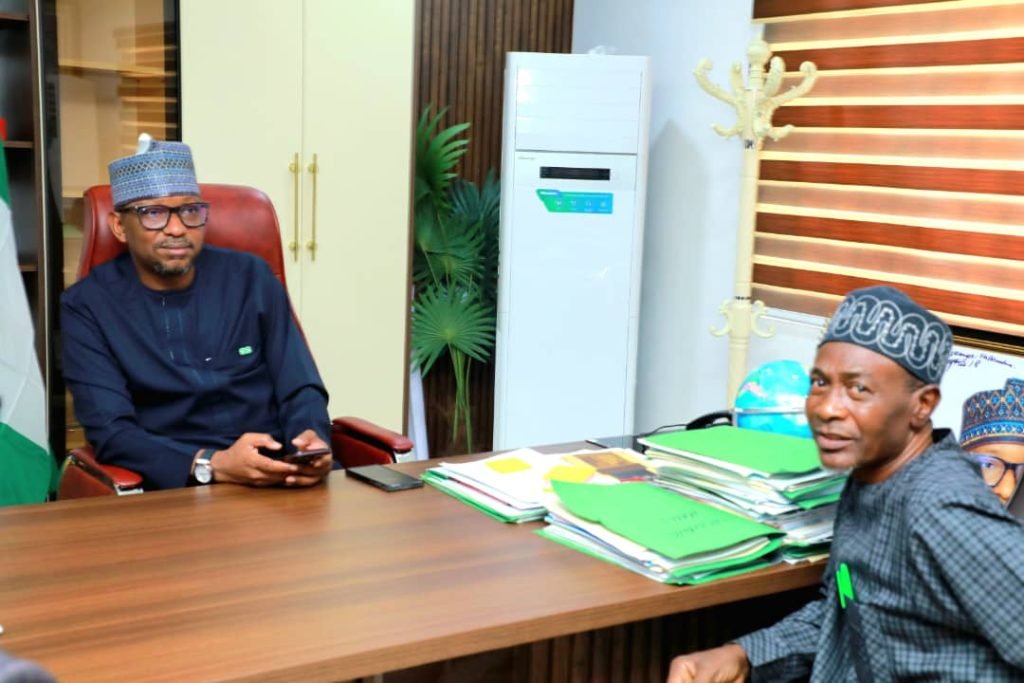
NSC Chairman Mallam Shehu Dikko and NRA President Zubairu. Photo Credit: NSC/X
“Some countries have two or three; it’s not like they are better,” he said.
“Aside from AFCON, our referees are still getting called for some other CAF assignments. The NFF are trying to provide courses for us by inviting CAF and FIFA instructors. What I think they have to do more is play the politics up there as well.”
CLICK HERE TO JOIN THE ATHLETIC NG WHATSAPP CHANNEL NOW!
Nigeria’s prolonged absence from CAF’s elite officiating ranks underscores the country’s struggle to meet the modern demands of international refereeing.