

Nigeria’s football crisis has reached a point where simply replacing the people at the top may no longer be enough.
The resignation of Nigeria Football Federation president Ibrahim Musa Gusau, general secretary Mohammed Sanusi and members of the Executive Committee has created a leadership vacuum at a particularly difficult moment for the country’s football.
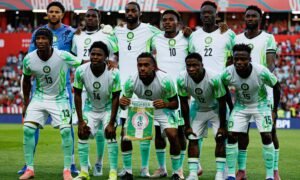
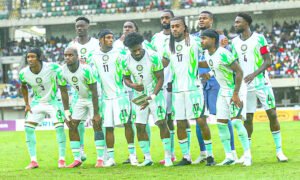
Gusau’s departure came after a turbulent period that included the Super Eagles’ failure to qualify for the 2026 FIFA World Cup and the Super Falcons’ failure to secure qualification for the 2027 Women’s World Cup.
Against that backdrop, the National Sports Commission is moving towards a normalization process, but the success of that process will depend largely on the people chosen to oversee it and the mandate given to them.
Nigeria now has an opportunity to go beyond organizing another election and instead address some of the structural problems that have repeatedly affected the administration of the game.
so Who should serve?
The composition of the Normalization Committee will be crucial. Nigeria needs people with demonstrable competence, integrity, football knowledge and administrative experience.
The committee should not become another arena for political influence, factional interests or the installation of preferred candidates.
Its membership should ideally reflect expertise across several areas of football and governance, including football administration, sports law, finance and auditing, electoral management, professional and grassroots football, women’s football, player welfare, sponsorship and commercialization.
Credible female representation should also be guaranteed. most importantly, anyone intending to contest the next NFF election should not be allowed to influence or control the process through which the election is organized.
Those responsible for establishing the rules, determining eligibility and conducting the election must be sufficiently independent from those who stand to benefit from its outcome.
Reform must come before election
The committee’s first priority should be to restore confidence in the football governance system.
That means carrying out an independent review of the NFF Statutes, particularly the composition and eligibility of Congress delegates and the existing electoral framework.
READMORE: ‘He understands what Nigerians want’ – Obafemi Martins backs Seyi Tinubu for NFF top job
Article 24 establishes Congress as the supreme and legislative body of the NFF, while Article 38 provides for a 19-member Executive Committee and outlines eligibility and integrity requirements for its members.
Those provisions should be carefully reviewed where necessary, while the integrity requirements for prospective candidates must be applied rigorously.
The conflict-of-interest provisions should also be strengthened so that people with serious integrity concerns or incompatible interests cannot occupy positions of authority within Nigerian football.
The aim should not be to create rules for particular individuals or factions. It should be to establish a system that remains credible regardless of who eventually emerges as the winner.
The committee must not choose Nigeria’s next leaders
Perhaps the most important distinction is that the Normalization Committee should organize the conditions for a credible election without becoming the body that determines who leads Nigerian football.
Its job should be to give the football community a fair process through which it can choose its own leaders.
That mandate should include reviewing the Congress register, resolving legitimate representation disputes, examining the Statutes, establishing a transparent electoral framework, conducting eligibility and integrity checks, publishing a clear electoral timetable, organizing the Congress and handing over to the elected leadership.
The ultimate test should be whether the process is credible enough for even defeated candidates to accept the result.
That is how confidence in Nigerian football governance can begin to return.
Nigeria does not need another cabal
The danger in any transition of this nature is that one powerful group could simply be replaced by another. that would amount to changing the occupants without changing the system.
Nigeria does not need a new cabal controlling football from another direction. It needs a governance structure in which no cabal can dominate the sport.
That requires transparent rules, accountable leadership, credible elections and institutions strong enough to operate without undue interference.
State FAs and grassroots football cannot be ignored
The reform agenda should also extend beyond the Glass House to the State Football Associations and the grassroots.
Article 22 recognizes the role of State FAs in administering football within their territories. Yet many of them require stronger capacity in areas such as sponsorship, financial management, competition organization, scouting and administration.
CLICK HERE TO JOIN ATHLETIC NG WHATSAPP CHANNEL NOW!
A stronger national football structure ultimately depends on stronger institutions at state and grassroots level.
If the normalization process focuses exclusively on who occupies the NFF offices in Abuja, it will miss an important part of the problem.
The opportunity before Nigeria is therefore much bigger than another leadership transition.
The country needs a football system built around competence, transparency, accountability and credible representation so the normalization Committee should be the bridge to that system not another power center within it.



































Pingback: Super Eagles suffer Zaidu Sanusi blow ahead of AFCON 2027 qualifiers - The Athletic NG