FIFA is facing a fresh legal challenge over its handling of women’s football after European Leagues expanded its existing complaint to the European Commission to include the women’s international match calendar and related regulatory decisions.
The move brings the women’s game directly into a wider dispute over FIFA’s role as both football’s global regulator and organiser of major competitions, with European Leagues arguing that the governing body’s decisions threaten the sustainability of domestic leagues and the welfare of players.
European Leagues, which represents professional football leagues across Europe, said the latest submission raises the same concerns contained in its original complaint, but now applies them to the women’s international calendar.
The organisation argues that FIFA’s decisions could undermine the growth and financial sustainability of women’s professional leagues while placing additional pressure on players’ health and wellbeing.
At the centre of the dispute is FIFA’s dual role. European Leagues alleges that the governing body is able to act simultaneously as football’s regulator and as a competition organiser with commercial interests, creating what it considers a conflict of interest.
READMORE: Nwabali, Okoye and Okonkwo face off for Super Eagles number one shirt
The organisation further alleges that FIFA has used its regulatory authority to advance its own competitions and commercial interests at the expense of domestic leagues and other stakeholders.
“The European Commission must now act to ensure that EU law is respected and that the future of women’s professional football is not determined unilaterally by FIFA,” European Leagues said.
The latest development builds on a complaint originally filed in October 2024 by European Leagues, FIFPRO and LaLiga over FIFA’s handling of the international match calendar.
That complaint argued that FIFA’s position as both regulator and competition organiser created a conflict of interest and that its decisions were being imposed without sufficient consultation with leagues and player representatives.
European Leagues has continued to press the European Commission over the issue. In its 2026 strategic priorities, the organisation said football governing bodies have responsibilities to act in a neutral, objective and inclusive manner and argued that FIFA’s approach to the international calendar increasingly favours international competitions at the expense of domestic football.
The women’s dimension is particularly significant because European Leagues only formally brought 14 women’s professional leagues into its membership and decision-making structures in June 2026, describing the move as a major step in strengthening the representation of women’s domestic football in Europe.
readmore: Over ₦429m controversy rocks Nigeria’s AFCON 2027 opponent as Guinea-Bissau FA president faces detention order
That development gives the latest complaint a broader significance for the women’s game. Rather than being treated as a separate issue from the wider calendar dispute, women’s professional leagues are now being represented within the same institutional challenge to FIFA’s decision making process.
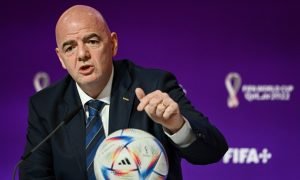
The legal dispute on FIFA president Gianni Infantino following the collapse of the FIFA Forward Enterprise proposal, which was intended to attract private investment into FIFA’s commercial rights.
The proposal was withdrawn on July 31 after opposition from UEFA and other regional football bodies. European Leagues had previously criticised the proposal and linked it to broader concerns about FIFA’s governance and decision-making.
In August, the organisation said the withdrawal raised wider questions about FIFA’s governance, internal culture and decision making.
CLICK HERE TO JOIN ATHLETIC NG WHATSAPP CHANNEL NOW!
The latest complaint therefore adds another front to the growing debate over FIFA’s governance, with the organisation’s control of the international calendar now being challenged not only on behalf of men’s domestic football but also in relation to the rapidly expanding women’s professional game.
The dispute goes beyond the calendar itself. At stake is who gets a meaningful voice in decisions that determine how often players compete internationally, how domestic leagues plan their seasons and how sustainable the professional game can become.
European Leagues’ intervention places those questions before the European Commission as the organisation continues its broader challenge to FIFA’s regulatory model.