For more than two decades, Enyimba were held up as the benchmark for club football in Nigeria. Nine league titles more than any other club and two CAF Champions League trophies built a reputation for organisation, discipline and competitive edge.
Today, that image is badly bruised.
Players are on strike, senior officials have been dismissed or resigned, and there is confusion over who is in charge of football matters. While poor results have played a role, Athletic NG’s investigation shows the roots of Enyimba’s crisis run much deeper.
The leadership shift that changed everything
The turning point came in 2023, when former Super Eagles striker Nwankwo Kanu was appointed chairman, replacing long-serving administrator Chief Felix Anyasi.
Anyasi’s era delivered most of Enyimba’s domestic and continental success and was marked by centralised authority and relative financial stability. Kanu’s appointment was meant to modernise the club and usher in a new era.
Instead, sources describe a leadership structure where responsibilities became blurred, football decisions were increasingly fragmented and accountability harder to pin down.
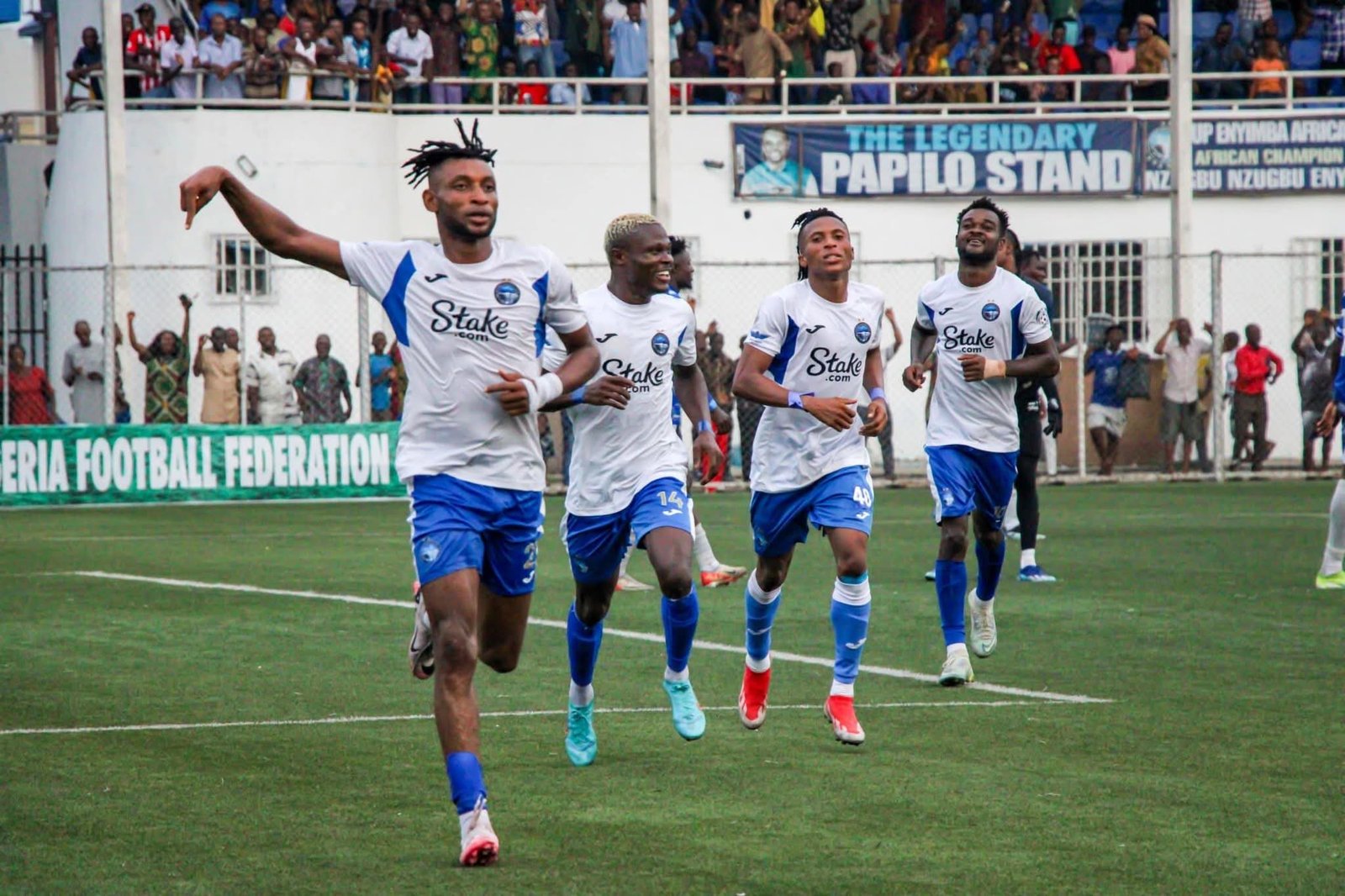
Photo Credit: Enyimba/X
Since then, Enyimba have seen a steady stream of sackings, resignations and internal disputes.
Recruitment without the coach
The first detailed public warning came from Finidi George in 2023.
Before leaving Enyimba, the former winger spoke candidly about how little control he had over squad building.
“Out of 19 new players that were brought in, I had knowledge of only four of them,” Finidi said.
Alarmed by the quality and fit of the signings, he said he contacted sporting director Ifeanyi Ekwueme to clarify expectations.
“I asked what the target for the season was, and I was told it was just to stabilise in the league.”
Finidi also said the coaching crew was excluded from registering players for CAF competitions.
“Ideally, the coaches must be consulted. That wasn’t the case. They registered players themselves and later sent us the list.”
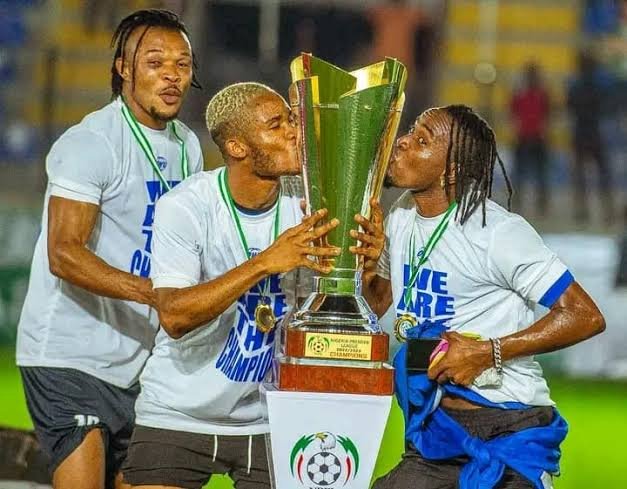
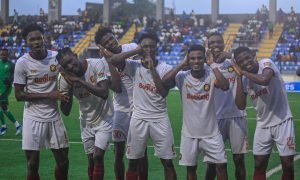
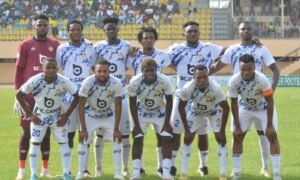
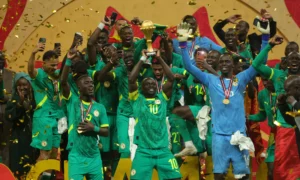
Enyimba players celebrating after winning the clubs ninth title. Photo Credit: NPFL/X
The consequences were felt during the African Football League (AFL) as they lost horribly across both legs against Wydad (4-0).
The AFL campaign and organisational breakdown
Many of Finidi George’s most serious allegations only became public after the African Football League campaign, with Caretaker News first reporting details of his frustrations and his desire to resign.
Finidi described a series of decisions that he said undermined the team’s preparation.
Players were initially dropped from the squad for the away leg against Wydad Casablanca, allegedly over visa issues, before strong protests forced a reversal.
“We later found out there was more to it,” he said.
Players who eventually travelled to Casablanca were paid a paltry ₦180,000 each as estacode, despite CAF’s $1m participation fee for AFL clubs.
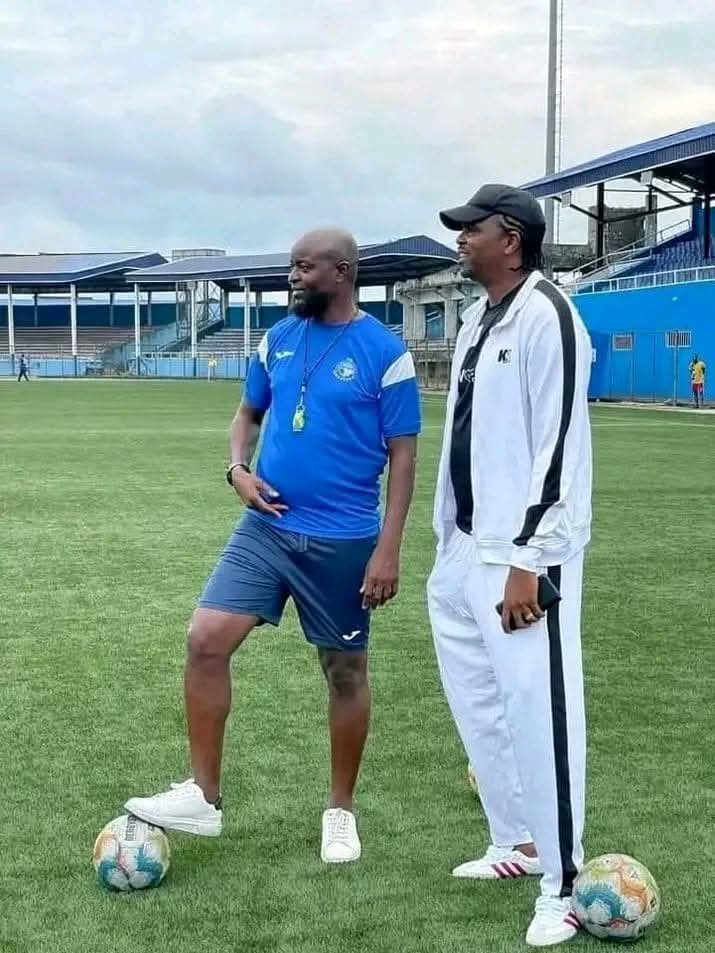
Finidi and Kanu. Photo Credit: Enyimba/X
Finidi was also furious with the club’s logistical arrangements for the home leg in Uyo. Players were lodged at the Tranquility Hotel, which is a two-star facility, while officials and CAF representatives stayed elsewhere.
Players reportedly protested after the club initially brought food from Aba for them, before eventually being allowed to eat at the hotel.
More striking was the travelling setup.
“We went for such a big game without the goalkeeping coach and fitness coach. Only myself and Yema travelled” Finidi said.
Preparation for the home leg in Uyo was equally chaotic.
“We arrived with the plan to train properly on grass, but management failed to make the right arrangements. We trained at a primary school. Another session was cut short.”
Finidi said Enyimba entered the tie at a disadvantage.
“We were playing a team more used to the surface than us. We had only three sessions with the AFL match ball.”
He rejected claims that the problem was tactical.
“The issue has nothing to do with the coaches. These same coaches won the league and the Super Six.”
Finidi won the People’s Elephant’s ninth title in the 2022/2023 season which was under ex chairman Chief Anyasi
Sporting director dismissed, responsibility disputed
On 28 January 2026, Enyimba sacked sporting director Ifeanyi Ekwueme.
The decision followed sustained criticism over recruitment and squad planning. But Ekwueme suggested he was being scapegoated.
Speaking via journalist Mike ‘The Pundit’, he said:
“I regret watching others handle my responsibilities while I took the fall for outcomes.”
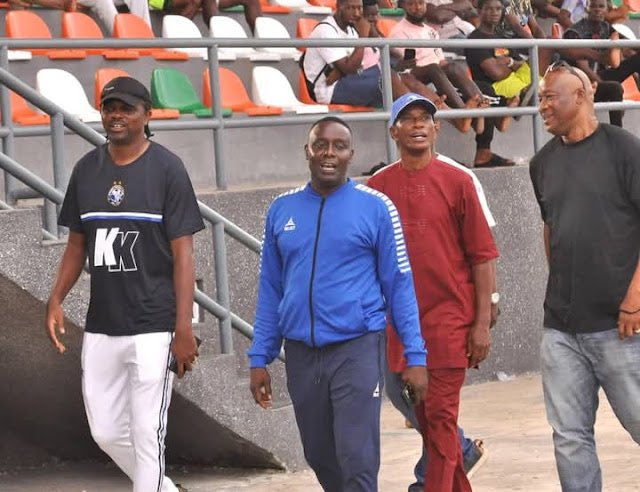
Ekwueme alongside Kanu at the Uyo township stadium. Photo Credit: X
His comment reinforced claims that multiple power centres were influencing football decisions
Shortly after the sacking of Ekwueme, the club announced the appointment of former Super Eagles defender Uche Okechukwu as Sporting Director.
Few days later the government of Abia State approved the appointment of Daniel Eke as the new Sporting Director, creating a public display of overlapping authority between the club board and the state government.
In January 2026, Benedict Eni resigned as Head of International Partnerships at Enyimba in a post on LinkedIn.
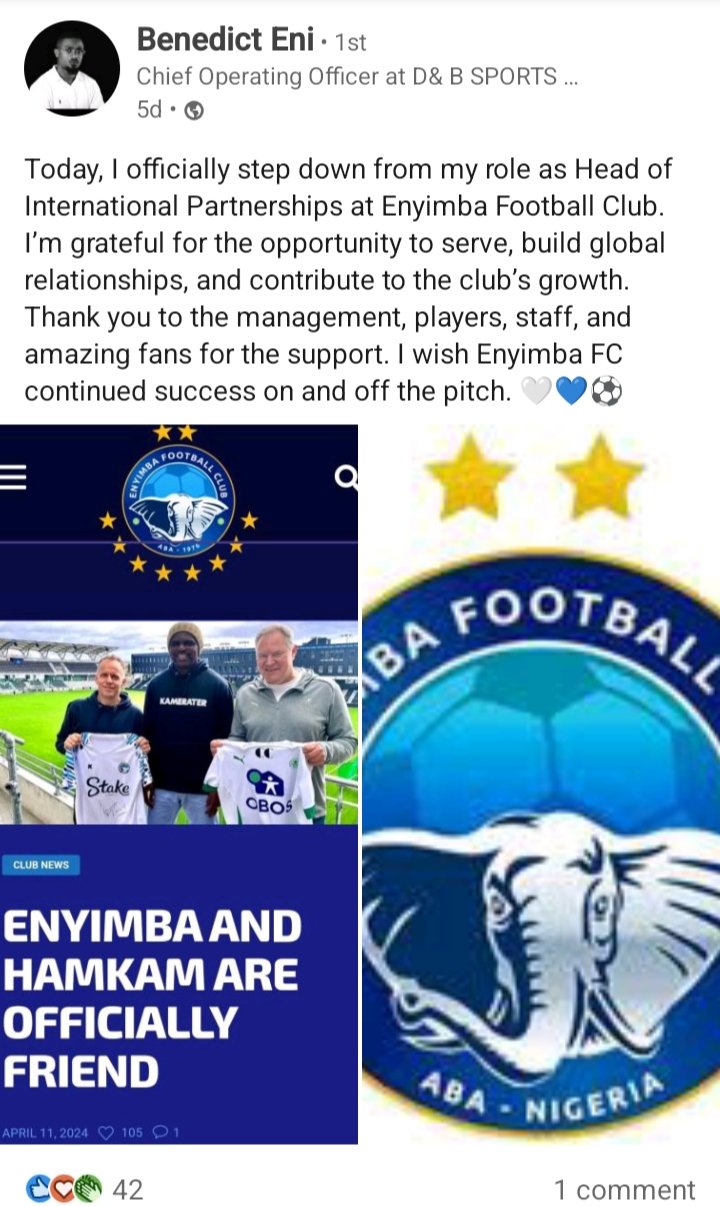
FULL statement from Benedict Eni on LinkedIn. Photo Credit: Linkedin
Coaches in and out, clarity nowhere
After Finidi’s departure to the Super Eagles, Yema Olarenwaju led Enyimba to a CAF Confederation Cup place before being dismissed early in the 2024/25 season.
Stanley Eguma followed but was sacked after a poor NPFL run, triggered by a shock home defeat to Wikki Tourist.
Deji Ayeni was appointed next. Yet even his role became uncertain when the Abia State Ministry of Sports announced Emmanuel Deutsch as head coach few weeks later.
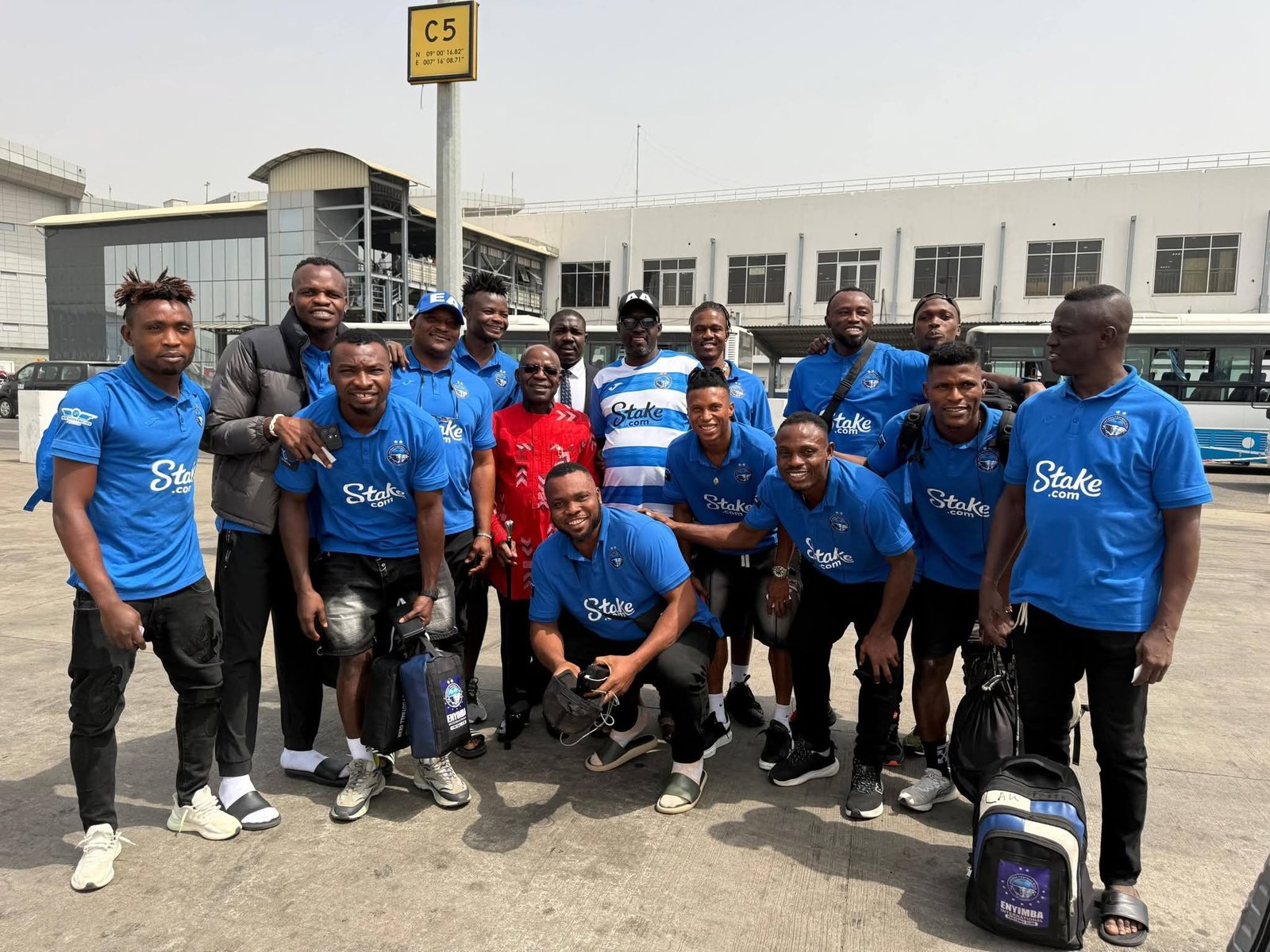
Governor Otti and Ayeni with some Enyimba players at the Airport in Abuja. Photo Credit: Enyimba/X
Despite that Ayeni remained on the touchline during the recent 1–0 win over Bayelsa United, even as official line-ups stopped listing a coach.
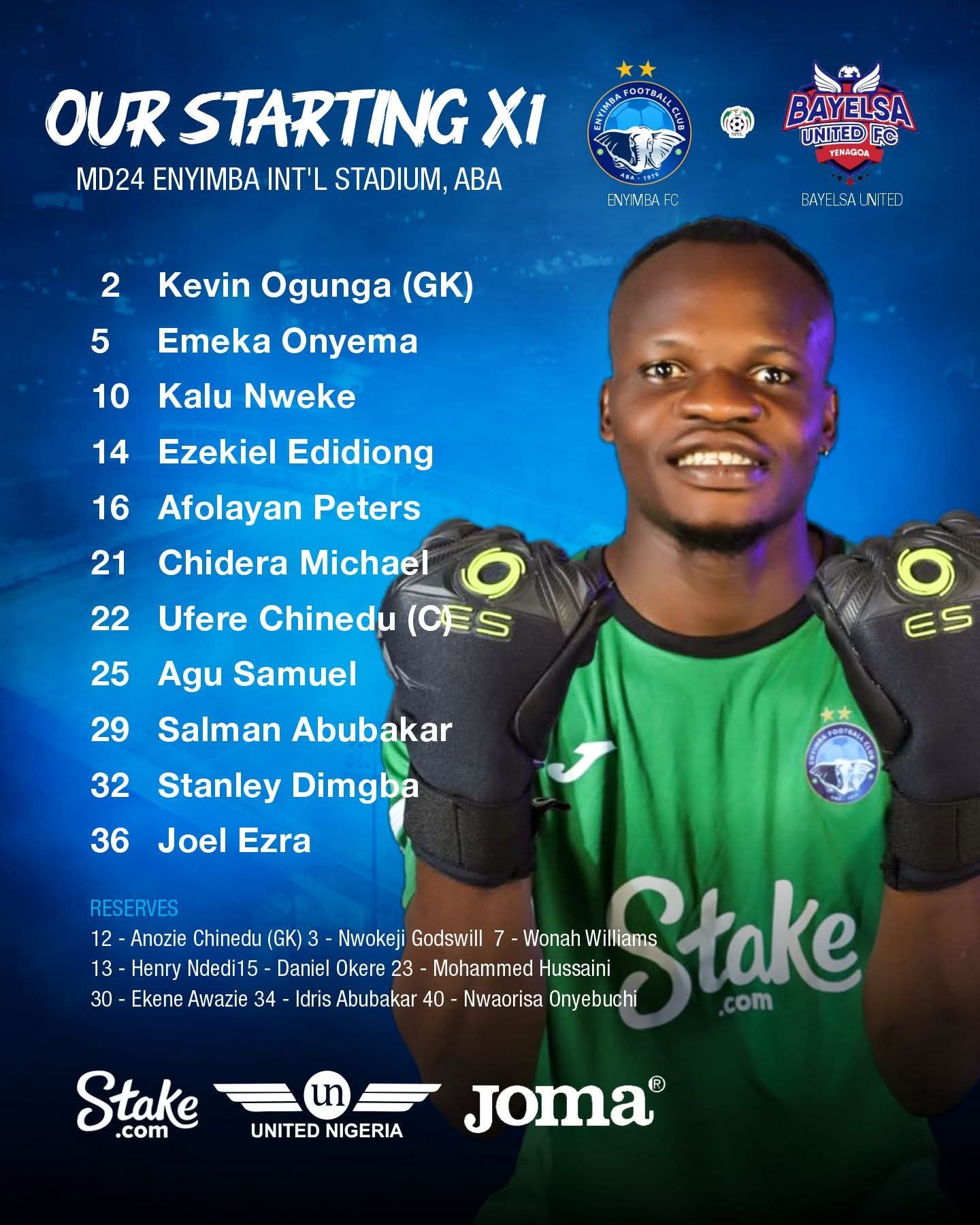
The last matchday graphics of the club on social media without a place for the Technical advisers name. Photo Credit: Enyimba/X
Despite the announcement, Deutsch has not led any training sessions.
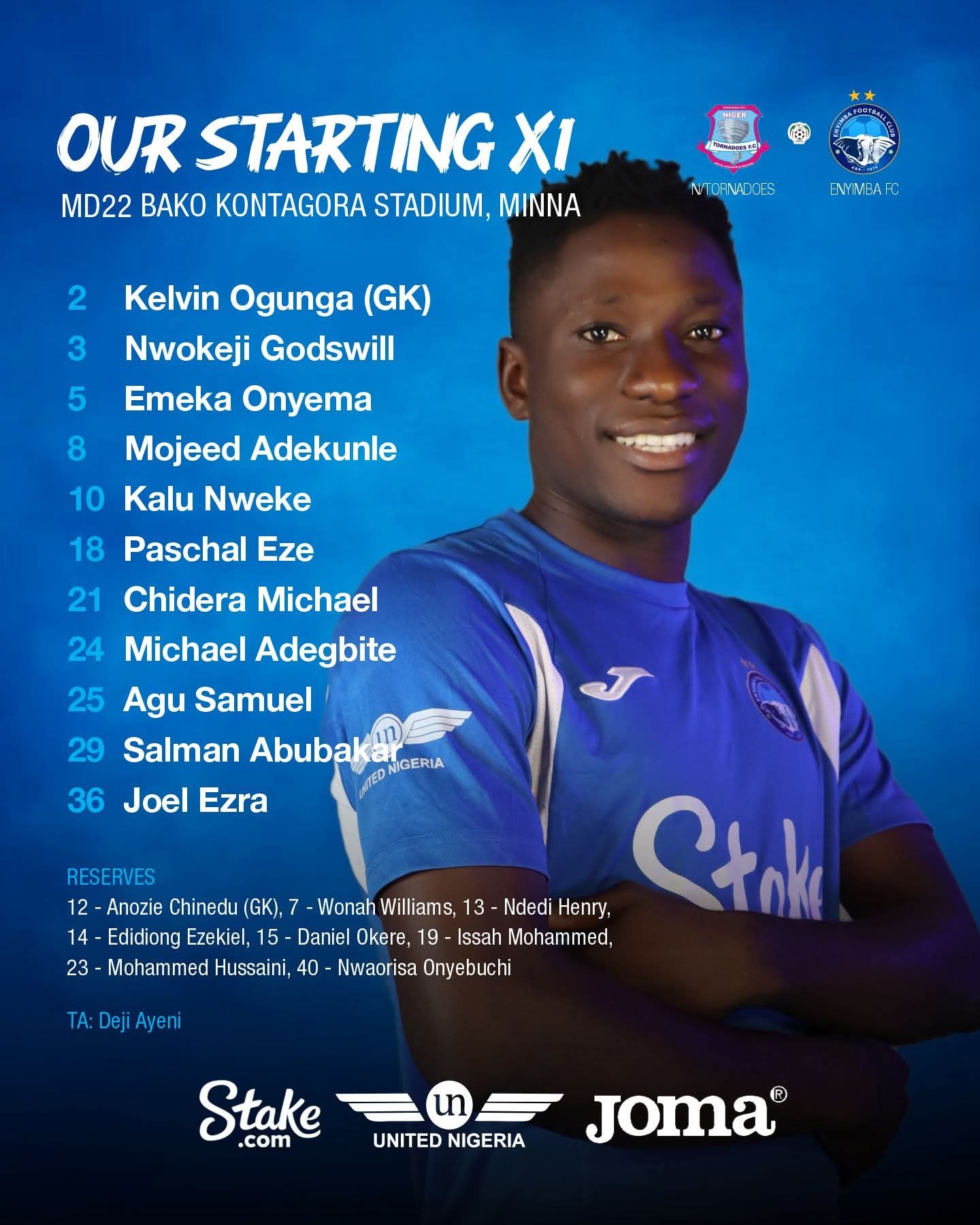
This was the match Day graphics before the announcement from the State Government on the appointment of Emmanuel Deutsch as new Technical Adviser. Photo Credit: Enyimba: X
Player unrest: a cycle, not a surprise
The current strike is part of a longer pattern.
Athletic NG previously reported on unilateral contract terminations under the current leadership. Five key players from the 2024/25 squad exited by mutual consent but were owed money.

Brown Ideye with Enyimba teammates. Photo credit: Getty Images
Those players jointly escalated their grievances to the Nigeria Football Federation (NFF). An agreement reached in May committed Enyimba to clear the arrears, which were later paid in tranches.
The method of resolution, delayed payment after external pressure has now repeated itself.
Bonuses unpaid, trust broken
Today players refused to train over unpaid match bonuses. Multiple sources say bonuses have gone unpaid for two seasons.
Last year Former Super Eagles striker Brown Ideye publicly called out the club over unpaid bonuses from last season, which he said remain outstanding.
“Because I get money I should not ask for the one I work for? Please pay me and the players last season match bonuses. The season ended in May, till now nothing,” Ideye wrote on social media.
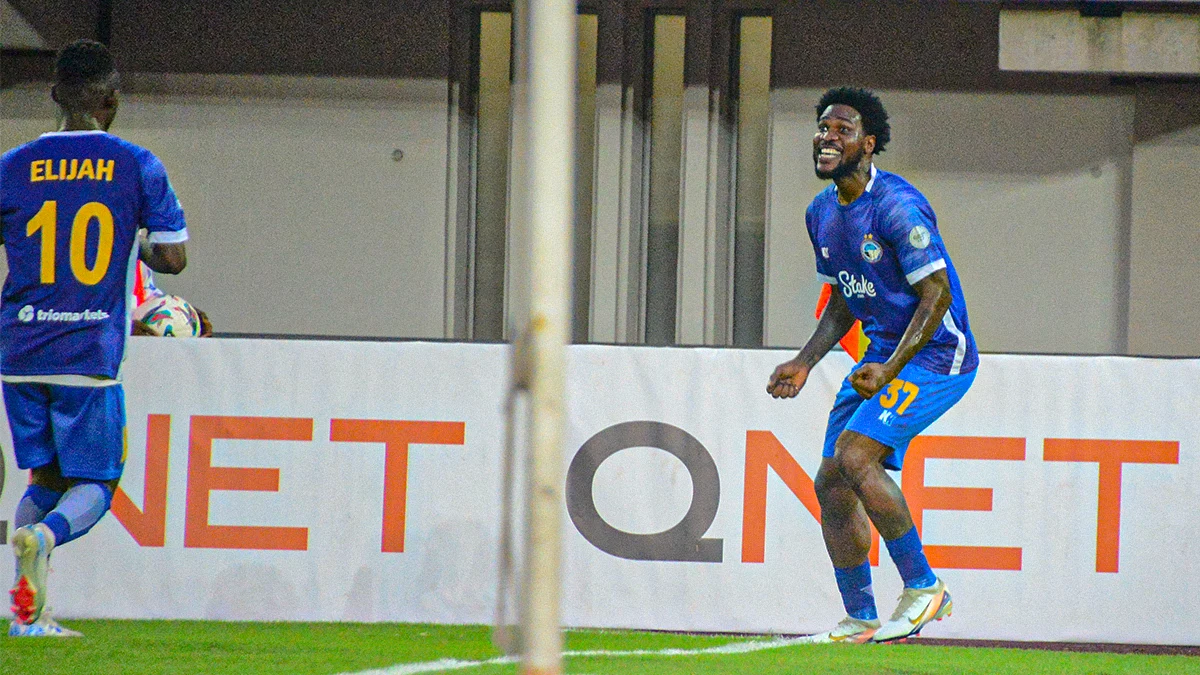
Ideye celebrating his goal in the CAF Confederation cup for Enyimba. Photo Credit: The Athletic Images
Ideye also explained that bonuses are not paid weekly or monthly, but accumulated and meant to be settled at the end of the season. These bonuses, as well as ‘paper money’ which are like NPFL sign-on fees are yet to be paid to former players and current players.
A former player told Athletic NG in condition of anonymity that while money was spent on facilities such as a gym and an ice-bath pool, basic player entitlements were ignored.
Some departing players, fearing they would never be paid, allegedly removed equipment when leaving the club.
The ₦1bn AFL money question
One former player alleged to Athletic NG that players were verbally promised a share of the $1m AFL participation fee worth about ₦1bn at the time.
Our investigation found no written agreement outlining how the money was to be shared. Club sources insist no specific promise was made and say the funds were paid into a government-linked account.
Beyond the AFL, former players and coaches are also still awaiting estacode payments for last season’s CAF Confederation Cup trip to Mozambique to face Black Bulls, according to multiple sources.
Two years later, players say they have received nothing. The Abia State government has now asked Enyimba’s management to explain how the AFL money was spent, indicting the club management.
The accountability gap
Enyimba are not just another club. Their dominance shaped the NPFL era.
The issues now unfolding raise wider questions about governance, transparency and player welfare in Nigerian football especially at state-backed clubs.
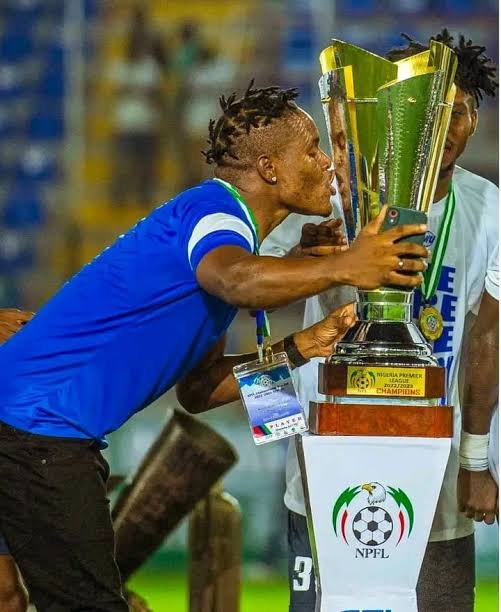
Photo Credit: NPFL/X
Despite the volume of claims, several questions remain unanswered:
Who ultimately controls football decisions at Enyimba?
Why are players entitlements repeatedly unpaid until external bodies intervene?
What formal decisions governed the use of the AFL’s $1m payment?
Why has no clear coaching structure been communicated to players and supporters?
Until clear answers are provided, Enyimba’s decline risks becoming a case study in how success can unravel not through lack of talent, but through failure of governance.