There was a time when Rena Wakama’s presence on the D’Tigress bench seemed to guarantee that Nigeria would find a way, the coach arrived on the international scene in 2023 and, within a remarkably short period, transformed expectations around the Nigerian women’s national team.
She led D’Tigress to a fourth consecutive FIBA Women’s AfroBasket title in Rwanda, beating Senegal 84-74 in the final and becoming the first woman to win the competition as a head coach.
A year later came the performance that changed the status of Nigerian women’s basketball. At the Paris Olympics, Nigeria stunned Australia 75-62, defeated Canada 79-70 and became the first African team, male or female, to reach an Olympic basketball quarterfinal, with Wakama subsequently named FIBA’s Best Coach of the tournament.
Then came another piece of history in 2025, Wakama guided D’Tigress to a fifth consecutive Women’s AfroBasket crown, defeating Mali 78-64 in Abidjan as Nigeria finished unbeaten and extended its AfroBasket winning streak to 29 games.
That record makes the events surrounding the 2026 FIBA Women’s Basketball World Cup difficult to ignore because, for the first time in Wakama’s D’Tigress tenure, a major tournament preparation was conducted with the head coach largely away from the team and now Nigeria are out.
The missing piece in the preparation
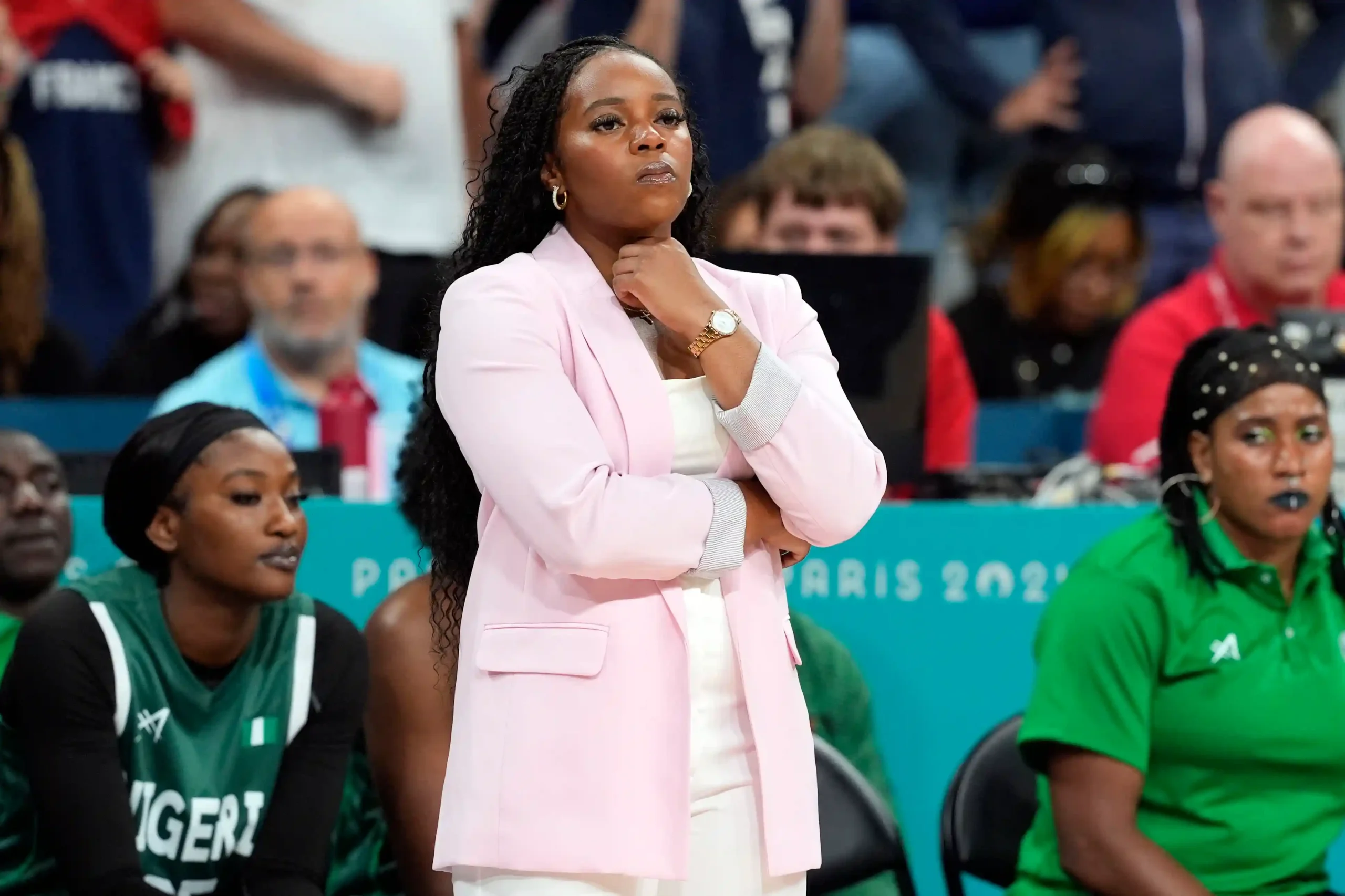
Wakama has led D’Tigress to back-to-back Women’s AfroBasket titles, winning in 2023 and 2025 becoming the first woman to achieve the feat. Photocredit: Getty Images
Wakama’s dual responsibilities were not a secret. The Nigerian coach also works as an assistant coach with WNBA side Chicago Sky, which retained her on Tyler Marsh’s coaching staff for the 2026 season.
The arrangement became a focus this year because, while D’Tigress were beginning their World Cup preparations in the United States in April, Wakama was with Chicago Sky, leaving assistant coach Wani Muganguzi to take charge of the Nigerian team during the tour.
The results were three defeats, with D’Tigress losing 89-63 to the Los Angeles Sparks before producing a much more competitive performance in an 88-79 defeat against the Minnesota Lynx and later suffering another heavy loss to Indiana Fever.
The results alone should not necessarily be treated as a disaster because the matches were against WNBA opposition and were designed to expose a developing Nigerian squad to a higher level of competition. The Sparks fixture was also historic, marking the first time an African national team faced a WNBA franchise.
The bigger concern was what Nigeria potentially lost while the matches were being played: continuity with the head coach during a crucial stage of preparation.
International basketball leaves little room for wasted preparation time because national teams do not have months of daily training together.
Players arrive from different clubs, countries and basketball systems, often with only a few weeks to absorb a coach’s philosophy, establish roles and develop the combinations needed to survive against elite opposition.
D’Tigress subsequently continued their preparation in China and Spain, with the team going through more warm-up matches before arriving in Berlin.
Wakama, meanwhile, remained tied to her WNBA responsibilities and, according to the account surrounding Nigeria’s World Cup buildup, eventually joined the national team only four days before their opening game.
That timing inevitably raises questions about how much tactical and technical work could realistically have been done between the coach’s arrival and Nigeria’s first competitive game.
Why Wakama’s presence matters
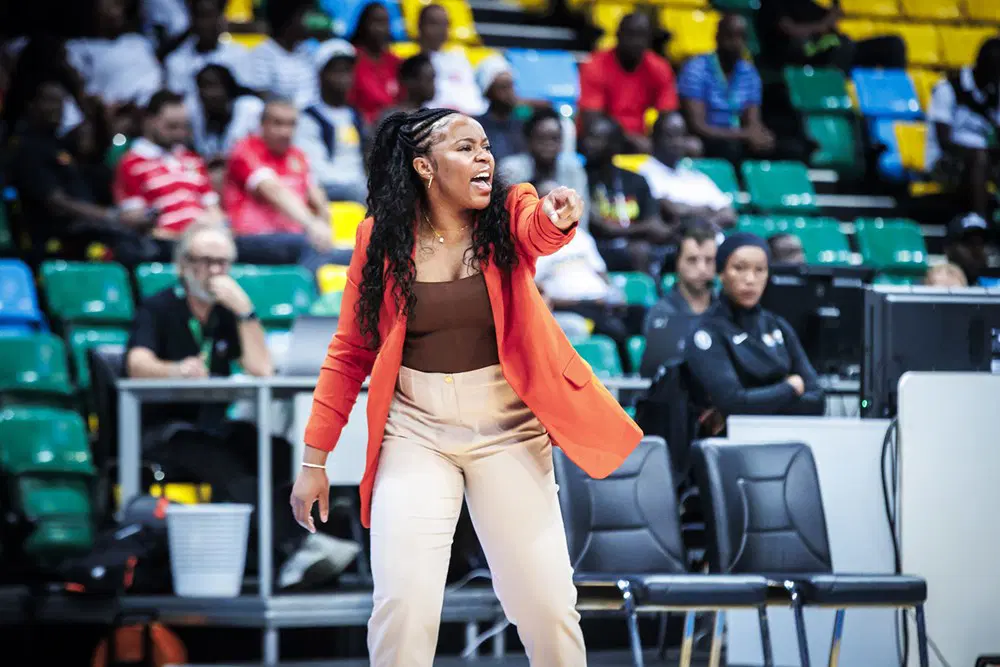
Rena Wakama has a perfect 10-0 record across her two AfroBasket campaigns, guiding Nigeria to titles in both appearances. Her 2023 team went 5-0, while the 2025 champions also finished unbeaten. Photocredit: Getty Images
Wakama’s greatest success with D’Tigress has come when her tactical identity and the players’ understanding of it have developed together.
At Paris 2024, defence was Nigeria’s defining weapon. They forced Australia into 26 turnovers in the opening game and used pressure, traps and aggressive defensive rotations to overwhelm opponents.
That was a team that looked unmistakably coached, with players appearing comfortable in their responsibilities and confident in the system.
Berlin has looked different. against South Korea, Nigeria conceded 99 points before losing 71-67 to Hungary, leaving them with two defeats from two and no route into the knockout phase.
Against Hungary, Nigeria also struggled to contain the opposition inside, with Dorka Juhasz and Virag Takacs-Kiss helping the Hungarians control the paint while their side collected 38 defensive rebounds.
The contrast with the defensive identity that carried D’Tigress through Paris is difficult to overlook but blaming Chicago Sky alone would be too easy.
The problems started before Berlin
There is an important weakness in the argument that Wakama’s absence caused Nigeria’s World Cup collapse, the cracks had already appeared before the final preparation period.
In March, Nigeria competed at the FIBA Women’s Basketball World Cup Qualifying Tournament in Lyon-Villeurbanne, where they beat Colombia 70-37 and the Philippines 101-84 but lost to South Korea 77-60, France 93-86 and Germany 81-73.
Nigeria therefore finished the qualifying tournament with a 2-3 record.
That is significant because the problems seen in Berlin did not suddenly appear because Wakama was working with Chicago Sky. South Korea had already beaten Nigeria by 17 points in Lyon, before defeating them again months later, this time 99-81 at the World Cup.
The pattern suggests that D’Tigress entered the World Cup with weaknesses that had been visible for months.
Did Nigeria compromise its preparation?

Under Wakama, D’Tigress became the first African team, male or female, to reach the Olympic basketball quarterfinals, after beating Australia and Canada in the group stage. Photocredit: D’Tigress/X
The fairest conclusion may therefore be that Wakama’s absence amplified an existing problem rather than created it.
A coach’s role during preparation extends beyond drawing plays. It involves establishing roles, determining combinations, developing defensive responses, building late game decision making and ensuring that players understand how the team should react when opponents change their approach.
Those details are developed through repetition, and repetition is difficult to replace when the head coach arrives only four days before a major tournament.
That becomes even more important for a team that has been integrating younger players into its structure.
The April US tour was part of a rebuilding process, with Nigeria working with a squad that included younger and collegiate-based talents. so for such a group, continuity with the head coach becomes even more valuable because younger players generally need more time to understand a national team system and their precise responsibilities within it.
There is also a psychological dimension. Wakama’s greatest achievement may not simply have been her tactical decisions but the belief she helped instil in D’Tigress.
Paris demonstrated that Nigeria could beat Australia and Canada and compete with the world’s best, while the continued success at AfroBasket reinforced that confidence.
Wakama herself pointed to cohesion after the defeat to South Korea, noting that their opponents had played together and were clear about what they wanted to do.
So, did Chicago Sky cost D’Tigress the World Cup?
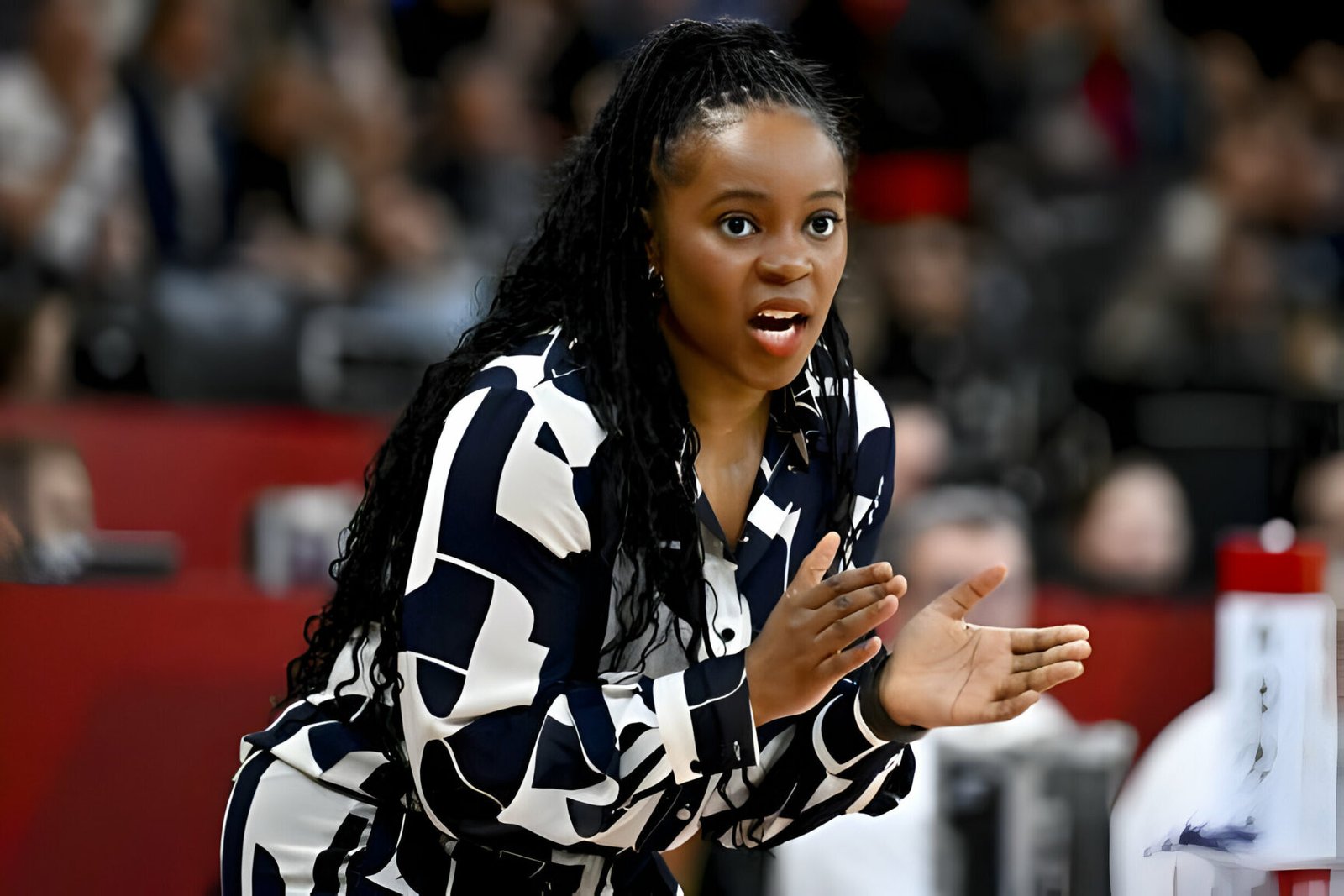
After Nigeria’s historic Olympic run, Wakama was named Best Coach of the women’s basketball tournament at the Paris 2024 Olympics by FIBA. Photocredit: Getty Images
There is not enough evidence to say that however, there is enough evidence to argue that Nigeria entered the tournament with a potentially avoidable disadvantage.
Wakama missed an important section of the preparation because of her Chicago Sky responsibilities, Muganguzi had to oversee the US tour, the team continued its programme through China and Spain, and the head coach only joined the squad four days before the tournament.
That is a very different preparation model from the one that preceded Nigeria’s historic Olympic campaign. tt the same time, Nigeria had already gone 2-3 in the World Cup qualifying tournament and had already lost to South Korea, France and Germany.
Those results exposed weaknesses that cannot simply be blamed on Wakama’s late arrival.
CLICK HERE TO JOIN ATHLETIC NG WHATSAPP CHANNEL NOW!
So perhaps the most accurate verdict is that Wakama’s absence did not create D’Tigress’ problems, it may have denied them the time and continuity needed to fix them.
That distinction matters because the bigger issue for Nigerian basketball is no longer whether Wakama can coach D’Tigress because her record says she can.
The bigger question is whether Nigeria can give its national team the conditions required to turn continental dominance into sustained global competitiveness.