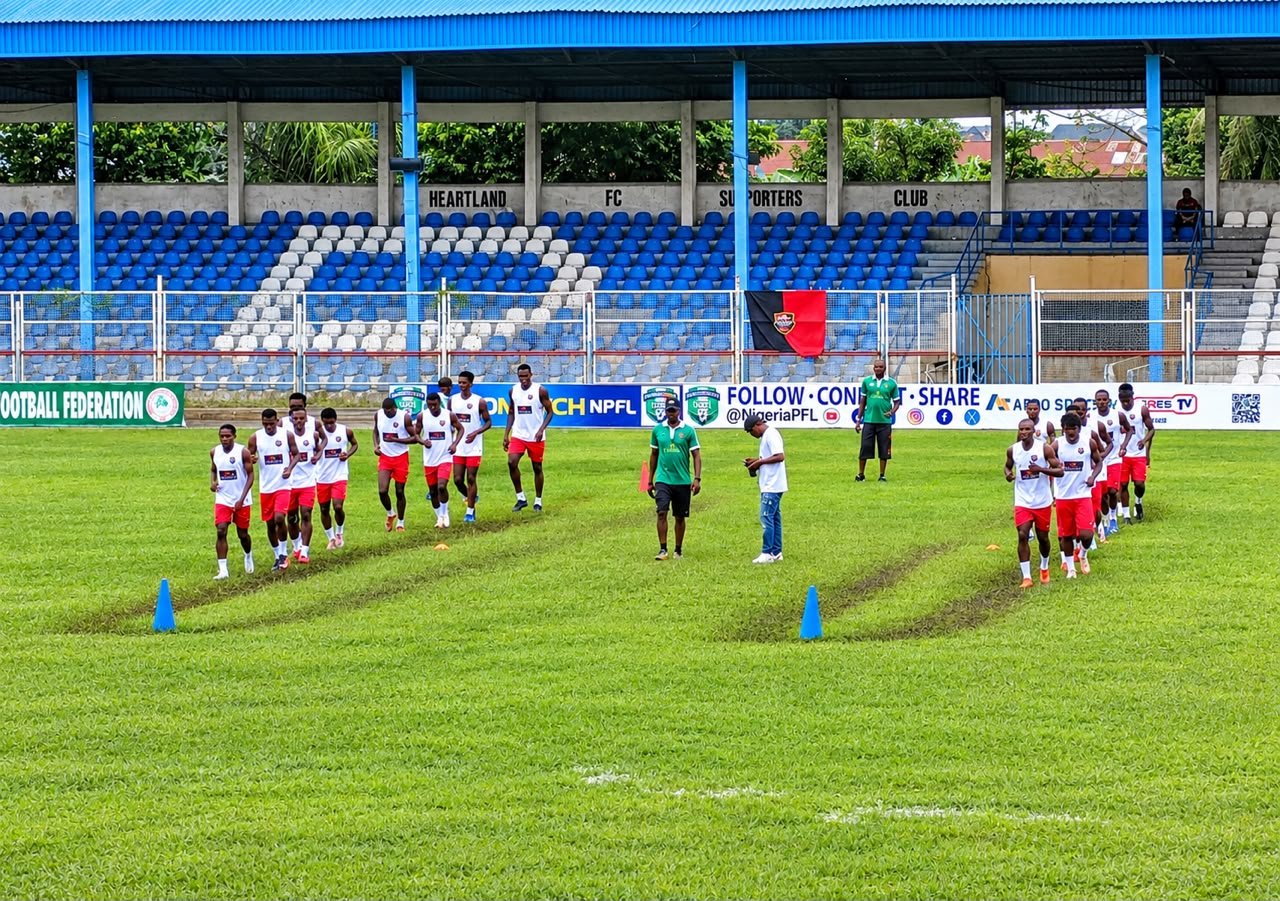
Dan Anyiam Stadium remains one of the valuable natural grass football venues in Nigerian domestic football, but its increasing workload is also highlighting the need for consistent maintenance, effective drainage and better matchday pitch management.
The observation was made by TheAthleticNG during Sunday’s SouthEast derby between Kun Khalifat and Enugu Rangers in Owerri, where light rainfall made sections of the surface increasingly slippery during the 4-2 encounter.
The issue is particularly relevant because Dan Anyiam is currently carrying a considerable share of football activity in the city.
The stadium serves as the home ground of Heartland, while Heartland Queens also use the facility for women’s football. Kun Khalifat have adopted the venue as their home for NPFL fixtures, while Rangers are temporarily using it for their NPFL home matches during the ongoing rehabilitation of the Nnamdi Azikiwe Stadium in Enugu.
That level of usage makes proper pitch management important.
Natural grass is worth protecting
The presence of natural grass should be viewed as an advantage rather than a problem.
But natural turf requires regular mowing, aeration, watering, fertilisation, recovery work and careful management of worn areas, particularly when several teams are using the same surface.
The bigger concern is what happens when heavy rainfall arrives.
Rangers’ previous NPFL fixture against Nasarawa United at the stadium provided a clear example. Heavy rain forced the match to be halted before the fixture was eventually completed the following day.
Rangers went on to win 2-1, but the disruption shows the importance of an effective drainage system at a venue increasingly relied upon for professional football.
Drainage and game management
During the Kun Khalifat-Rangers derby, the wet conditions again affected players’ footing.
A slippery surface can alter ball movement, reduce players’ grip and make it more difficult to maintain consistent playing conditions across 90 minutes.
The answer is not simply to replace the natural grass.
The more immediate requirement is proper grooming, drainage and matchday assessment.
With Dan Anyiam hosting multiple teams and competitions, there should also be careful consideration of fixture scheduling and recovery time between matches, especially during periods of persistent rainfall.
Pitch inspections and decisions around whether a surface is suitable for play should equally form part of a coordinated matchday process involving the stadium authorities, competition organisers, clubs and match officials.
READMORE:
Dan Anyiam has the foundations of an important football venue for Imo State.
It is already serving Heartland, Heartland Queens, Kun Khalifat and now Rangers’ temporary NPFL operation and now used the stadium for their home fixture against Nasarawa United and their subsequent Kun Khalifat encounter.
That makes protecting the playing surface more important, not less.
The natural grass pitch is an asset to Nigerian football. With the right maintenance programme, improved drainage and sensible matchday management, Dan Anyiam can continue to accommodate the growing demands being placed on it.
The issue is not the presence of natural grass. It is making sure the grass, the ground beneath it and the infrastructure around it receive the attention required to keep professional football moving whatever the weather.