
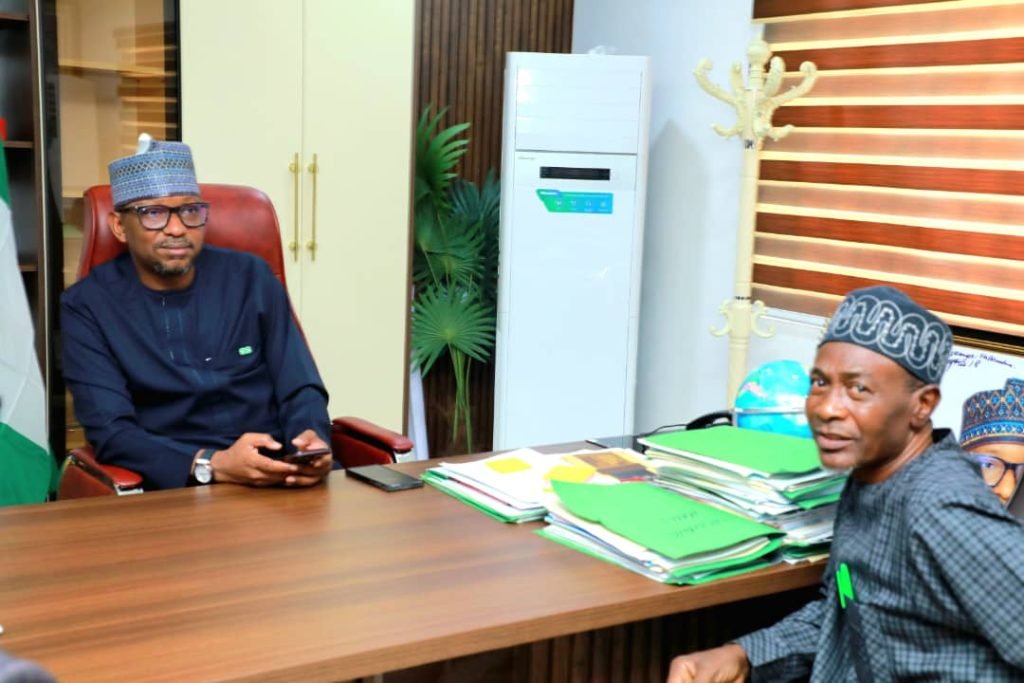
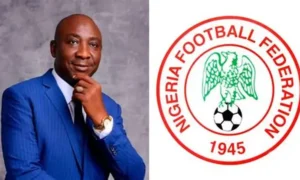
The Federal Government provided the Nigeria Football Federation with more than 200 per cent of the financial support it received from the previous administration during its entire eight years, according to National Sports Commission chairman Shehu Dikko.
Dikko made the disclosure while addressing the Nigeria Football Federation’s Extraordinary General Assembly in Yenagoa, Bayelsa State, on March 23, 2026, as he made the case for sweeping reforms across Nigerian football.
His claim formed part of a wider argument that the administration of President Bola Tinubu has fundamentally changed the way sports is being funded and positioned within Nigeria’s economy.
According to Dikko, the Federal Government’s support for football under the current administration has been “unprecedented”, both financially and through other forms of institutional backing.
He argued that the increased government investment should be matched by reforms within sports federations, particularly the NFF, to ensure that public resources translate into stronger institutions and greater commercial value.
Dikko said the NFF had received and continued to receive substantial government support because of the importance of football to national morale and the country’s sporting ambitions.
He stressed that the scale of the investment made it necessary for football administrators to respond with equal responsibility by improving their structures, governance systems and accountability.
The NFF funding claim sits within a much broader shift in the Federal Government’s approach to sports.
Dikko said sports funding had moved into a new architecture under the Tinubu administration, with sports being treated as a first-line item and government releases expected to become more predictable once appropriations are signed.
He also pointed to the re-establishment of the National Sports Commission as the apex body for sports administration and regulation, following the scrapping of the Federal Ministry of Sports Development.
CLICK HERE TO JOIN ATHLETIC NG WHATSAPP CHANNEL NOW!
The broader objective, he said, is to move Nigerian sports away from a model largely dependent on government expenditure and towards an industry capable of attracting private investment and generating economic returns.
That philosophy is captured in the NSC’s Renewed Hope Initiative for Nigeria’s Sports Economy, known as RHINSE.
Dikko said the framework is designed to reposition sports as a productive sector capable of contributing to economic growth, creating jobs, attracting investment and generating national value.





















Pingback: Official: Pitso Mosimane returns as Bafana Bafana coach after 14 years with one clear warning - The Athletic NG