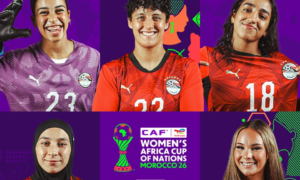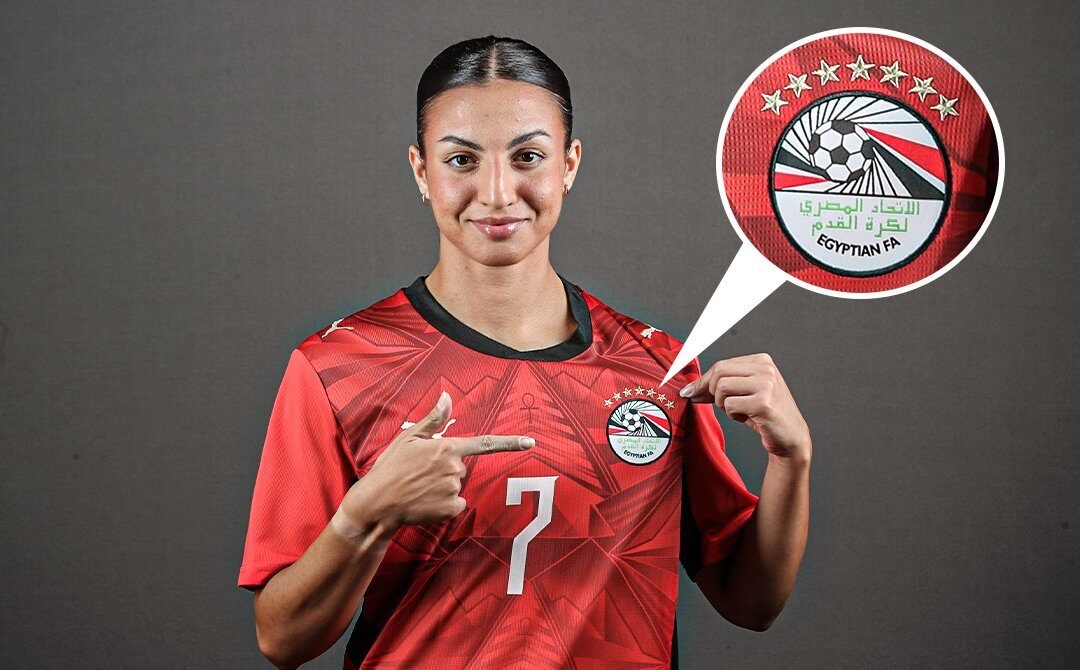
One of the biggest talking points at the 2026 Women’s Africa Cup of Nations has not been a goal, a controversial refereeing decision or even a tactical masterclass instead, it is a badge.
As Egypt walked onto the pitch for their return to the Women’s Africa Cup of Nations after a decade away, supporters quickly noticed seven stars sitting proudly above the Egyptian crest. the reaction was immediate.
How could a team that has never won the Women’s Africa Cup of Nations wear seven championship stars?
For many fans, the answer came as an even bigger surprise than the question. the stars do not belong to Egypt’s women’s team at all. they belong to the men.
The seven stars belong to the Pharaohs, not the Pharaohs Women
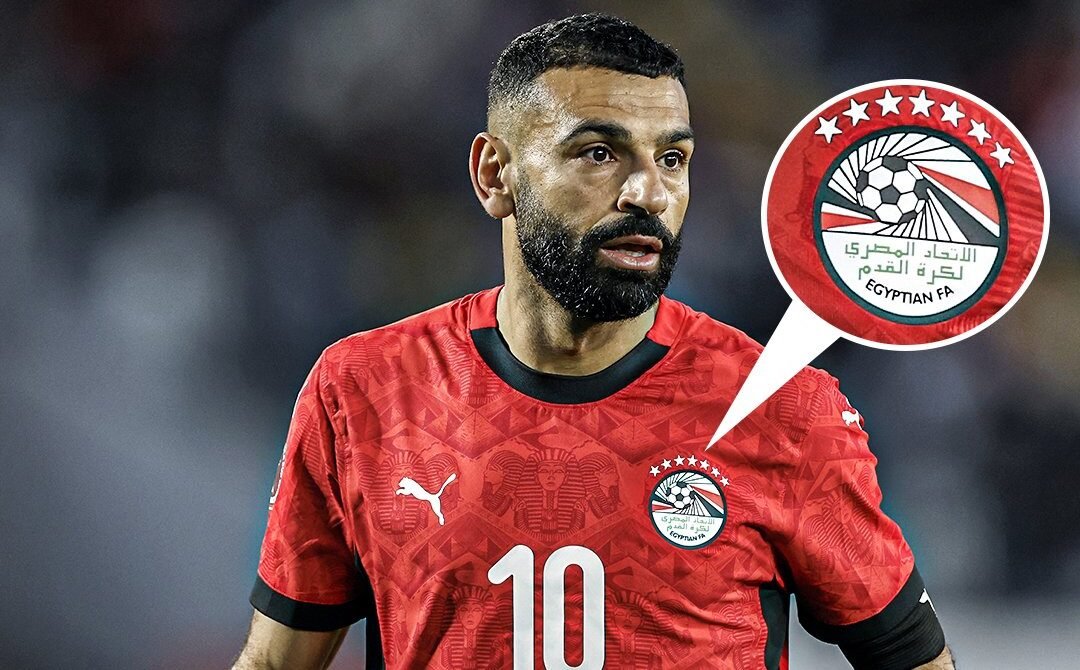
Mohammed Salah donning the men’s 7 stars jersey. Photocredit: ESPN/X
Egypt’s seven stars commemorate the men’s national team’s record seven Africa Cup of Nations triumphs, won in 1957, 1959, 1986, 1998, 2006, 2008 and 2010.
Those titles make Egypt the most successful men’s team in AFCON history.
The women’s team, however, has travelled a very different road.
Before Morocco 2026, Egypt had appeared at only two previous WAFCON tournaments in 1998 and 2016 and failed to progress beyond the group stage on either occasion. Their return this year follows a 10-year absence from the competition.
The Egyptian Football Association has long treated the seven stars as a symbol of the nation’s football heritage rather than honours attached exclusively to one team.
That approach may be accepted domestically, but on the continental stage it has opened an unexpected debate about identity, recognition and the symbolism of success.
Nigeria as example chose a different path
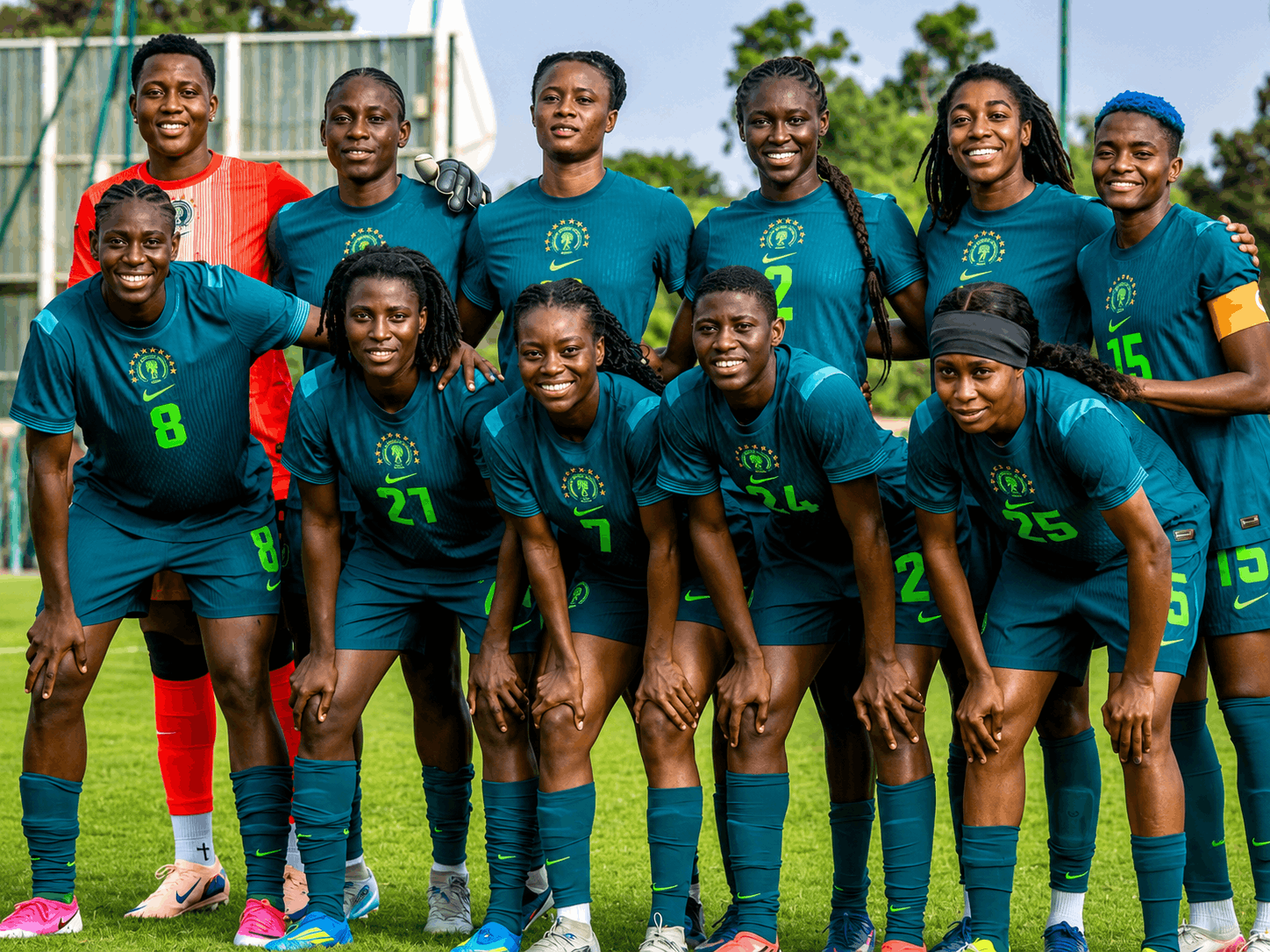
Perhaps the contrast that has amplified the discussion most is Nigeria.
The Super Falcons arrived in Morocco wearing a special commemorative badge featuring 10 stars each representing one of their own Women’s Africa Cup of Nations triumphs.
There was no attempt to incorporate the Super Eagles’ three AFCON titles, instead, the badge celebrates the women’s own extraordinary legacy. It is a powerful statement.
READMORE: Breaking: Super Falcons receive house certificates as FG fulfils WAFCON title promise in Morocco
Nigeria’s women have spent nearly three decades building the greatest dynasty in African women’s football, winning 10 of the 13 editions played before Morocco 2026 while reaching at least the semi finals every single time. Their jersey reflects achievements earned exclusively by the players wearing it.
That distinction is exactly why Egypt’s badge has generated so much discussion.
Should one team wear another team’s achievements?
The debate extends far beyond Egypt. supporters are asking a broader question:
Should stars represent the achievements of the team wearing the shirt, or can they represent the football history of an entire nation?
Across world football there is no universal approach outside FIFA competitions.
Many federations use stars to celebrate titles won by the specific team displaying them.
Others treat stars as symbols of national football success regardless of whether the men’s or women’s team is wearing the crest.
Neither approach is universally adopted and that ambiguity has allowed the conversation to flourish.
What FIFA says and why WAFCON is different
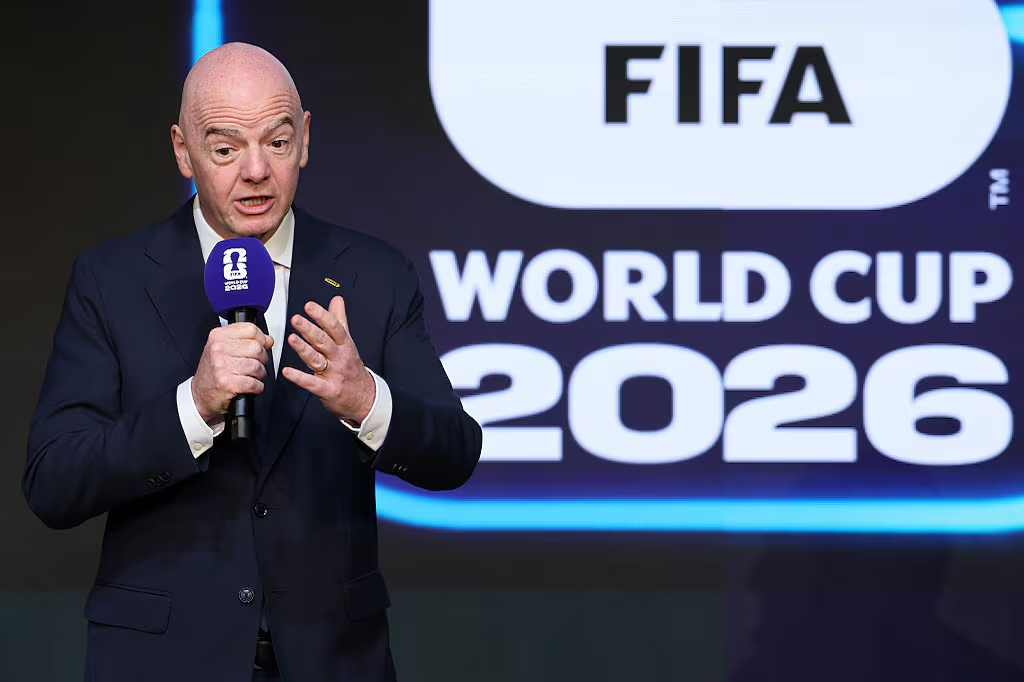
FIFA President Gianni Infantino. Photocredit: Getty Images
The discussion became even more interesting because Egypt encountered a similar issue only coulpes of weeks ago.
Ahead of the 2026 FIFA World Cup, Egypt were instructed to remove the seven AFCON stars from their World Cup kit after FIFA reiterated that stars displayed during FIFA World Cup tournaments are reserved for FIFA World Cup titles rather than continental championships.
WAFCON, however, is organized by CAF rather than FIFA.
There has been no public indication that CAF prohibits member associations from displaying continental title stars on national team kits during its own competitions, leaving badge design largely in the hands of national federations.
That difference in governance explains why Egypt’s seven stars disappeared at the FIFA World Cup but remain visible at WAFCON.
Fans remain visibly unconvinced and concerned about credibility
Understanding the explanation has not ended the debate. instead, it has intensified it.
Following ESPN Africa’s post explaining the seven stars, supporters questioned whether the practice accurately reflects the achievements of the team competing on the pitch.
One supporter argued that if Egypt can display the men’s AFCON titles, then countries such as Ghana, South Africa and Nigeria could theoretically combine men’s and women’s continental honours on one badge.
Another fan described the practice as “a misrepresentation of the facts and stats,” warning that allowing every federation to combine honours across different teams would create confusion.
Others questioned whether the decision damages the credibility of African football, while several users directly challenged CAF over whether the governing body should establish clearer regulations.
Among the lighter reactions, one comment perhaps captured the mood most memorably:
“Wearing your big brother’s credentials to an interview.”
It was humorous, but it also reflected a deeper concern shared by many supporters that women’s football deserves recognition based on its own achievements rather than those of the men’s game.
Some argued that if men cannot compete in women’s football games just as women cannot compete in men’s football why should women be allowed to parade the glory of men football in continental football like Egypt have done?
The conversation is more than just seven stars
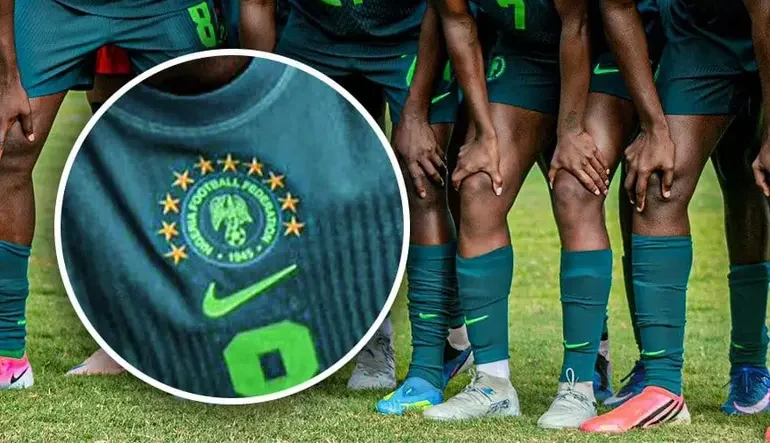
Nigeria’s Super Falcons unveiled a special jersey featuring 10 stars around the national badge ahead of the 2026 Women’s Africa Cup of Nations, with each star representing one of the team’s 10 WAFCON titles.
Ultimately, this debate is not really about Egypt nor is it about whether the Egyptian Football Association has broken any rule, It is about what stars are supposed to represent.
To some, they are national symbols celebrating a country’s football history. To others, especially to those inclined to FIFA standard, stars are sporting honours that belong only to the team that earned them.
READMORE: ‘Everything starts with a safe environment’ – Ajibade calls for better protection of women footballers
As women’s football continues to establish its own identity across Africa, many believe the second interpretation better reflects the progress the game has made.
That is precisely why Nigeria’s 10-star Super Falcons badge has been widely celebrated.
Every star tells the story of the women who won it. Egypt’s seven stars tell another team’s story entirely.
Whether that remains acceptable or prompts CAF to introduce clearer guidance in future tournaments is a conversation that may continue long after WAFCON 2026 ends.
CLICK HERE TO JOIN THE ATHLETIC NG WHATSAPP CHANNEL NOW!