European football has launched an unprecedented challenge to FIFA after UEFA unanimously voted to boycott all FIFA competitions, including the World Cup, if the governing body’s controversial plan to bring private investors into the commercial ownership of its tournaments goes ahead.
The decision, described as one of the most significant moments in UEFA’s modern history, came after all 55 member associations met in an emergency online meeting on Thursday to discuss FIFA’s proposal to establish a new commercial entity known as FIFA Forward Enterprise (FFE).
The proposed company would oversee the commercial operations of the FIFA World Cup and other FIFA competitions while allowing up to a 20 per cent stake to be sold to external investors as part of a reported $20 billion investment package.
In a strongly worded statement issued after the meeting, UEFA rejected the proposal in its entirety, insisting the World Cup should never become an investment asset.
“UEFA and its 55 member associations stand as one. We unanimously and unequivocally reject FIFA’s proposal to transfer ownership interests in the World Cup and other FIFA competitions to private investors,” the statement read.
“The World Cup cannot be treated as an investment product. It is one of football’s greatest sporting legacies. It has been built over generations by players, national teams and supporters across every continent. No part of it should ever be surrendered to private investors. The World Cup is not for sale.”
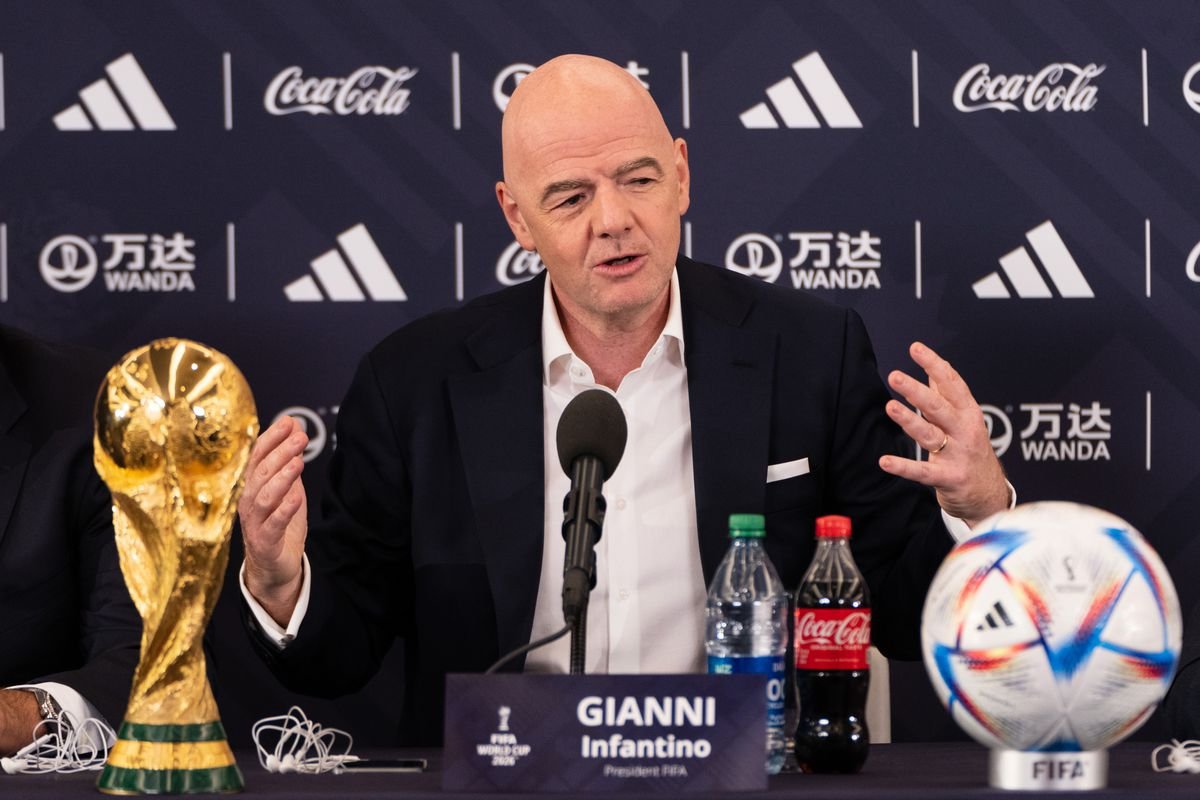
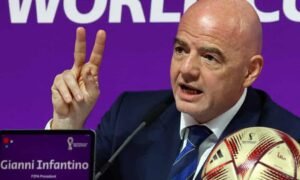
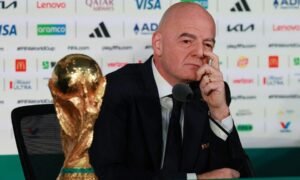
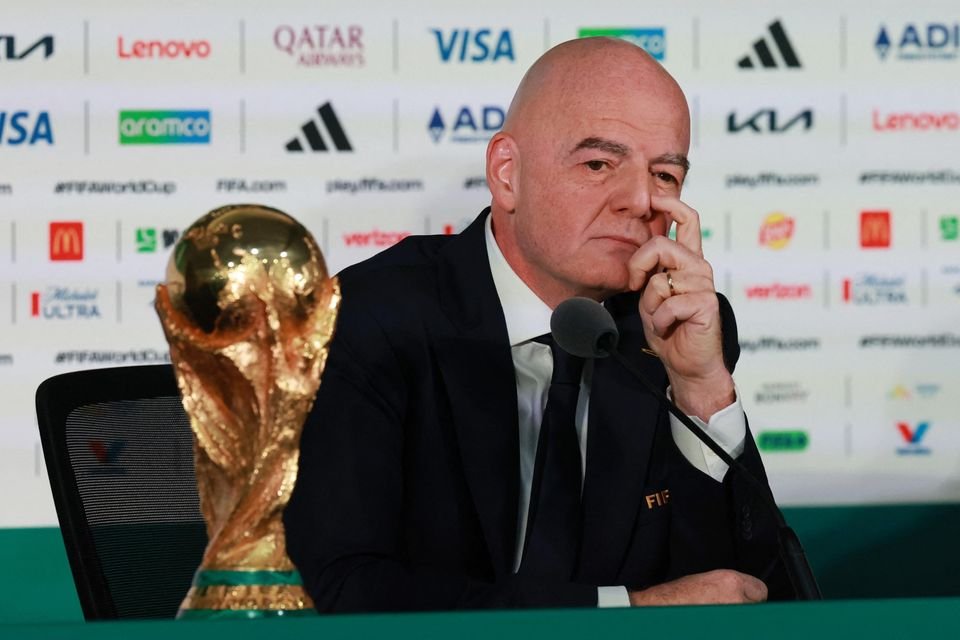
Gianni Infantino has built his presidency around expanding FIFA’s global reach and financial power. His latest proposal, however, has triggered the strongest institutional backlash of his tenure, with multiple confederations questioning both the process and the principle behind the plan. Photocredit: Getty Images
According to details circulated to FIFA’s 211 member associations, FIFA Forward Enterprise would be launched in partnership with American banking giant J.P. Morgan Chase, with investment expected from firms linked to American entrepreneur Josh Kushner.
FIFA president Gianni Infantino has proposed the venture as a way of unlocking billions of dollars in fresh investment for global football.
As part of the proposal, FIFA would immediately make a funding package worth $10 billion available to member associations that support the plan, with each association receiving around $40 million.
Associations that reject the proposal would instead receive funding estimated at $2.7 billion, significantly less than under the proposed investment structure.
FIFA’s member associations have until September 19 to vote on the proposal.
UEFA warns football’s future is at stake
While acknowledging football’s financial needs, UEFA argued that allowing private investors into the ownership structure of FIFA competitions would fundamentally alter the sport’s priorities.
“The moment external investors acquire ownership interests in FIFA competitions, football changes forever,” UEFA said.
“Commercial return becomes a permanent obligation. Investor expectations become a daily pressure. Every decision on the international calendar, every decision on competition formats and every decision shaping the future of football is no longer driven by what best serves the game, but by what best serves shareholders.”
UEFA insisted football’s future should never be dictated by investor returns.
“Football cannot mortgage its future for financial gain.”
UEFA had previously condemned FIFA’s decision to overturn Folarin Balogun’s automatic World Cup suspension, calling it unprecedented, incomprehensible and a threat to football’s integrity. Photocredit: Getty Images
The European governing body went further by warning that none of its national teams would compete in FIFA competitions while the proposal remained active.
“Europe’s position is clear. We will never lend this model our legitimacy.”
“No UEFA national teams will participate in any FIFA competition for so long as these proposals remain alive, unless this proposal has been abandoned in its entirety and binding assurances have been given that FIFA will never again open its governance or competitions to private ownership.”
The statement concluded with a firm declaration that European football would oppose the initiative without compromise.
“The FIFA World Cup belongs to football. It always will. And so long as Europe has a voice, it will never be for sale.”
UEFA’s stance quickly found support across the Atlantic after CONCACAF joined opposition
Following its own meeting on Thursday, CONCACAF announced that its 41 member associations had also rejected the proposal, citing concerns over the lack of transparency, inadequate consultation and the absence of proper governance procedures.
“The discussion reinforced the need for greater transparency and proper governance,” CONCACAF said.
“For these reasons, CONCACAF and its 41 Member Associations have rejected the proposal.”
Several leading football administrators also criticised FIFA’s plans before Thursday’s vote.
German Football Association president Bernd Neuendorf warned that football must not become “a plaything for investors,” while Dutch FA president Frank Paauw said the proposal had crossed a line that should never have been reached.
READMORE: From orphan to AC Milan icon: The remarkable life of Franco Baresi comes to an end at 66
The Confederation of African Football (CAF) is expected to discuss the proposal during an executive committee meeting next week, while the Oceania Football Confederation has scheduled discussions for next month.
South American governing body CONMEBOL has yet to make its position public.
Global players’ union FIFPRO has also expressed reservations, warning that the proposal could permanently reshape the priorities underpinning international competitions and the careers of professional footballers.
With FIFA’s September 19 voting deadline approaching, world football now faces one of the biggest governance battles in its history.
CLICK HERE TO JOIN ATHLETIC NG WHATSAPP CHANNEL NOW!
Meanwhile, former Nigeria Football Federation president Amaju Pinnick has publicly backed FIFA’s proposal, arguing the initiative could unlock unprecedented funding for member associations despite mounting opposition from Europe.