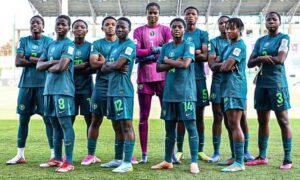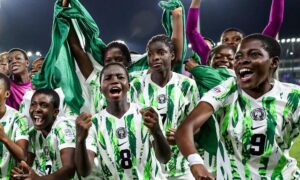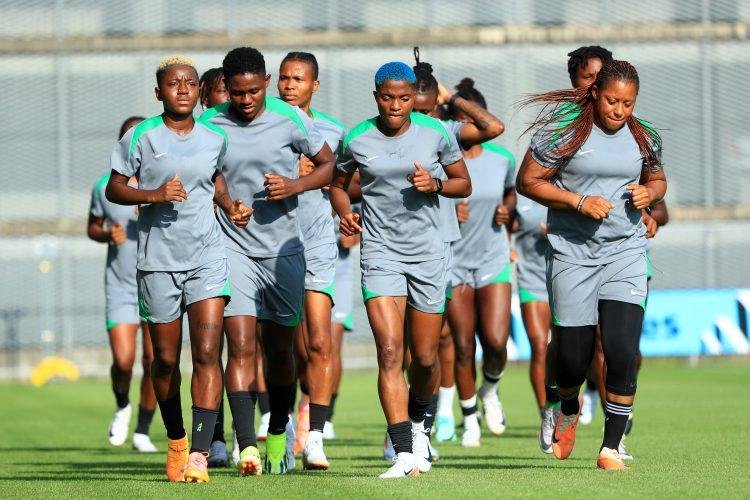
Nigeria’s Super Falcons are approaching an important international test against Algeria, but the preparations for the two-match series have already highlighted a difference in how both countries are organising their campaigns.
While Algeria have named a 25-player squad and begun preparations at their national training centre, Nigeria were yet to announce their selection as of November 25, with caretaker coach Augustine Eguavoen expected to oversee the team.
The two friendlies are scheduled for November 30 and December 4, giving the African champions an opportunity to assess their options against North African opposition before returning to competitive action in the 2028 Olympic qualifiers.
Algeria move first with 25-player squad
Algeria head coach Farid Benstiti has selected three goalkeepers, eight defenders, seven midfielders and seven forwards for the double-header.
According to Algeria’s state news agency, APS, the squad began assembling at the Sidi Moussa National Technical Centre on November 24 for a training camp that will run until December 5. The Algerian Football Federation also confirmed that preparations would include two meetings with Nigeria.
The selection features several familiar faces, including goalkeeper Chloé N’Gazi, midfielder Ghoutia Karchouni and forward Lina Boussaha.
N’Gazi was particularly influential when the teams last met at the 2025 Women’s Africa Cup of Nations, helping Algeria secure a goalless draw against Nigeria in Casablanca.
The return of experienced players, alongside members of the group that frustrated the Super Falcons at WAFCON, suggests Benstiti intends to use the fixtures as a serious examination of his team rather than simply an opportunity to experiment.
Two away matches for the Super Falcons
The opening encounter will take place at the 5 July 1962 Stadium in Algiers on Monday, November 30, with kick-off scheduled for 6pm Nigerian time.
The teams will meet again four days later at the Hocine Aït Ahmed Stadium in Tizi-Ouzou, where the second fixture is scheduled to begin at 5pm.
Both matches fall within the November-December FIFA women’s international window, which runs from November 24 to December 5.
The fixtures also provide Nigeria with an opportunity to improve their record against an opponent that has become increasingly difficult to overcome.
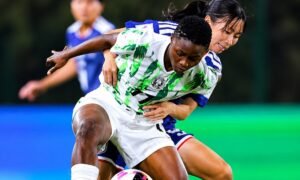
The Super Falcons defeated Algeria 2-0 in Ikenne and 4-1 in Lagos during friendly matches in October 2024. However, their most recent meeting ended goalless in the WAFCON 2025 group stage on July 13, with N’Gazi producing an important performance to deny Nigeria.
Morocco already waiting in the Olympic qualifiers
Beyond the immediate challenge, the Algeria double-header carries significant importance for Nigeria’s next competitive assignment.
The Super Falcons progressed to the third round of the African qualifiers for the 2028 Los Angeles Olympic Games after defeating Comoros 7-0 on aggregate in October.
Nigeria won the first leg 2-0 away from home before completing the job with a 5-0 victory at Remo Stars Stadium in Ikenne on October 13.
Their next opponents will be Morocco in a two-legged qualifying tie scheduled for February and March 2027. The winner will advance to the next stage of the African qualification campaign.
Algeria, meanwhile, will face Burkina Faso in the corresponding round after progressing past the Central African Republic with a 15-0 aggregate victory.
The upcoming friendlies therefore offer Eguavoen an opportunity to assess his squad against a stronger opponent before the Super Falcons face another demanding North African assignment.
READ MORE: Omar Berrada explains why Man Utd could leave Pochettino without January signings
Despite the fixtures being confirmed by the Algerian Football Federation, Nigeria’s preparations have attracted attention because the Super Falcons had not publicly announced their squad as of November 25.
With the first meeting scheduled for November 30, the timing of the announcement and the players’ arrival in camp will be important as Nigeria prepare for two away matches within a short period.
The contrast with Algeria, who have already begun their training programme, places the spotlight on the Nigeria Football Federation and the arrangements being made for the reigning African champions.