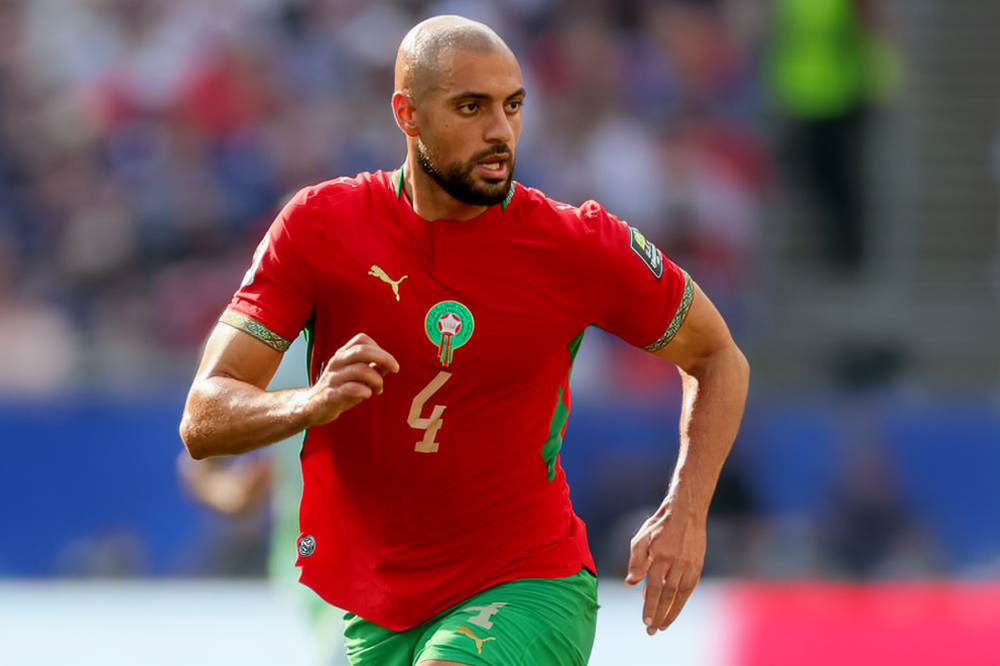
Morocco midfielder Sofyan Amrabat has admitted that the aftermath of the 2025 Africa Cup of Nations final has left his country in an unusual and disappointing position, following the latest development in their long-running dispute with Senegal.
The Ajax midfielder believes the controversy has overshadowed what was otherwise a successful tournament and questioned the impact of the saga on the image of African football.
His comments come after the Court of Arbitration for Sport (CAS) delivered a decisive verdict on Tuesday, November 24, bringing another dramatic turn to a final that has remained under scrutiny for almost a year.
‘You receive the trophy, and now you have to give it back’
Amrabat described the sequence of events surrounding Morocco’s brief recognition as champions before Senegal’s title was restored as a particularly strange experience.
“Honestly, it doesn’t evoke much emotion in me, because it was almost a year ago,” the Ajax player said, as quoted by Wiw Sport.
“It’s a very peculiar and rather strange situation. You lose the final, then you receive the trophy, and now you have to give it back again. It’s a strange situation, and it’s a shame for us.
“But there’s nothing we can do about it.”
Morocco had initially lost the final 1-0 to Senegal after extra time at the Prince Moulay Abdellah Stadium in Rabat on January 18, 2026.
However, the result was overturned in March when the CAF Appeal Board ruled that Senegal had forfeited the match after their players temporarily left the pitch in protest over a late penalty awarded to Morocco. The decision handed the Atlas Lions a 3-0 victory and the continental title.
That outcome has now been reversed by CAS, which reinstated Senegal’s original victory and confirmed them as champions.
Amrabat says Morocco could not properly celebrate
Beyond losing the trophy again, Amrabat reflected on how the legal dispute affected the team’s experience of what should have been a defining moment in their football history.
He explained that Morocco never enjoyed the celebrations usually associated with winning a major international final because the original outcome was immediately surrounded by controversy.
“When you win a match, a final, you feel joy. You celebrate with people. At the time, we hardly experienced that. It was different, really strange.”
The midfielder also believes the prolonged uncertainty has damaged the tournament’s legacy.
“What happened isn’t good for the image of African football. It’s not normal. Almost a year later, we’re still debating who won the tournament.
“It casts a shadow over what was otherwise a fantastic competition. It’s a shame, because African football is booming.
“I hope that next time, we’ll win this trophy on the pitch, without all this fuss.”
His remarks reflect Morocco’s disappointment, although CAS’s decision was based on the referee’s authority to restart the final rather than an endorsement of Senegal’s temporary walk-off.
The tribunal ruled that referee Jean-Jacques Ngambo Ndala was entitled to decide whether the match should resume or be stopped permanently. Since both teams returned to the pitch and agreed to continue, CAS found that Articles 82 and 84 of the AFCON regulations, which concern matches permanently abandoned by a referee, did not apply.
Senegal federation president denies contact allegations
The controversy has also extended beyond the pitch, with Morocco’s federation questioning the circumstances surrounding the CAS proceedings.
The Royal Moroccan Football Federation alleged that contact had taken place between Senegal Football Federation president Abdoulaye Fall and German CAS arbitrator Ulrich Haas before the verdict.
Fall has strongly rejected the allegation, insisting he had no communication with any member of the arbitration panel.
“I’m telling you that’s completely false. I’ve never spoken with any member of the panel. I’ve never been to Switzerland,” Fall said.
He added: “I think it’s even the honour of the tribunal that’s tarnished.”
The allegations remain contested. Morocco has said it intends to pursue further legal avenues, while Senegal has denied any improper contact.
Morocco’s historic FIFA ranking position also comes under pressure
The consequences of the ruling have extended into Morocco’s position in the FIFA men’s world rankings.
The Atlas Lions had climbed to fifth in the November 18 rankings, achieving their highest-ever position since the global standings were introduced in 1993. They had accumulated 1,809.37 points, moving ahead of Portugal and Brazil.
However, a recalculation following the reversal of the AFCON final result has reportedly deducted 18.02 points from Morocco’s tally, leaving them with 1,791.35.
That figure would place them seventh, behind Portugal and Brazil, who had been pushed down to sixth and seventh respectively in the November 18 standings.