
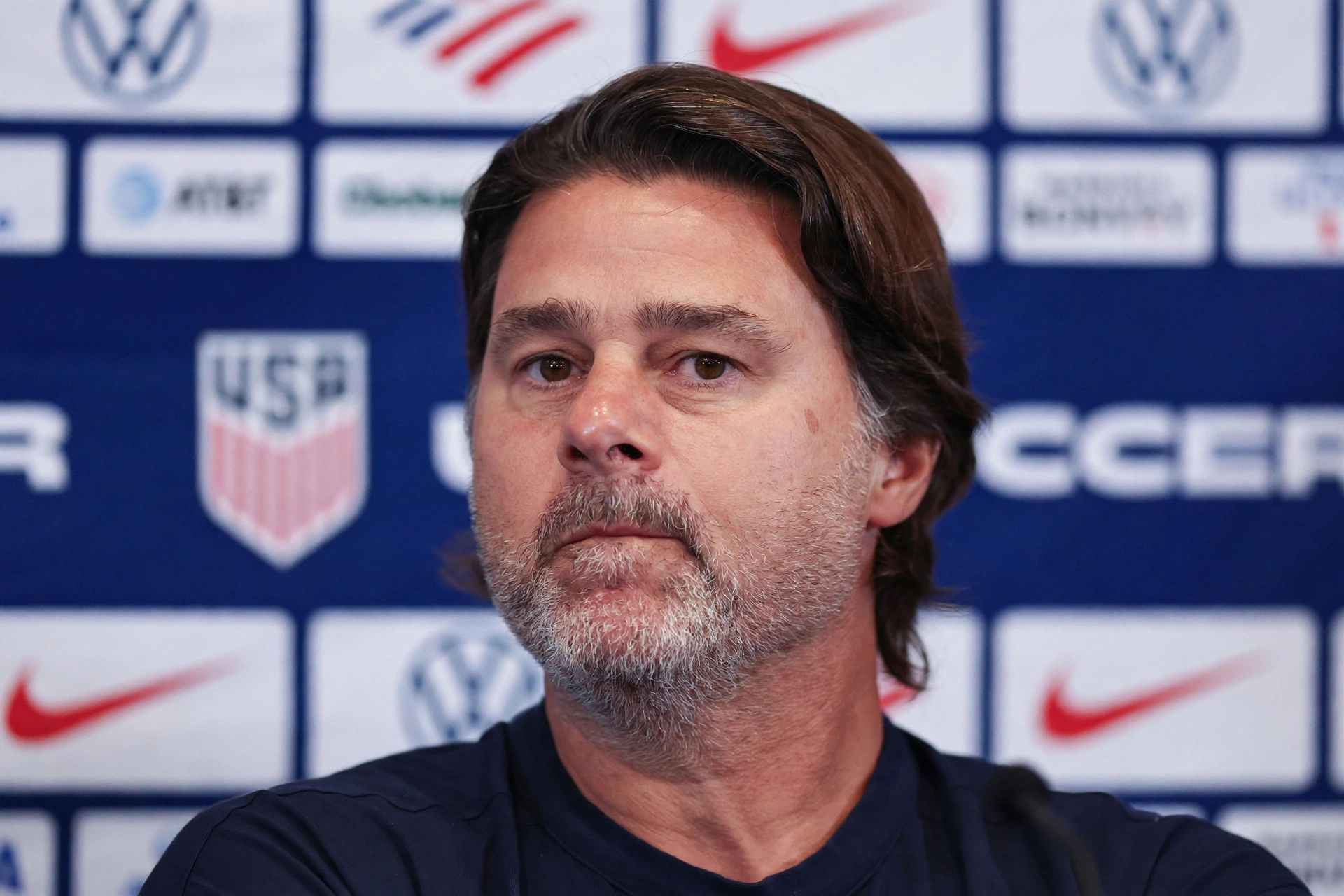
It is a significant appointment for a club that has spent more than a decade searching for a manager capable of restoring its former authority. Pochettino arrives with experience at some of Europe’s biggest clubs, a reputation for developing young players and a recognisable football philosophy.
He has also demonstrated that he can build competitive teams. Southampton improved under him, Tottenham became regular challengers for the Premier League’s leading positions, Paris Saint-Germain won domestic honours and the United States reached the knockout stages of the 2026 World Cup.
There are reasons to believe he can improve Manchester United. But improvement is no longer enough. United have already experienced managers who promised a new identity, demanded greater commitment and arrived with impressive reputations. Several enjoyed encouraging periods before the same problems resurfaced.
The concern is not necessarily that Pochettino lacks the ability to coach Manchester United. It is whether his methods, career history and expectations are compatible with a club that has repeatedly failed to provide the conditions required for a successful long-term project.
His appointment could prove an inspired decision. Yet there are at least eight reasons why it could become another expensive mistake.
1. United have tried a version of his football before – and it did not work
Pochettino is associated with aggressive pressing, quick transitions and a team that attempts to win possession high up the pitch. His preferred systems have generally been built around a 4-2-3-1 or 4-3-3, with full-backs providing width and attacking players expected to contribute significantly without the ball.
His teams seek to build from the back, create numerical advantages in possession and move forward quickly when opportunities appear. When possession is lost, they are expected to react immediately and prevent opponents from escaping the pressure.
There is nothing inherently wrong with that approach. It has produced some of the most impressive football of his managerial career.
However, Manchester United have already witnessed the difficulties of implementing a similar philosophy.
Ralf Rangnick arrived at Old Trafford in November 2021 with a reputation as one of the leading advocates of gegenpressing. His brief was to bring greater organisation, intensity and tactical discipline to a side that had become increasingly inconsistent under Ole Gunnar Solskjaer.
The early signs were encouraging. United pressed aggressively against Crystal Palace in Rangnick’s first match, recovering possession 12 times in the opposition’s final third, their highest figure in the Premier League that season at the time.
But the improvement did not last. Rangnick eventually admitted that United had abandoned his preferred pressing approach only three matches into his interim tenure because the squad lacked the fitness, preparation and player profiles required to execute it.
READ MORE: From Moyes to Carrick: How Manchester United managers have fared since Ferguson
He also acknowledged that the team had not been assembled for his tactical approach and argued that recruitment needed to be aligned with a clear footballing identity. that is an uncomfortable precedent for Pochettino.
The Argentine is a more experienced manager with a stronger record of building teams, and he should have more time than Rangnick received. He has also shown that he can use a compact mid-block rather than insist on pressing relentlessly.
Nevertheless, the underlying challenge remains: United must have players who understand when to press, how to support the first line of pressure and how to protect the spaces left behind.
Rangnick discovered that possessing talented individuals does not automatically produce a coordinated pressing team. Pochettino could discover the same thing.
2. His demanding football could expose the squad’s physical and tactical limitations
Pochettino does not simply ask his attackers to score goals. He expects them to work relentlessly when the opposition has possession.
His philosophy requires forwards to make repeated short, intense runs, midfielders to cover spaces quickly and defenders to move forward together. Full-backs must provide attacking width while remaining capable of recovering defensively when possession changes hands.
In a 2014 interview discussing his methods at Tottenham, Pochettino explained:
“Our style is demanding – sometimes too much – but we use common sense. We demand a lot from them because that is our style.”
He also said:
“Our philosophy is ‘suffer in training so you don’t suffer in the game’.”
And made his expectations clear:
“We can only expect full commitment and a positive attitude.”
Those standards could be exactly what United need. The club has lacked consistency, intensity and collective responsibility for several seasons.
But demanding a particular level of performance and having the players capable of delivering it are different matters.
United have some promising options for Pochettino’s football. Bryan Mbeumo, Amad Diallo and Matheus Cunha offer energy and mobility in attacking areas, while players such as Leny Yoro and Lisandro Martínez could suit an aggressive defensive approach. the bigger question concerns the balance of the team.
A high press can quickly become a liability when the forwards close down opponents without adequate support from midfield. If the central players cannot cover ground, close passing lanes and recover possession, opponents can bypass the first line and attack the space behind it.
United’s early-season defensive and pressing data in October 2026 already suggested problems with the coordination of their high block. The team was using a high defensive block frequently but was not consistently turning that approach into high turnovers.
Pochettino may improve those patterns through coaching. But if the players lack the necessary physical or tactical qualities, he will eventually need recruitment to address the problem.
That brings the discussion back to a familiar question at Old Trafford: will the club provide the players required to make the manager’s football work?
3. His impressive career has not produced consistent elite-level success
Pochettino’s reputation is built on more than attractive football. He has improved teams, developed young players and taken clubs into competitions they previously struggled to reach.
Yet his career also contains a recurring limitation: he has often taken teams close to major success without consistently delivering the trophies expected at the highest level.
His first managerial job was at Espanyol, where he took over in January 2009 with the club in the relegation zone. He helped them finish 10th, 11th and eighth in his first three full or partial campaigns, establishing himself as a promising young coach.
However, his fourth season deteriorated badly. Espanyol were bottom of La Liga after 13 matches in the 2012–13 campaign, with only one league victory, and he was dismissed in November 2012.
His Southampton spell was more encouraging. He took the club to eighth place in 2013–14, matching their highest Premier League finish at the time. His work helped establish a reputation for developing players and building an energetic, well-organised team.
Tottenham was where his reputation reached another level. He guided Spurs to five consecutive top four finishes, including second place in 2016–17, and took them to the 2019 Champions League final. Yet he left north London without winning a major trophy.
READ MORE: Michael Carrick sends emotional farewell to Manchester United fans after Old Trafford exit
At PSG, he finally collected silverware, winning the Coupe de France and Trophée des Champions in 2021 before claiming the Ligue 1 title in 2021–22.
But the Champions League remained elusive. PSG were eliminated by Real Madrid in the 2021–22 last 16 after surrendering a two-goal aggregate advantage in the second leg.
His Chelsea spell ended with a sixth-place finish, a League Cup final defeat and a departure by mutual agreement. The team’s strong finish offered encouragement, but another season passed without a major trophy.
Pochettino’s career win percentage has generally been around 49 per cent, his does not make him an unsuccessful manager. His achievements at Tottenham and Southampton are significant.
But United are not appointing him simply to make the team competitive again. They need a manager capable of delivering sustained success and challenging for the biggest trophies.
His career suggests he can take a team a long way. Whether he can take United all the way is a different question.
4. Tottenham’s decline offers a warning about what happens when his project loses momentum
Pochettino’s Tottenham years provide perhaps the most important evidence for understanding the risks of his appointment.
He inherited a club that had finished sixth in the Premier League and gradually turned it into a consistent top-four side. Spurs challenged Leicester City for the title in 2015–16, finished second the following season and eventually reached the Champions League final.
It was an impressive transformation. But the final stage of the project exposed problems that should concern Manchester United.
Tottenham needed to refresh an ageing and increasingly unsettled squad. Several important players faced uncertain futures, while the club’s recruitment had stalled during the construction of its new stadium.
Spurs went two consecutive transfer windows without making a signing. Pochettino was increasingly frustrated because he believed the team needed new quality to remain competitive.
In February 2019, he publicly expressed his disappointment with the club’s inability to strengthen.
“We were open to adding some quality to the team to help us achieve the things we want but we can’t add that quality, not because we can’t or don’t want to, but, for different reasons, we can’t deliver what we wanted.”
He also said:
“Of course I wanted to strengthen the squad but if we cannot sign, I need to stick with the project of the club.”
The situation became more difficult after the Champions League final defeat to Liverpool.
Pochettino spoke about “different agendas in the squad” and the need to rebuild togetherness. The team had lost momentum, and the manager appeared to be running out of solutions.
Tottenham eventually dismissed him in November 2019 after a poor start to the following campaign. BBC analysis identified the failure to refresh the squad and the growing frustrations surrounding recruitment as major factors in the breakdown.
This is where the comparison with United becomes uncomfortable.
Manchester United have repeatedly spent heavily without establishing a coherent long-term recruitment strategy. Their squad has been assembled across different managerial regimes, leaving successive coaches with players recruited for different systems.
Pochettino could arrive with a clear idea of the team he wants to build. But if the club’s recruitment decisions do not match his requirements, Tottenham’s experience suggests that frustration could eventually return.
5. Managing star names and building a cohesive dressing room are not the same thing
Pochettino’s reputation as a developer of young players is deserved. Harry Kane, Dele Alli, Christian Eriksen and several others developed significantly under his guidance at Tottenham.
But his experience at PSG also raised questions about his ability to bring a dressing room full of major personalities together.
At the Paris club, he managed Lionel Messi, Neymar and Kylian Mbappé, among other established stars. PSG won domestic trophies, but their European ambitions remained unfulfilled.
French journalist Julien Laurens, discussing Pochettino’s time in Paris, argued that the manager struggled with the dressing-room egos and did not succeed in turning the squad into a cohesive team. That is Laurens’ assessment rather than a direct admission by Pochettino, but it raises a relevant question about managing a collection of high-profile players.
Chelsea offered another example of the challenge of establishing collective standards.
During his time at Stamford Bridge, Pochettino repeatedly spoke about the need for maturity, discipline and a mentality in which players demanded more from themselves and their teammates.
The public penalty dispute involving Chelsea players in April 2024 also illustrated the difficulty of managing individual priorities within a young squad. Pochettino criticised the players’ behaviour and stressed that the collective must come before personal ambitions.
United’s dressing room presents a different but equally demanding challenge. The club has senior players, emerging talents, expensive signings and individuals whose futures may depend on how the new manager sees them.
Pochettino will have to establish authority quickly, decide who fits his football and convince the group that individual status will not protect anyone from competition. that could be one of his strengths.
However, it will require the club’s hierarchy to support him when those decisions become unpopular. A manager cannot establish standards if his authority is undermined whenever a difficult decision involves an influential player.
6. His expectations may clash with United’s recruitment-led structure
Pochettino has made it clear in previous jobs that he expects the head coach to have a meaningful voice in the football environment.
At Chelsea, he explained:
“The head coach or the manager is who decides the thing, how it’s going to work.”
That statement reflects his belief that the person responsible for coaching the team must have authority over how it operates on the pitch and around the training ground.
Manchester United, however, have been trying to establish a structure in which recruitment and long-term squad planning are not dictated solely by the head coach.
Chief executive Omar Berrada and director of football Jason Wilcox are central figures in that model. The club’s own corporate reporting describes the men’s first team as being led by the director of football and head coach, supported by a large football operations department.
There is a sensible argument for this approach. United cannot keep changing their entire recruitment strategy every time they appoint a new manager. But it creates an important test for Pochettino.
Will he have enough influence to shape the squad around his football? Will the recruitment department identify players who fit his demands? And what happens if he wants a player the club does not consider part of its long term plan?
The club’s previous experience with managers suggests this relationship cannot be left to chance.
Rúben Amorim’s final period at United exposed disagreements over the distinction between being a head coach and having the authority of a traditional manager. The club cannot afford another appointment in which the boundaries of responsibility become a source of conflict.
Pochettino must understand the structure he is entering, but United must also be clear about the authority they are giving him.
7. His World Cup success is encouraging, but international football is a different challenge
There is a strong counterargument to the concerns surrounding Pochettino: his recent work with the United States.
He guided the USMNT to the 2026 World Cup, where they won Group D and defeated Bosnia and Herzegovina 2-0 in the round of 32.
It was the country’s first knockout-stage victory since 2002 and gave Pochettino a record number of World Cup wins for a US men’s national-team manager. the achievement deserves recognition.
He helped generate belief around the national team, created a competitive environment and guided the United States through a tournament in which they won three matches before losing 4-1 to Belgium in the round of 16.
It would be wrong to dismiss that progress simply because it came in international football.
But the demands of managing a national team are different from those of managing Manchester United.
Pochettino had limited time with his players, worked within a tournament structure and prepared the team for a defined competition.
At United, he will have to manage a squad across a full domestic season, deal with injuries and suspensions, oversee player development and maintain standards through multiple competitions.
His USMNT experience is evidence that he remains a capable leader. It is not conclusive evidence that he can solve United’s long-term problems.
There is also a timing issue. Pochettino is expected to oversee the United States’ two Nations League matches against Haiti before travelling to England, with his first United assignment scheduled to be the trip to Liverpool on 22 November.
He will therefore inherit a crisis without the benefit of a conventional pre-season or an extended period to work with the full squad.
8. United’s biggest problems may be beyond the manager’s control
This is perhaps the most important reason to question the appointment.
Since Sir Alex Ferguson retired in 2013, Manchester United have appointed David Moyes, Louis van Gaal, José Mourinho, Solskjær, Rangnick, Ten Hag, Amorim and Carrick in different permanent or interim capacities.
Each arrived with a different philosophy and a different promise of renewal.
Moyes was expected to continue Ferguson’s work. Van Gaal brought tactical structure and experience. Mourinho arrived with a record of winning major trophies.
Solskjær promised a return to the club’s traditional attacking identity. Rangnick was supposed to introduce a modern pressing model.
Ten Hag was expected to build a possession-based team. Amorim arrived with a clearly defined system, while Carrick was given the opportunity to establish himself after a strong interim period.
The outcomes varied, but the club’s central problems remained.
United have repeatedly struggled with recruitment, squad balance, managerial authority and the relationship between their football leadership and the first-team coach.
Carrick’s dismissal provides another example of the cycle. He had guided United to third place and Champions League qualification in the previous campaign, but the team subsequently fell into the relegation zone after a disastrous start to the new season. He was dismissed after only a few months in the permanent role.
The club now has another manager to rebuild confidence and restore results. But the appointment itself cannot guarantee that the underlying structure has changed.
The Manchester United Supporters’ Trust criticised the club’s repeated managerial changes following Carrick’s dismissal, arguing that the ownership and leadership must also accept responsibility for the wider problems.
That criticism deserves consideration. Pochettino cannot independently repair recruitment, establish a stable leadership structure, improve the club’s long-term planning and resolve every issue that has accumulated over more than a decade.
He can coach the players, improve their organisation and demand higher standards. But he needs a functioning football operation around him.
If United appoint him and then fail to provide the support required to build a competitive squad, the club could end up blaming another manager for problems that existed before he arrived.
READ MORE: Infantino reconsiders major plan for 2030 FIFA World Cup
There is no convincing argument that Mauricio Pochettino is an unqualified or unsuccessful coach.
He rescued Espanyol from a difficult position, improved Southampton, transformed Tottenham into a serious contender, won domestic trophies with PSG and guided the United States to an encouraging World Cup campaign.
He has experience, a clear football philosophy and a track record of developing young players. those qualities make him a credible candidate for Manchester United.
But the club’s recent history demands more than a credible appointment. It needs a manager whose methods can be supported by the squad, whose authority is understood by the hierarchy and whose long term plans are matched by recruitment decisions.
Pochettino’s career offers warning signs in all three areas.
His Tottenham experience showed how quickly a successful project can deteriorate when squad renewal stalls. His PSG spell raised questions about creating unity among elite personalities. His Chelsea departure demonstrated the challenges of working with a young squad and a complex ownership structure.
And Rangnick’s failed pressing experiment at United offers a reminder that a football philosophy cannot succeed without the right players.
CLICK HERE TO JOIN ATHLETIC NG WHATSAPP CHANNEL NOW!
The bigger question is whether Manchester United have finally created the conditions for a manager to succeed, or whether they have simply found another experienced coach to carry the burden of a club that has yet to resolve its own identity crisis.
Pochettino may be the right man to improve Manchester United. The danger is that United may still be the wrong club for him to succeed.



































Pingback: Nicolas Jackson ends Aston Villa’s 11-year wait for Premier League award - The Athletic NG
Pingback: DR Congo punish Nigeria as Olympic Eagles face uphill battle in U-23 AFCON qualifying - The Athletic NG