
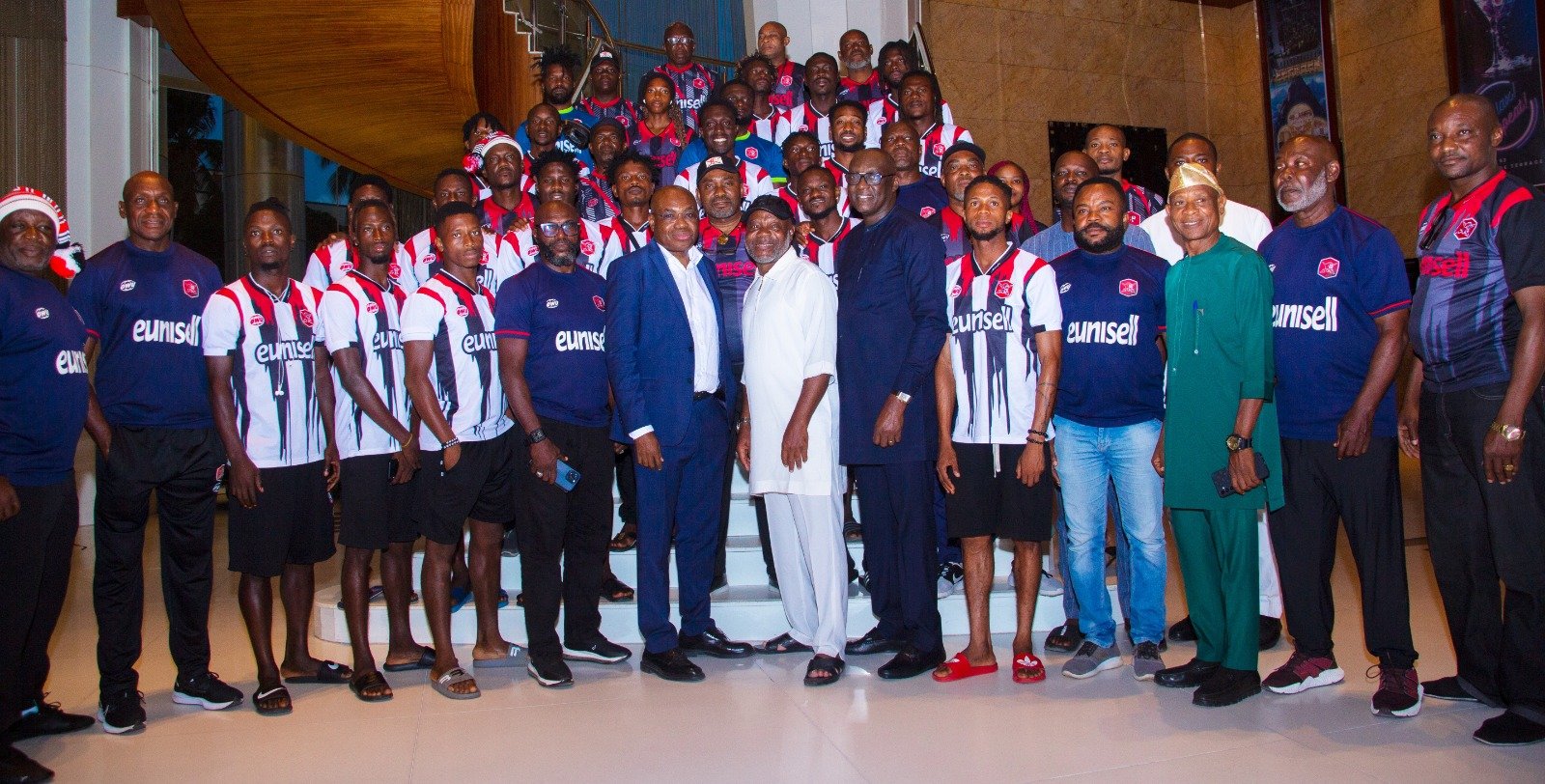
Eunisell has reaffirmed its commitment to Abia Warriors, using an engagement centred on its existing partnership with the club to highlight the importance of corporate sponsorship to the development of Nigerian football.
The occasion provided an opportunity for both parties to strengthen their relationship, with discussions extending beyond brand visibility to the wider contribution businesses can make to professional football and the communities connected to it.
Although details of the sponsorship arrangement, including its financial terms, were not disclosed, the reaffirmation reinforces Eunisell’s continued association with Abia Warriors as the club’s front-of-shirt sponsor.
The development also brings renewed attention to an important issue within the Nigeria Premier Football League (NPFL): the need for stronger private sector participation in a competition where clubs continue to face financial and institutional challenges.
Eunisell sees sponsorship as more than brand visibility
For Eunisell, a company with interests in the oil and gas, chemicals and industrial sectors, its relationship with Abia Warriors reflects a broader view of corporate participation in sports.
The company believes businesses can contribute to football development by supporting institutions, creating opportunities and helping to strengthen the communities around them.
Speaking on the philosophy behind the partnership, Eunisell founder Chika Ikenga said:
“We believe that meaningful corporate participation goes beyond supporting an activity or associating with an institution. It is about recognizing the potential that exists within our communities and contributing to an environment where that potential can flourish.
Football has an extraordinary ability to bring people together, create opportunities and inspire ambition. Our partnership with Abia Warriors reflects our belief that businesses have a role to play in supporting that progress.”
That position reflects an increasingly important conversation around the sustainability of Nigerian club football, where sponsorship can provide support beyond the traditional sources of funding.
Why corporate partnerships matter to the NPFL
Professional football clubs occupy an important position within their communities. Beyond competing for league points and trophies, they provide platforms for players to develop their careers, create a sense of belonging among supporters and contribute to economic activity around matchdays.
Essentially for young footballers, a properly supported professional club can offer a pathway towards a sustainable career. For supporters, the club represents a shared identity, while the wider community benefits from the attention and activity generated by the game.
However, sustaining these contributions requires more than the efforts of players, coaches and club administrators. Financial support, effective management, infrastructure and long-term investment are also essential.
This is where partnerships between clubs and private companies can become significant. When structured around sustained commitment rather than temporary publicity, corporate sponsorship can help clubs strengthen their operations and improve the environment in which players and technical teams work.
Eunisell’s continued association with Abia Warriors provides an example of the kind of relationship that can form part of that wider conversation.
A wider question about the future of Nigerian football
Nigeria continues to produce football talent, but translating that potential into sustained professional success requires investment across different levels of the game.
Players, technical teams, administrators, grassroots coaches and supporters all contribute to the football ecosystem. Their efforts need to be matched by institutions and businesses willing to support the structures that keep the game running.
For the NPFL, attracting and retaining corporate partners remains an important part of building a more sustainable domestic competition. Clubs need support that can extend beyond individual campaigns, while sponsors need to recognise the long term value of investing in Nigerian football.
Ultimately, the growth of Nigerian football cannot rest on the clubs and football authorities alone. It requires a broader partnership involving businesses, communities and the people whose passion sustains the game.




































Pingback: Super Eagles handed fresh opening as AFCON 2027 qualification race takes a turn - The Athletic NG