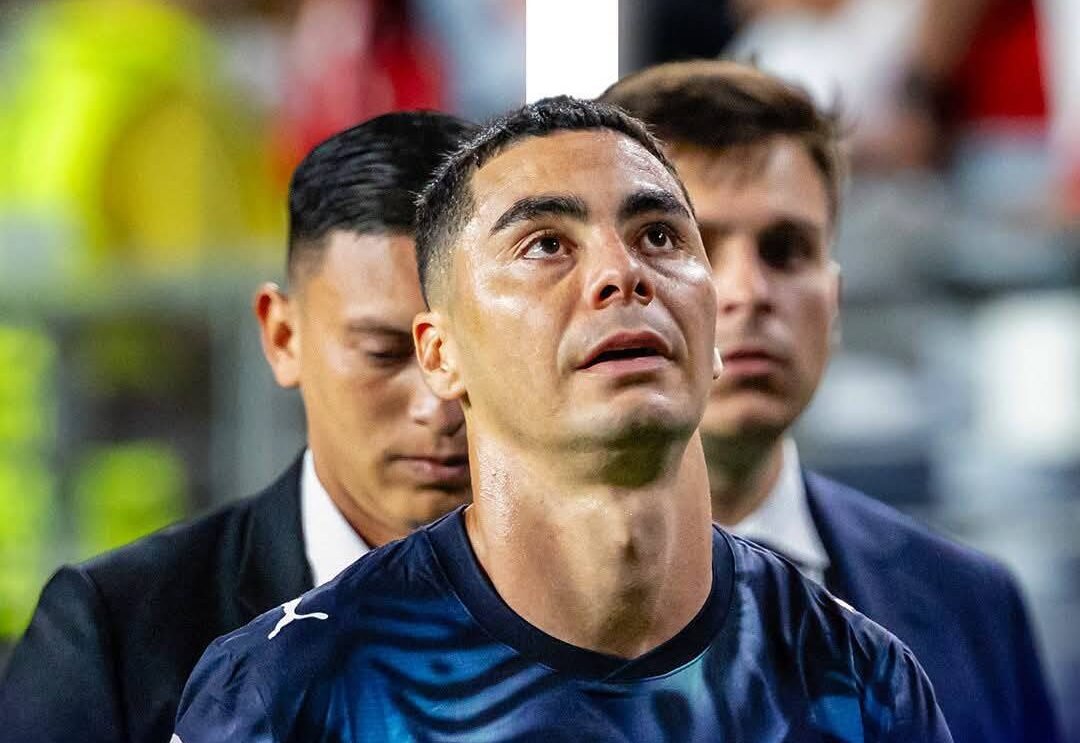
When Paraguay’s Miguel Almirón was shown a red card during his side’s World Cup clash with Turkey, many fans were left asking the same question.
How can a player be sent off simply for covering his mouth?
The dismissal made history as Almirón became the first player at a FIFA World Cup to be sanctioned under football’s newly introduced mouth-covering protocol. Yet the incident has also generated confusion because players, coaches and even some of the sport’s biggest stars regularly cover their mouths while speaking on the pitch.
Just hours before Paraguay faced Turkey, viewers watched Cristiano Ronaldo repeatedly cover his mouth while speaking to Portugal teammate João Neves before kick-off and again before the start of the second half against DR Congo. Neither incident resulted in punishment.
So what exactly is the rule?
The crucial detail is that covering your mouth is not, by itself, an offence.
The regulation was introduced by IFAB earlier this year following concerns that players could conceal abusive, discriminatory or offensive language from cameras and officials. The debate intensified after allegations involving Benfica youngster Gianluca Prestianni and Real Madrid forward Vinicius Junior during a Champions League match.
READMORE: Saibari wonder goal sends Morocco top as Atlas Lions edge Scotland at World Cup
In its official guidance, IFAB stated:
“At the discretion of the competition organizer, any player covering their mouth in a confrontational situation with an opponent may be sanctioned with a red card.” Those words are key.
The rule is not aimed at private conversations between teammates. It is not designed to stop players discussing tactics before kick-off. Nor does it prevent captains, coaches or teammates from shielding their lips while speaking during a match.
Instead, the focus is on confrontational exchanges involving opponents.
That distinction explains why Ronaldo’s conversations with João Neves did not fall under the rule. There was no confrontation, no dispute and no interaction with an opposing player. The pair were simply communicating with each other before play resumed.
Almirón’s situation was very different.
The incident occurred shortly before half-time after a foul on Paraguay striker Isidro Pitta sparked a heated confrontation between players from both teams. During the altercation, Almirón was seen covering his mouth while speaking directly to Turkey defender Mert Müldür.
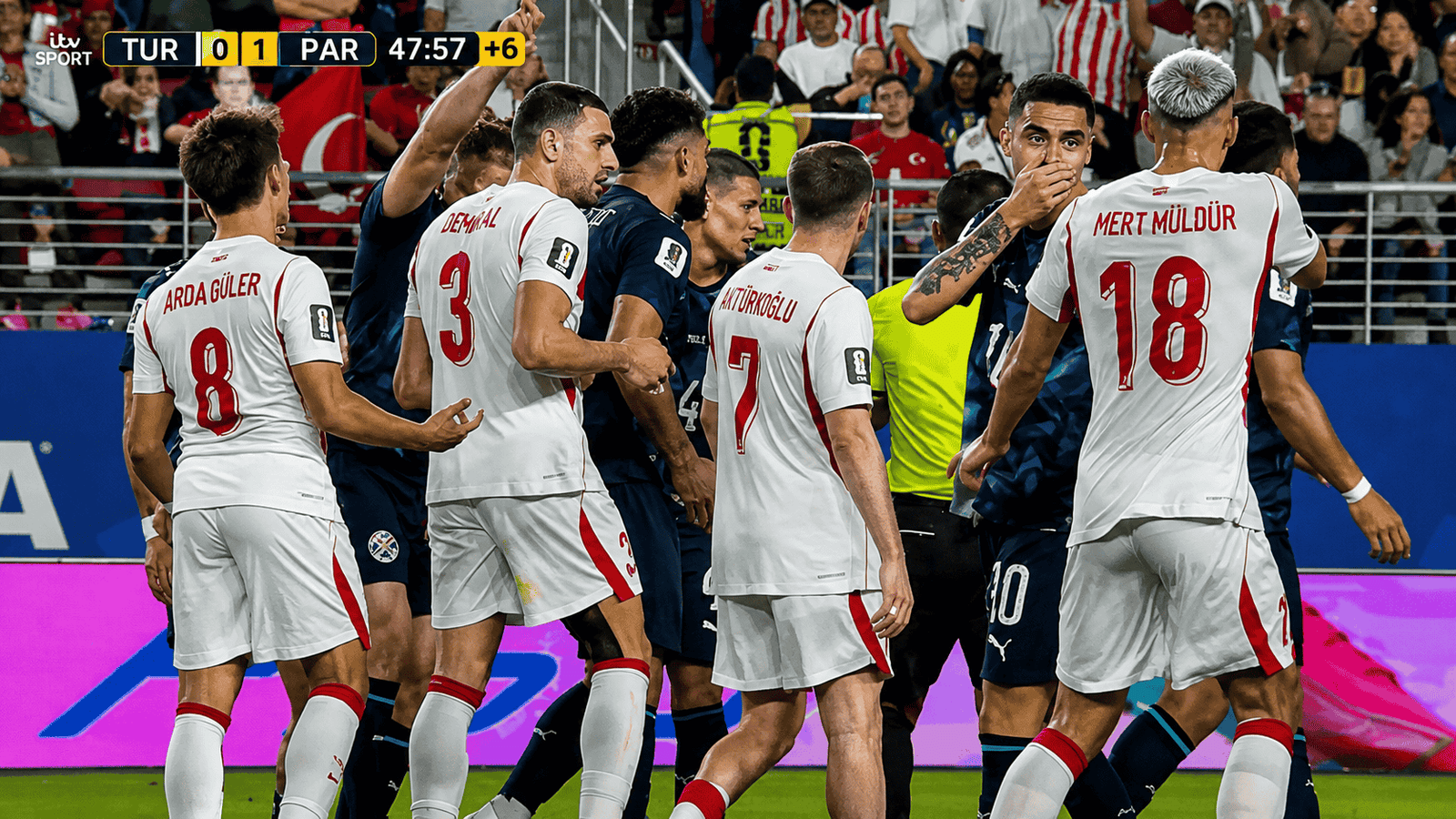
Miguel Almirón became the first player sent off at the 2026 FIFA World Cup for covering his mouth while speaking to an opponent. But does the rule apply to teammates too? Here’s what football’s new law actually says.
Although referee Ivan Barton initially missed the exchange, VAR alerted him to the incident. Following a review, Almirón was dismissed.
The decision suggests officials believed the act met the criteria outlined in the new protocol: a player covering his mouth during a confrontational interaction with an opponent.
Importantly, the law does not state that every player who covers their mouth while arguing with an opponent must automatically be sent off. IFAB’s wording leaves room for interpretation and enforcement by individual competitions. That means context remains critical.
Officials will likely consider factors such as the nature of the confrontation, the behavior of the players involved and whether there is suspicion that offensive, discriminatory or abusive language may have been used.
The safest conclusion is that football has not banned players from covering their mouths.
Players can still do so when speaking to teammates, discussing tactics, communicating before kick-off or during breaks in play.
The red-card risk emerges when that action occurs in a heated confrontation with an opponent.
Almirón’s dismissal may therefore be remembered not because covering your mouth became illegal, but because it’s the first time football’s newest disciplinary tool was used on the World Cup stage.
CLICK HERE TO JOIN ATHLETIC NG WHATSAPP CHANNEL NOW!
As the tournament progresses, players will undoubtedly become more cautious. And after a decision that has already sparked widespread debate, officials around the world will be watching closely to see where the line is drawn next.