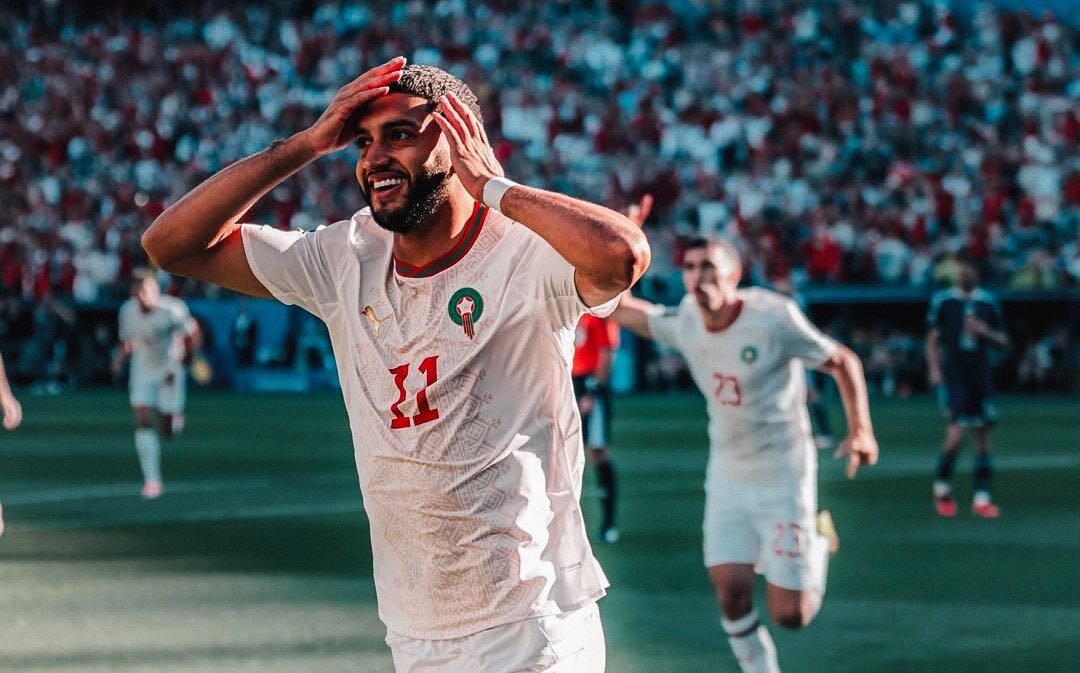
Ismael Saibari’s winning goal against Scotland may have grabbed the headlines, but for Morocco coach Mohamed Ouahbi, the midfielder’s importance goes far beyond finding the back of the net.
Following Morocco’s 1-0 victory that moved the Atlas Lions closer to the knockout stages of the 2026 FIFA World Cup, Ouahbi offered a revealing insight into the tactical thinking behind Saibari’s increasingly influential role in the team.
The Morocco boss explained that his system has been built around a simple principle: finding a way to fit as many of the country’s top attacking talents into the same lineup as possible.
“The idea, and I said it from the start, is that when I took over this team, of course, we had to have a game plan,” Ouahbi said.
“We had to have game principles. And I like to work on these principles in relation to the best players that I have at my disposal.”
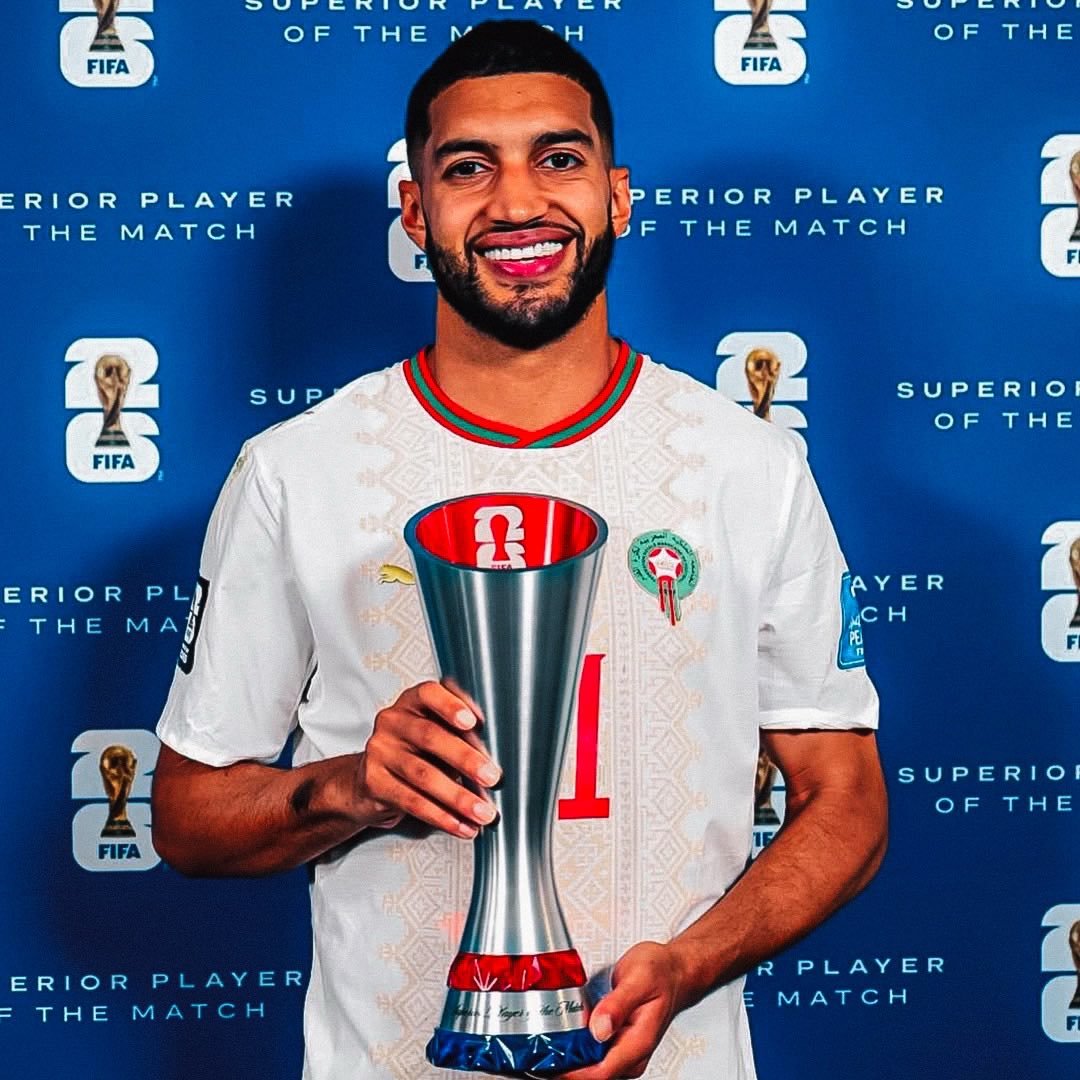
Ismael Saibari with Superior player of the match vs Scotland. Photocredit: Imago
Rather than forcing players into a rigid tactical structure, Ouahbi has opted to shape his system around Morocco’s creative strengths.
That approach has seen Saibari deployed in a more advanced role, often operating between the lines and linking Morocco’s midfield and attack.
According to the coach, leaving players of Saibari’s quality out of the team was never an option.
“When I have a group and I have good players, I absolutely want to put them on the pitch,” he explained.
“I can’t deprive myself.”
Ouahbi pointed to the abundance of creative talent available in his squad, including Saibari, Azzedine Ounahi, Brahim Diaz and Bilal El Khannouss.
“We say Saibari is a 10, Ounahi is a 10, Brahim Diaz is a 10, Bilal Khannouss is a 10, and they are good players,” he said.
The challenge for Ouahbi has not been identifying Morocco’s best players, but finding a structure that allows them to coexist without compromising the team’s balance.
That balancing act appears to be paying off.
Saibari’s goal against Scotland proved decisive, while Morocco also controlled large portions of the contest and limited Scotland’s opportunities despite late pressure.
“I said to myself, I have to find a structure and connections so that we are effective, so that we are solid, but that we have our best Moroccan players on the pitch,” Ouahbi explained.
“And so, for now, it works well.”
The coach’s comments provide a glimpse into the evolution of a Morocco side that appears increasingly comfortable with its identity after taking four points from its opening two World Cup matches.
READMORE: EXPLAINER: Ronaldo covered his mouth too – so why was Miguel Almirón sent off?
Saibari’s contribution against Scotland highlighted why Ouahbi views him as such an important piece of the puzzle.
While his goal ultimately separated the two sides, the midfielder’s movement, positioning and ability to operate in crowded central areas have become key components of Morocco’s attacking approach.
The role allows him to connect with fellow creators such as Brahim Diaz and Ounahi, while also arriving in dangerous positions around the penalty area.
For Ouahbi, that flexibility is exactly what Morocco need if they are to maximise the talent at their disposal.
A blueprint for the future?
The Scotland victory offered further evidence that the coach’s tactical gamble is bearing fruit.
Morocco followed up their draw with Brazil by claiming all three points against Scotland, leaving them in a strong position ahead of their final group match against Haiti.
And while Ouahbi acknowledged there are other attacking options waiting in the wings, his comments suggested Saibari’s role is likely to remain central to Morocco’s plans.
“There are other strikers who are there and who are also ready to take their place if we need it,” he said.
“But for now, it works well. And so, we will continue.”
CLICK HERE TO JOIN ATHLETIC NG WHATSAPP CHANNEL NOW!
If Morocco’s World Cup journey continues deep into the knockout rounds, Saibari’s transformation from talented midfielder to tactical focal point may prove to be one of the defining stories behind their success.