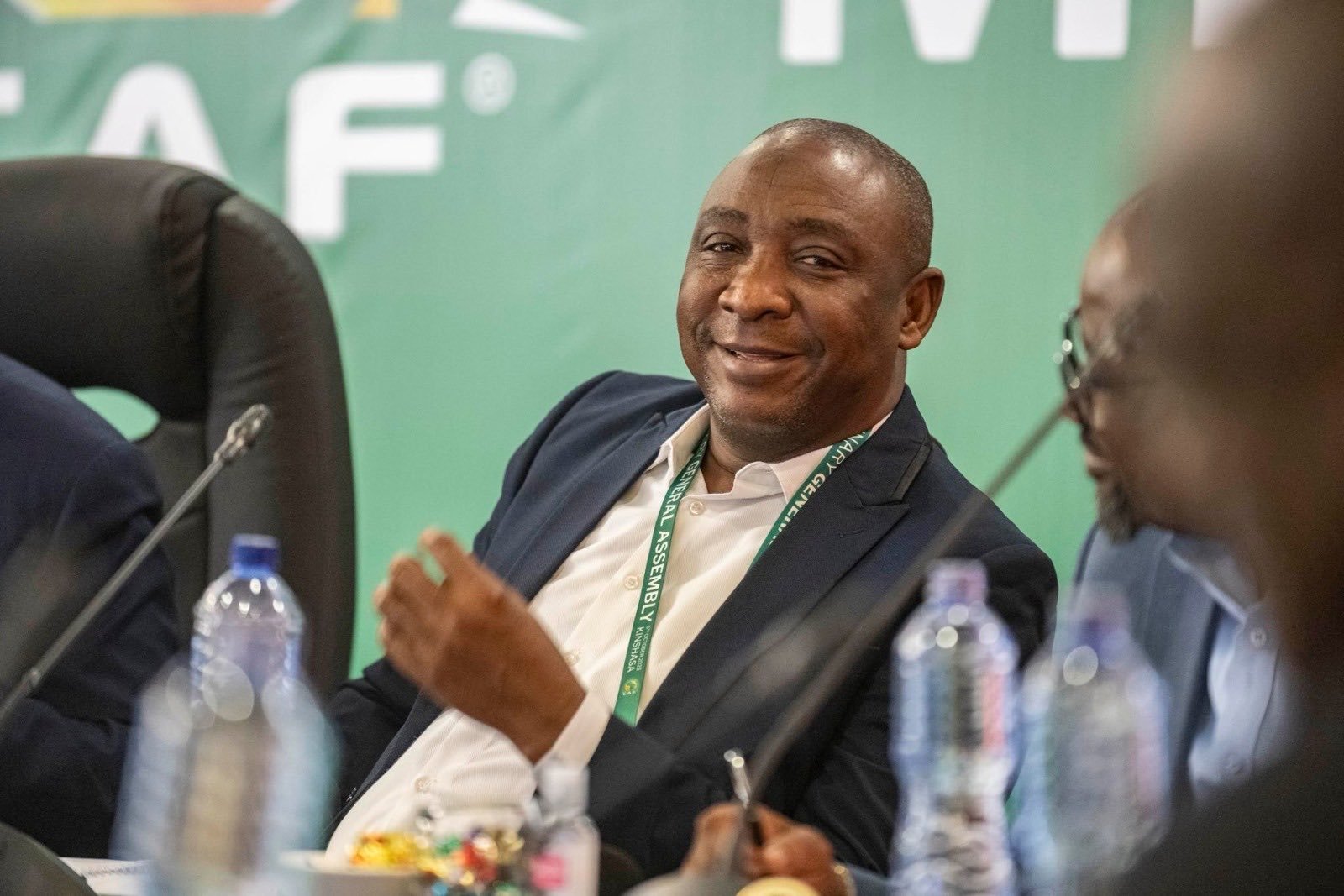
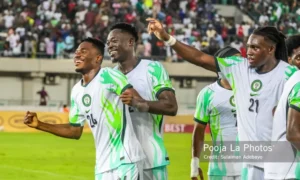
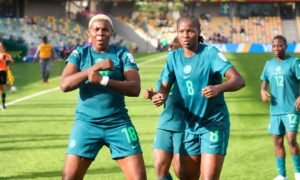
Nigeria Football Federation president Ibrahim Musa Gusau has insisted that he is not under pressure despite growing scrutiny over the country’s recent setbacks across several national teams.
Gusau’s comments come at a difficult moment for Nigerian football, with the Super Eagles having missed the 2026 FIFA World Cup, while the Super Falcons were eliminated from the 2026 Women’s Africa Cup of Nations by Cameroon and subsequently lost their automatic route to the 2027 Women’s World Cup.
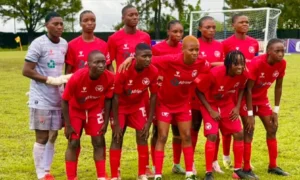
Nigeria’s youth teams have also endured disappointment, with the Flying Eagles missing out on the 2027 U-20 Africa Cup of Nations after their heavy defeat to Burkina Faso in the WAFU B final.
The Golden Eaglets have likewise suffered recent qualification setbacks, adding to concerns about the strength and consistency of Nigeria’s football development system.
Asked about the pressure surrounding the NFF following the string of disappointments, Gusau gave an emphatic response.
“I don’t have any pressure.”
The NFF president maintained that the federation had done its best and expressed confidence that Nigeria would recover from the recent setbacks.
“We know we did our best and we know the guys are doing their best and by the grace of God they will bounce back and we’ll get a cup.”
His comments come as questions over the direction of Nigerian football increasingly extend beyond individual match results and towards the administration of the game.
Nigeria’s recent results have intensified debate among former internationals, administrators and other stakeholders about whether the country’s football structure is delivering enough from the enormous pool of talent available.
The Super Eagles’ failure to qualify for the 2026 World Cup was followed by the Falcons’ quarterfinal exit at the WAFCON and the Flying Eagles’ failure to secure a place at the next U-20 AFCON.
The sequence has prompted renewed calls for deeper reforms rather than simply changing coaches whenever a national team fails to meet expectations.
Former Super Eagles captain Segun Odegbami has gone as far as calling for a temporary suspension of the NFF’s 2026 elections, arguing that the federation’s leadership and electoral structure require serious examination.
The NFF elective congress is currently scheduled for September 27 in Lafia, Nasarawa State, meaning the latest football setbacks have arrived just weeks before Nigerian football stakeholders are expected to decide who will lead the federation into the next four-year cycle.
Not everyone agrees that the elections should be suspended. some stakeholders have argued that while electoral reform may be necessary, stopping the process is not the answer and that any fundamental changes to the structure of the NFF Congress would require broader institutional intervention.
THE Pressure extends beyond the senior teams
The scrutiny facing the federation is also being driven by concerns over the wider football pathway.
Nigeria’s historic dominance at youth level has suffered a number of setbacks, with the Golden Eaglets missing successive U-17 AFCON tournaments and the Flying Eagles now out of the qualification pathway for the 2027 U-20 World Cup.
Those failures have raised questions about whether Nigeria is developing a sustainable system or relying too heavily on short term preparation ahead of individual competitions.
At the same time, there are areas providing some encouragement. The Falconets have qualified for the 2026 FIFA U-20 Women’s World Cup, maintaining Nigeria’s remarkable record of appearing at every edition of the competition, while the Flamingos have also secured qualification for the U-17 Women’s World Cup.
The domestic game is also receiving increased financial attention, with the 2026/27 NPFL champions set to receive at least ₦1 billion under a new prize-money arrangement.
With the NFF elections approaching, the debate is no longer simply about whether Nigeria’s national teams have underperformed at recent tournaments. It is increasingly about what the federation has achieved during the current leadership cycle and what should change going forward.
Critics point to repeated qualification failures, player welfare disputes, coaching instability and weaknesses in youth development as evidence that the system requires significant reform.
Others argue that Nigerian football’s problems are too complex to be placed entirely at the door of the federation and that progress in areas such as women’s youth football, coaching development and the domestic league should also be recognized.