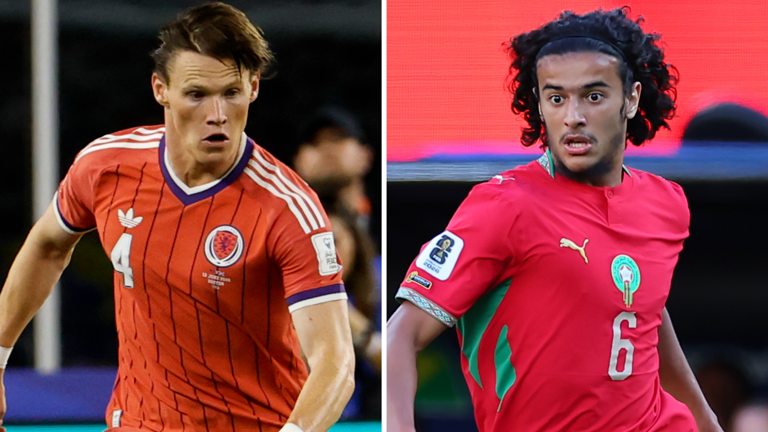
Gillette Stadium in Foxborough, Massachusetts hosts one of the most intriguing matches of the second round of fixtures at the 2026 FIFA World Cup on Friday, June 19, with kick-off scheduled for 11pm Nigerian time. Scotland arrive at the top of Group C after edging Haiti in their opener, while Morocco come into the contest buoyed by an impressive draw against Brazil that reinforced their growing reputation as one of the tournament’s most dangerous outsiders.
Why this match matters
Scotland know victory could secure qualification for the knockout stage before they face Brazil in their final group fixture. For a nation that has never progressed beyond the first round of a major tournament, the opportunity to rewrite history is now within touching distance.
Morocco’s position is different but no less important. The Atlas Lions cannot mathematically secure qualification with a win, but three points would place them in a commanding position heading into their final match against Haiti and could leave them on course to top the group.
The winner will take a giant step toward the round of 32. The loser could face a nervy final day with everything still hanging in the balance.
Current form
Results suggest both teams arrive in strong condition, though the manner of their opening performances told very different stories.
Scotland’s return to the World Cup after a 28-year absence produced a winning start as John McGinn’s first-half strike earned a 1-0 victory over Haiti. The result was all that mattered, but the performance generated mixed reviews. Steve Clarke’s side managed only two shots on target and spent long periods protecting their lead against opponents many expected them to beat more comfortably.
The Tartan Army will counter that argument by pointing to a broader picture. Scotland have won eight of their last 11 competitive matches and have developed a habit of grinding out results under Clarke, even when performances have fallen short of expectations.
Morocco arguably made the stronger statement on matchday one. Mohamed Ouahbi’s side matched Brazil for long spells and emerged with a deserved 1-1 draw after Ismael Saibari’s opener was cancelled out by a moment of brilliance from Vinicius Junior.
Many left that match believing Morocco had looked more likely to win than lose. Given their perfect World Cup qualifying campaign and recent triumphs in African and Arab competitions, the Atlas Lions have quietly assembled one of the most impressive unbeaten runs heading into this tournament.
Historical context
The history between these nations is remarkably brief but memorable.
Their only previous meeting came at the 1998 FIFA World Cup, Scotland’s last appearance on football’s biggest stage before their long absence. Morocco produced a stunning display that day in Saint-Étienne, recording a 3-0 victory that remains their biggest-ever World Cup win.
Nearly three decades later, Scotland have an opportunity to erase those memories.
Morocco, meanwhile, continue to build on a World Cup legacy that has grown significantly in recent years. Their run to the semi-finals in Qatar transformed perceptions of African football and established the Atlas Lions as a team capable of competing with the elite.
Another victory over European opposition would further strengthen that reputation. Morocco have lost only one of their last six World Cup group matches against UEFA nations and could set a new record for the longest unbeaten group-stage run by an African country at the tournament.
Key battle: Scott McTominay and Lewis Ferguson vs Ayyoub Bouaddi and Azzedine Ounahi
The contest may ultimately be decided in midfield. Scotland rely heavily on the energy, physicality and late runs of McTominay, while Ferguson provides composure and balance alongside him. Their ability to disrupt Morocco’s rhythm will be crucial.
Standing opposite them is one of the tournament’s most exciting midfield units.
Bouaddi was exceptional against Brazil, dictating possession and displaying maturity beyond his years, while Ounahi’s movement and technical quality remain central to Morocco’s ability to progress the ball through midfield.
Control of second balls, territory and transitions could determine which side takes command of Group C.
Tactical angle
Ouahbi offered a revealing glimpse into Morocco’s thinking ahead of the match when he highlighted the importance of second balls and controlling possession.
Morocco will seek to dominate the ball through Bouaddi, Ounahi and Bilal El Khannouss, while Achraf Hakimi and Brahim Diaz provide width, creativity and penetration from the right flank. Their fluid movement caused significant problems for Brazil and will test Scotland’s defensive organisation throughout the evening.
Clarke faces an interesting tactical dilemma. His recent shift towards a more adventurous 4-4-2 system delivered victory against Haiti, but Morocco’s technical superiority could tempt him back towards a more conservative structure. A back five would offer greater protection against Hakimi and Diaz, though it may reduce Scotland’s attacking threat.
The balance between caution and ambition could define Scotland’s approach.
Numbers that matter
- Scotland have never won two matches at the same major tournament.
- Morocco defeated Scotland 3-0 in their only previous meeting.
- Scotland managed just two shots on target against Haiti.
- Morocco are unbeaten in five of their last six World Cup group games against European opposition.
- John McGinn has scored 21 goals under Steve Clarke, one away from a national-team record under a single manager.
- Morocco have conceded before half-time only once in their last 25 matches.
- Six of Morocco’s last seven victories have come with clean sheets.
- Achraf Hakimi is level with Asamoah Gyan and François Omam-Biyik on 11 World Cup appearances and could become the most-capped African player in tournament history.
What they’re saying
Morocco coach Mohamed Ouahbi believes Scotland will present a very different challenge from Brazil despite the confidence generated by his side’s opening performance.
“Tomorrow is a different game. Scotland will pose different problems, and we must find the right answers,” he said.
“The physical battle against Scotland will be decided in part by second balls, but the most important thing is our ability to take control of the match.”
The Morocco boss also warned against reducing Scotland’s threat to one individual.
“It is a generous team that is not limited to Scott McTominay. They have several strengths and deserve our full attention.”
READMORE: ‘They can write what they want’ – Broos unfazed by Bafana criticism amid calls for resignation
Final Verdict
This fixture feels like a meeting between a team chasing history and a team attempting to confirm its place among football’s emerging powers.
Scotland possess resilience, organisation and a growing belief under Clarke. Morocco arguably arrive with greater technical quality, stronger momentum and a squad that looked entirely comfortable sharing a field with Brazil.
The challenge for Scotland is proving that their opening victory represented the beginning of something special rather than merely a positive start. The challenge for Morocco is turning potential into authority.
AthleticNG Prediction: Scotland 1-1 Morocco
Scotland’s structure and determination should keep them competitive, but Morocco appear to possess more match-winners across the pitch. If the Atlas Lions reproduce the intensity and technical quality they displayed against Brazil, they may take a decisive step toward the knockout stage.