
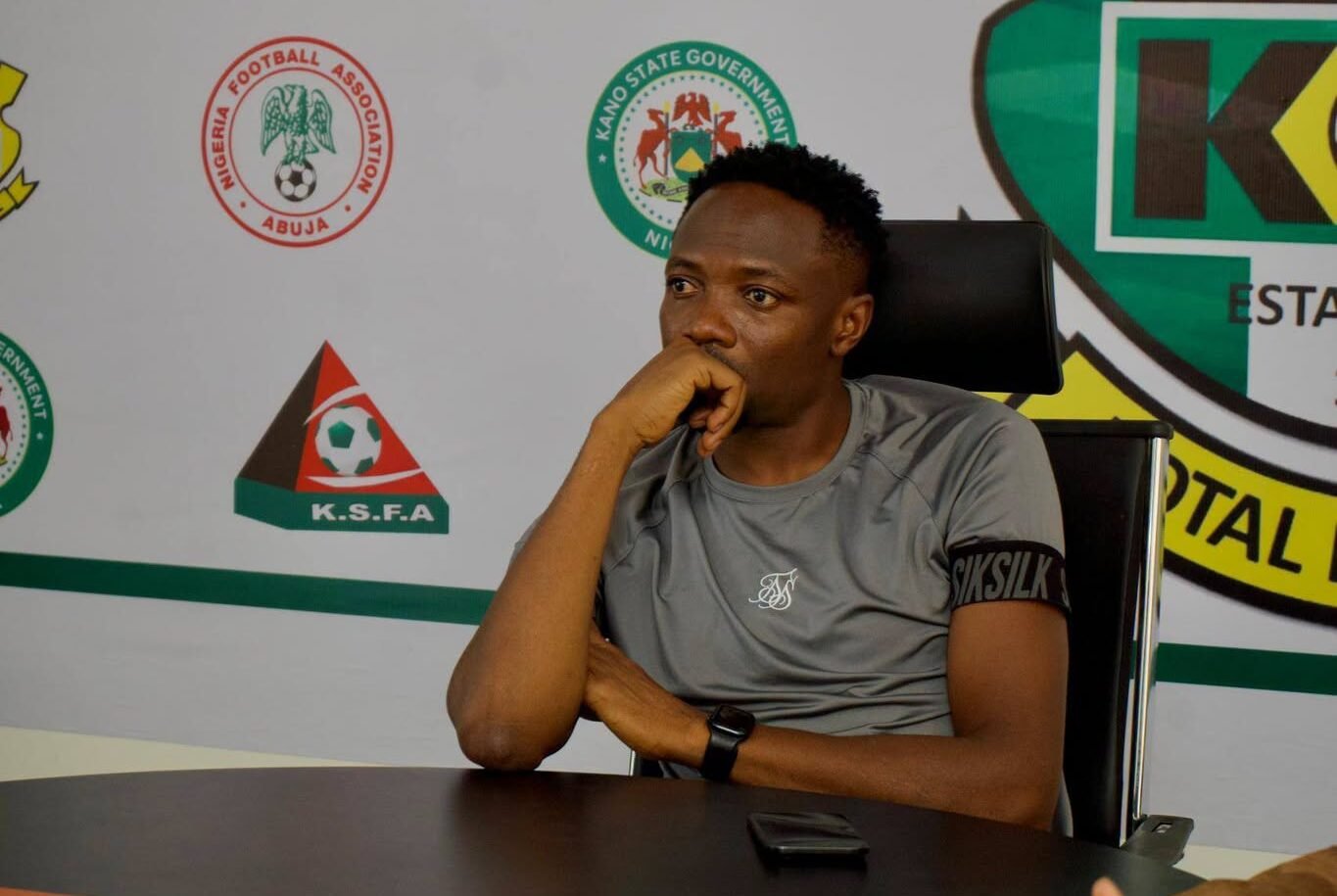
When Kano State Governor Abba Kabir Yusuf appointed Ahmed Musa as General Manager of Kano Pillars on 5 July 2025, it was presented as more than a routine administrative change. It was a homecoming.
The club legend who had risen from Kano Pillars to become one of Nigeria’s most celebrated footballers was returning to help steer one of the country’s biggest clubs back towards domestic and continental relevance. Still an active player, Musa was expected to combine his experience on the pitch with leadership in the boardroom, becoming the face of a new era under a reconstituted management led by Ali Muhammad Umar (Nayara). Eleven months later, that chapter has closed.
Following the appointment of a new management board by the Kano State Government, Musa has relinquished the role of General Manager and will now serve as the club’s Sports Ambassador, while football administrator Ahmad Musbahu Garo assumes leadership as chairman ahead of the 2026/27 Nigeria Premier Football League season.
The government has not stated why the restructuring was made. But Musa’s tenure leaves behind a record that tells the story of a season marked by encouraging commercial progress, administrative ambition and significant sporting and disciplinary challenges.
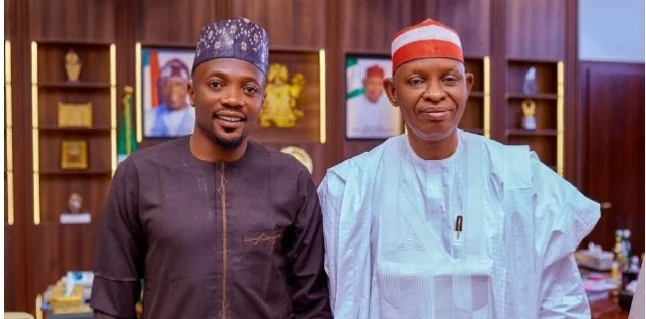
Ahmed Musa and Kano State Governor Abba Kabir Yusuf. Photo credit: Kano Pillars Media
The former Super Eagles captain returned to the club where his professional career began carrying not only his reputation as one of Nigeria’s greatest players but also expectations that his profile would attract investment, improve professionalism and reconnect Kano Pillars with the country’s football elite. Within weeks, those expectations appeared justified.
On 17 July 2025, Kano Pillars announced one of the most significant commercial partnerships in their recent history after signing a ₦100 million sponsorship agreement with Radio France Internationale (RFI) Hausa.
The agreement brought ₦45 million in direct funding alongside kit sponsorship, media support, communications training and improved branding opportunities for the club.
It was the kind of commercial breakthrough many supporters had hoped Musa’s influence could deliver.
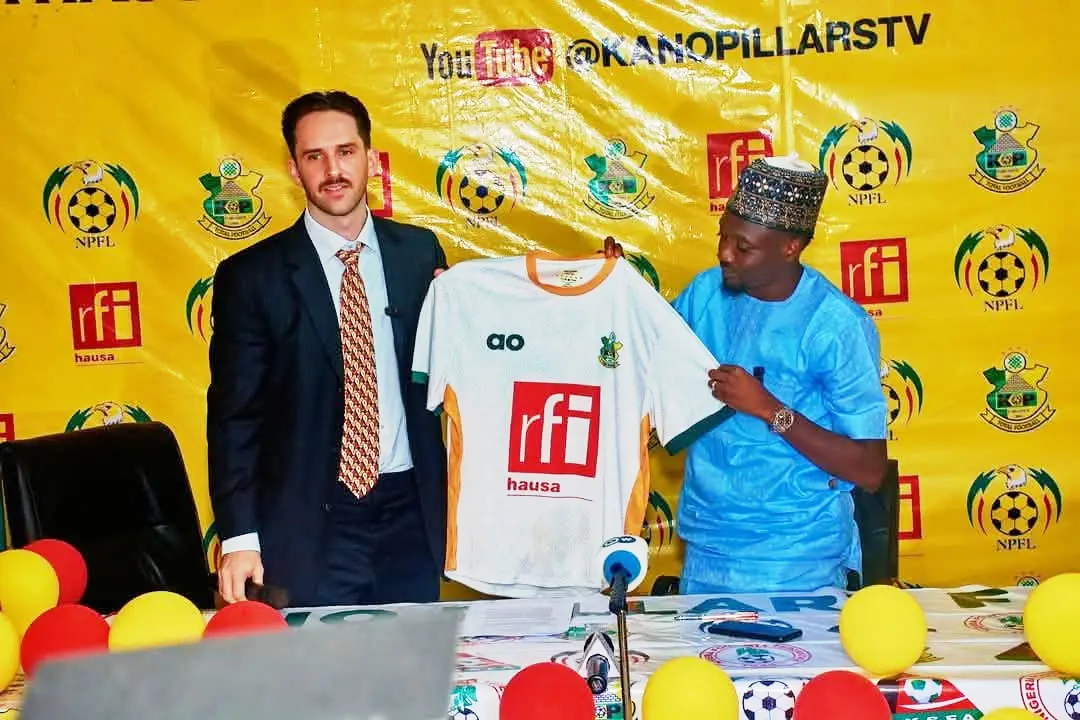
Kano Pillars GM Ahmed Musa and Joseph Penney of RFI. Photo Credit Kano Pillars
Speaking after the agreement was signed, the General Manager described the partnership as “a new dawn” for Kano Pillars, promising greater transparency, progress and excellence.
For a club seeking greater financial sustainability, it represented one of the clearest successes of his administration.
Football begins to overshadow administration
As the season unfolded, however, events on the pitch increasingly shaped perceptions of Musa’s leadership.
Results failed to match expectations for a club accustomed to competing among the country’s strongest sides.
The pressure intensified after Kano Pillars collected only two wins, two draws and four defeats from their opening eight league matches.
The disappointing run prompted the suspension of Technical Adviser Ogenyi Evans and Chief Coach Ahmed Garba Yaro Yaro following a derby defeat to newly promoted Barau.
Within days, the club turned to Mohammed Babaganaru for a third spell in charge, hoping the experienced coach could stabilise the campaign.
The swift managerial change reflected the growing urgency surrounding a season that was already threatening to drift away.
Violence that changed the conversation
Following Kano Pillars’ league draw against Shooting Stars on 12 October 2025, supporters invaded the pitch, with players and officials becoming targets in scenes widely condemned across Nigerian football.
The incident quickly became one of the defining moments of Musa’s tenure.
The General Manager responded with an emotional public apology, describing the violence as “heartbreaking, shameful and completely unacceptable.”
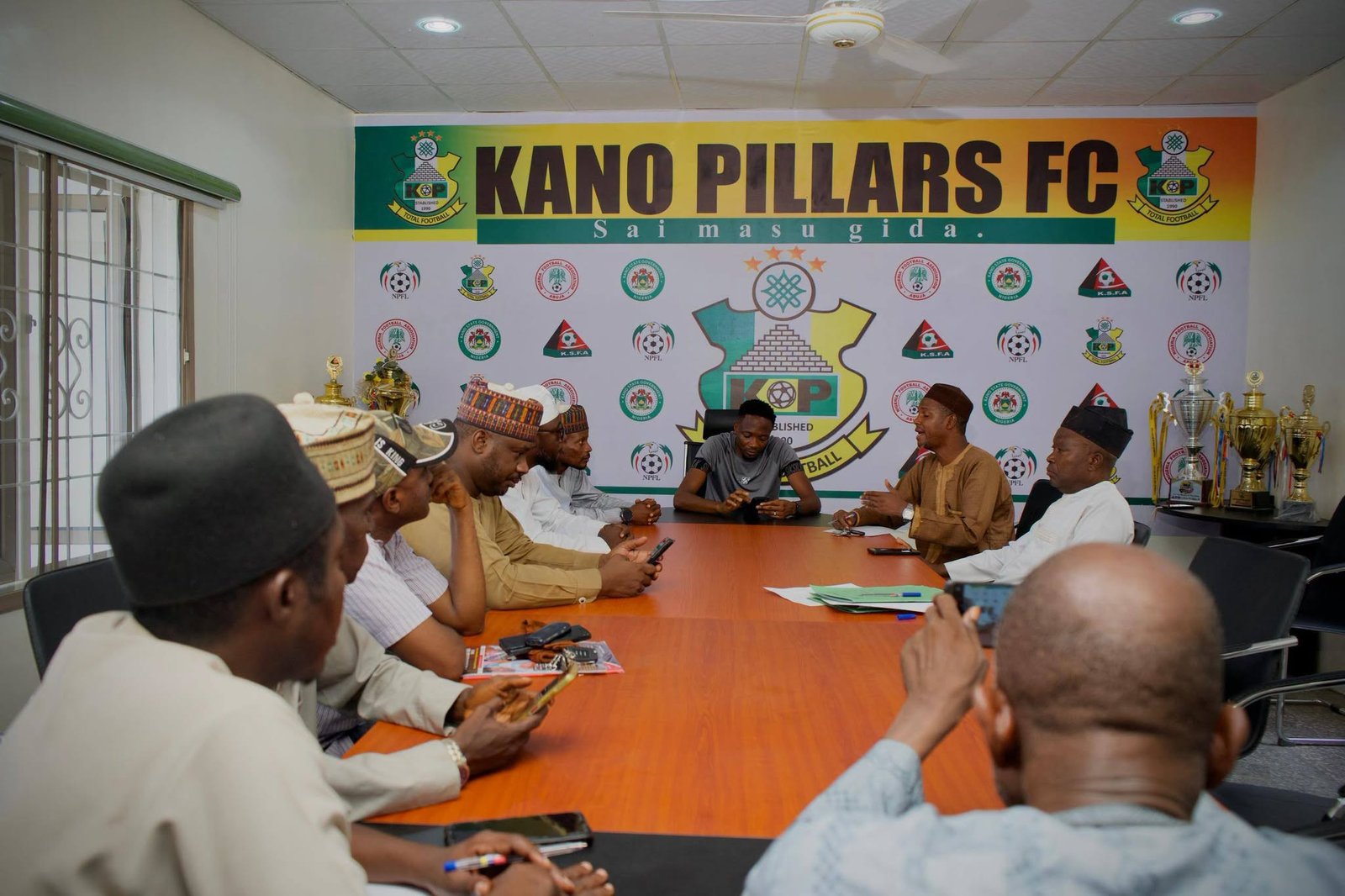
He accepted responsibility on behalf of the club, apologised to Shooting Stars, match officials, the NPFL and football supporters across the country, while promising those responsible would face consequences.
The club also pledged lifetime-style sporting sanctions of its own, announcing plans to ban identified offenders from entering the Sani Abacha Stadium for the next ten seasons. Despite those assurances, league authorities acted decisively.
Heavy sanctions and lasting consequences
The NPFL found Kano Pillars guilty of multiple breaches relating to security failures, supporter misconduct and assaults on players and officials.
The club received fines totaling ₦9.5 million, suffered a three-point deduction and a three-goal deduction, while the Sani Abacha Stadium was closed indefinitely until adequate security measures could be guaranteed.
For a club already battling inconsistent form, the sanctions represented both a sporting and reputational setback. Yet the disciplinary problems did not end there.
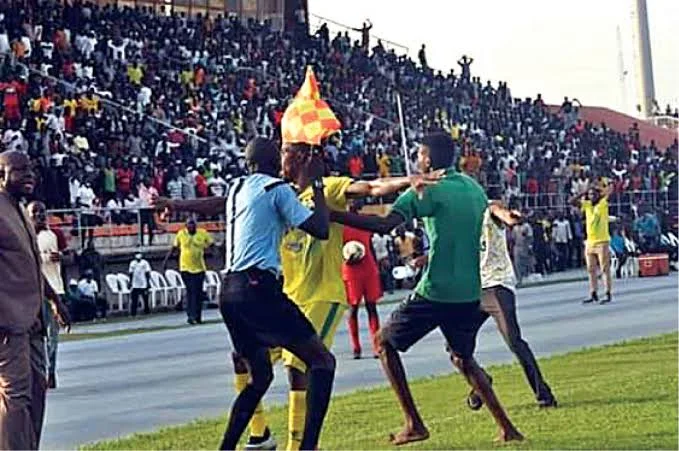
When supporters invaded the pitch and attacked match officials, Shooting Stars players, and threw objects onto the pitch. Photo credit: Kano Pillars Media
In April 2026, Kano Pillars again faced league punishment after further crowd trouble during a home fixture against Rivers United.
This time, the club was fined another ₦14 million and ordered to play three home matches behind closed doors after supporters again breached security protocols and harassed match officials.
The repeat offence inevitably raised difficult questions about crowd management and whether enough had been done after the first incident to prevent history from repeating itself.
Survival instead of success
By the end of the campaign, Kano Pillars’ ambitions had changed dramatically. Rather than competing for continental qualification, the club spent much of the season looking over its shoulder in the relegation battle.
The campaign ultimately ended with a 15th-place finish on 48 points, leaving the former league champions only one point above the relegation zone, merely surviving represented a disappointing outcome.
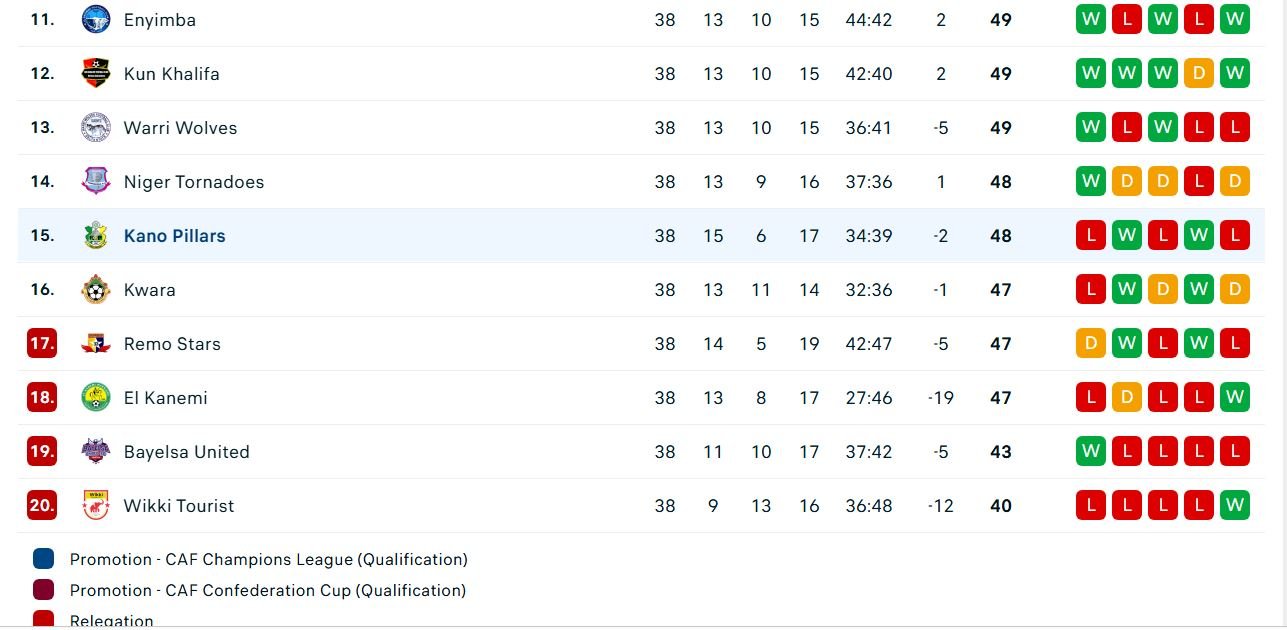
Kano Pillars 2025/26 NPFL final league finish. Photo credit: Flashscore
Assessing Musa’s tenure requires acknowledging both sides of the ledger. Commercially, his administration delivered tangible progress.
The RFI Hausa partnership demonstrated an ability to attract investment and strengthen the club’s commercial profile. His public handling of the October violence, including accepting responsibility and engaging openly with supporters and stakeholders, also reflected a willingness to confront difficult moments rather than avoid them.
Sportingly, however, the picture proved less encouraging.
A difficult league campaign, coaching instability, repeated crowd violence, significant financial penalties, stadium sanctions and a season spent battling relegation overshadowed many of the administration’s positive initiatives.
Whether those developments directly influenced the government’s decision to restructure the club has not been officially stated.
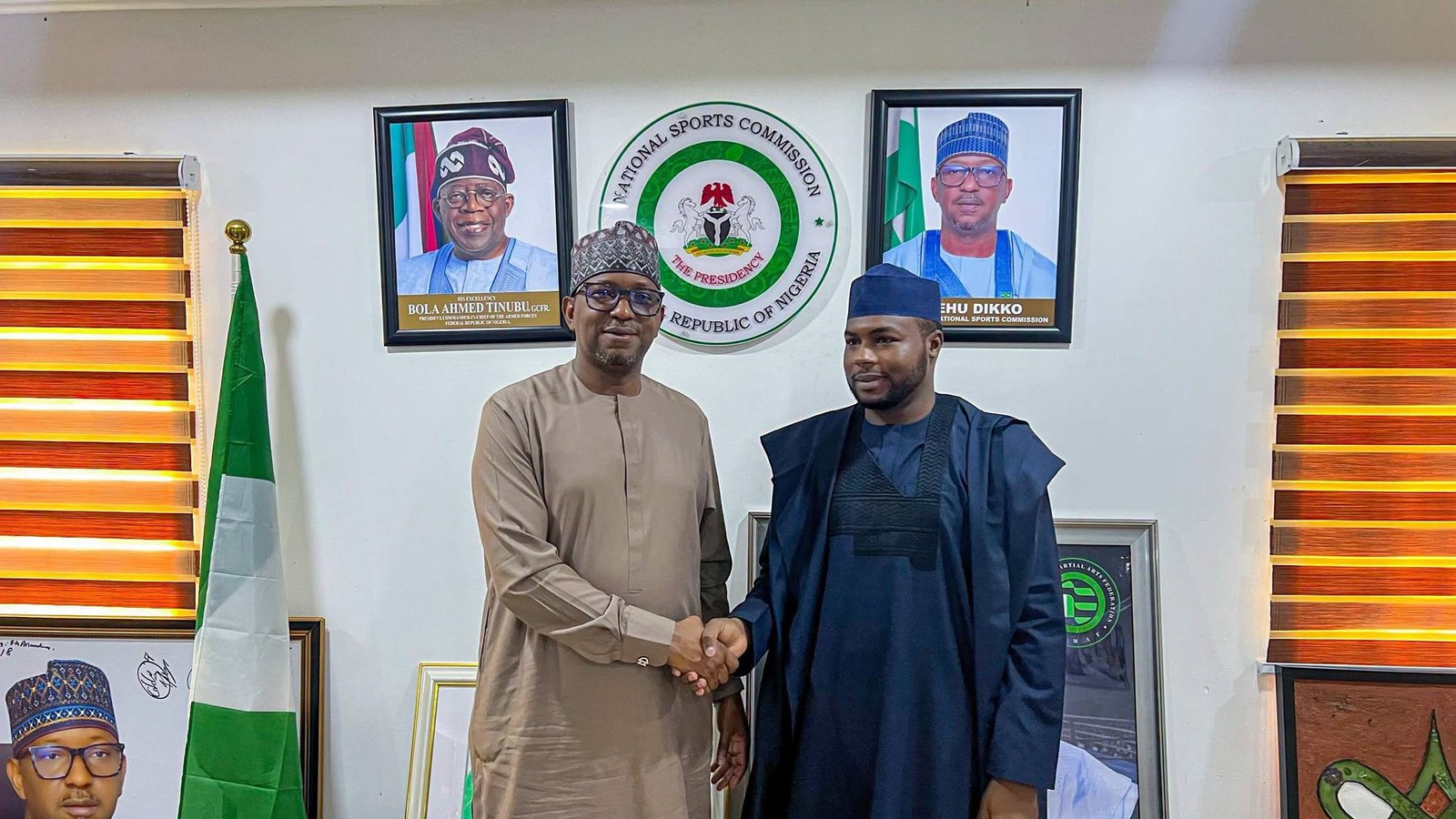
Newly appointed Kano Pillars chairman Ahmad Musbahu Garo has met National Sports Commission chairman Shehu Dikko in Abuja, seeking support as he begins efforts to reposition the club. Photo credit: Kano Pillars Media on FB
What is clear is that Kano Pillars have opted for a different leadership model ahead of the new season, appointing experienced football administrator Ahmad Musbahu Garo as chairman while retaining Musa in the newly assigned role of Sports Ambassador.
The decision ensures one of the club’s greatest players remains part of Kano Pillars’ future, even as responsibility for its day-to-day leadership passes into new hands.
Musa’s 11 months as General Manager will therefore be remembered not as a story of outright success or failure, but as one of high expectations, meaningful commercial progress, difficult lessons and a turbulent campaign that ultimately convinced Kano Pillars to begin another new chapter.



























Pingback: 'Analyze everything' – Hervé Renard calls for full review of Tunisian football - The Athletic NG
Pingback: Senegal demolish 10-man Iraq to keep World Cup dream alive with record-breaking victory - The Athletic NG
Pingback: Former Bayelsa United star completes Rivers United move on one-year deal - The Athletic NG