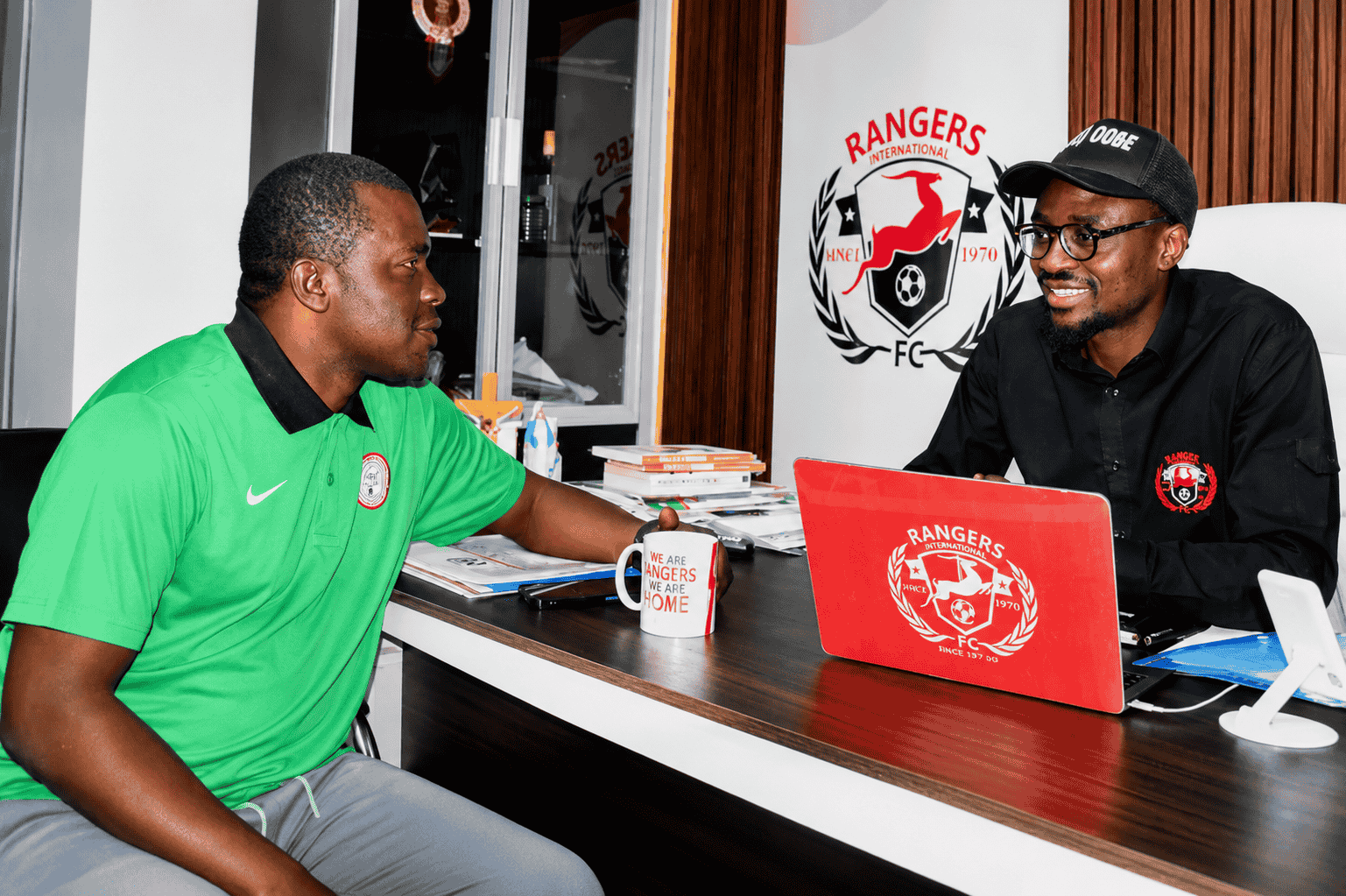
When Rangers International announced that Fidelis Ilechukwu had signed a new one-year contract extension, the immediate reaction across Enugu was relief.
For weeks, rumors had followed the coach wherever he went. Some linked him with jobs elsewhere in the Nigeria Premier Football League. Others suggested that his growing profile as a Super Eagles assistant coach could eventually take him away from the Flying Antelopes. The announcement appeared to settle the uncertainty, at least for now.
Yet beneath the celebrations sits a question that refuses to disappear: Why is the most successful coach in the NPFL over the last three seasons still being handed only one-year extensions?
This latest renewal means Ilechukwu will remain at Rangers until 2027. On the surface, that sounds like stability. Dig a little deeper, however, and a different picture emerges.
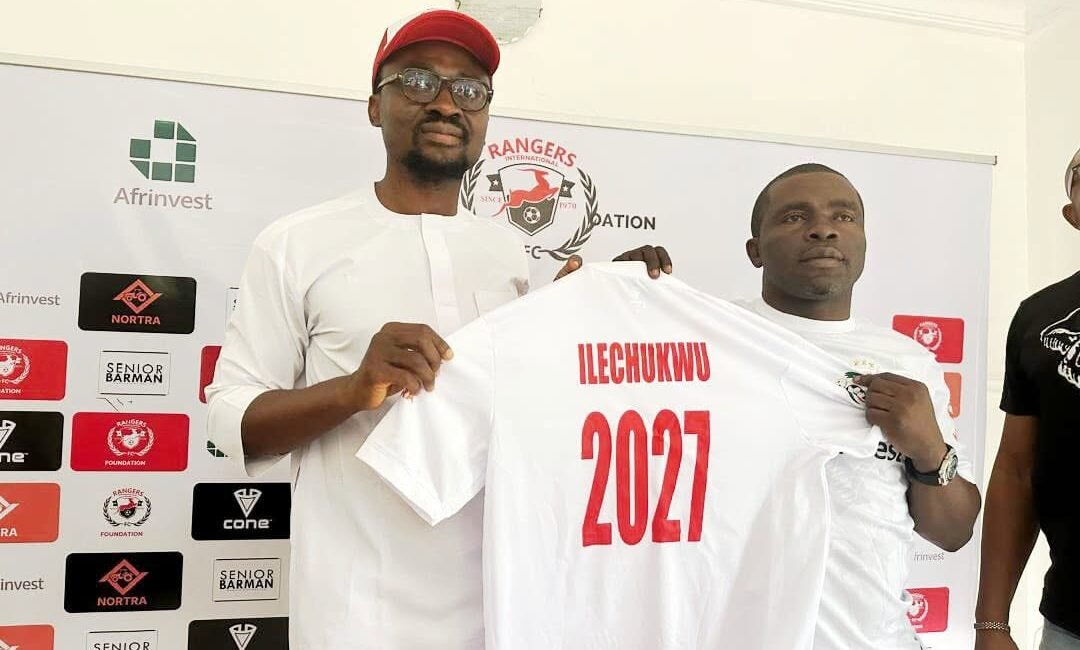
Rangers International announced that Technical Adviser Fidelis Ilechukwu has signed a new improved one-year contract extension that will keep him at the Enugu club until 2027.
This is now the second consecutive one-year extension he has signed. Rangers extended his deal in 2025 following a title-winning debut campaign. Twelve months later, after delivering yet another league crown, the arrangement has been repeated.
For a coach through the backing of his excellent general manager, has transformed Rangers from an inconsistent side into champions twice in three seasons, many would have expected something more ambitious.
After all, Rangers did not merely hire a coach in July 2023 when Abdul Maikaba departed. They recruited one of the most respected football minds in the country.
The former MFM, Heartland and Plateau United manager arrived with a reputation for organization, player development and overachievement. What followed exceeded even optimistic expectations.
In his first season, Rangers won the NPFL title. Two years later, they won it again. Across Nigerian football, there are few stronger managerial résumés in the modern era which is why the latest contract extension raises as many questions as it answers.
READMORE: Ilechukwu speaks on expectations, government funding and Rangers’ continental ambitions
Why have Rangers repeatedly stopped at one-year extensions?
Football administration in Nigeria rarely operates with the long-term certainty seen elsewhere. Government priorities change. Budgets fluctuate and club leadership can shift unexpectedly in that environment; shorter contracts offer flexibility. Yet that explanation feels incomplete.
The Rangers of today are not the Rangers of a few years ago. Under General Manager Amobi Ezeaku, the club has repeatedly spoken about structure, sustainability and long-term planning. A four-year strategic plan has guided decision making since 2023. Significant investments have been made in youth football, Women football infrastructure, sponsorship acquisition and international partnerships.
This is a club that constantly speaks about the future which makes the short-term nature of Ilechukwu’s deal stand out even more.
If Rangers genuinely believe the coach remains central to their project, then many supporters will understandably wonder why the commitment stops at 2027 rather than extending further into the future.
A longer contract would not merely secure a successful manager. It would send a message that the club sees him as a cornerstone of the institution it is trying to build. Instead, Rangers have once again chosen a path that leaves the conversation open.
Has Ilechukwu already earned the long-term security his achievements deserve?
Few coaches in modern Nigerian football can point to a body of work that compares favorably with what Fidelis Ilechukwu has achieved over the past decade. Long before he arrived in Enugu, he had already established himself as one of the country’s most respected managers through impressive spells at MFM, Heartland and Plateau United, earning a reputation for building competitive teams, developing players and succeeding under challenging conditions.
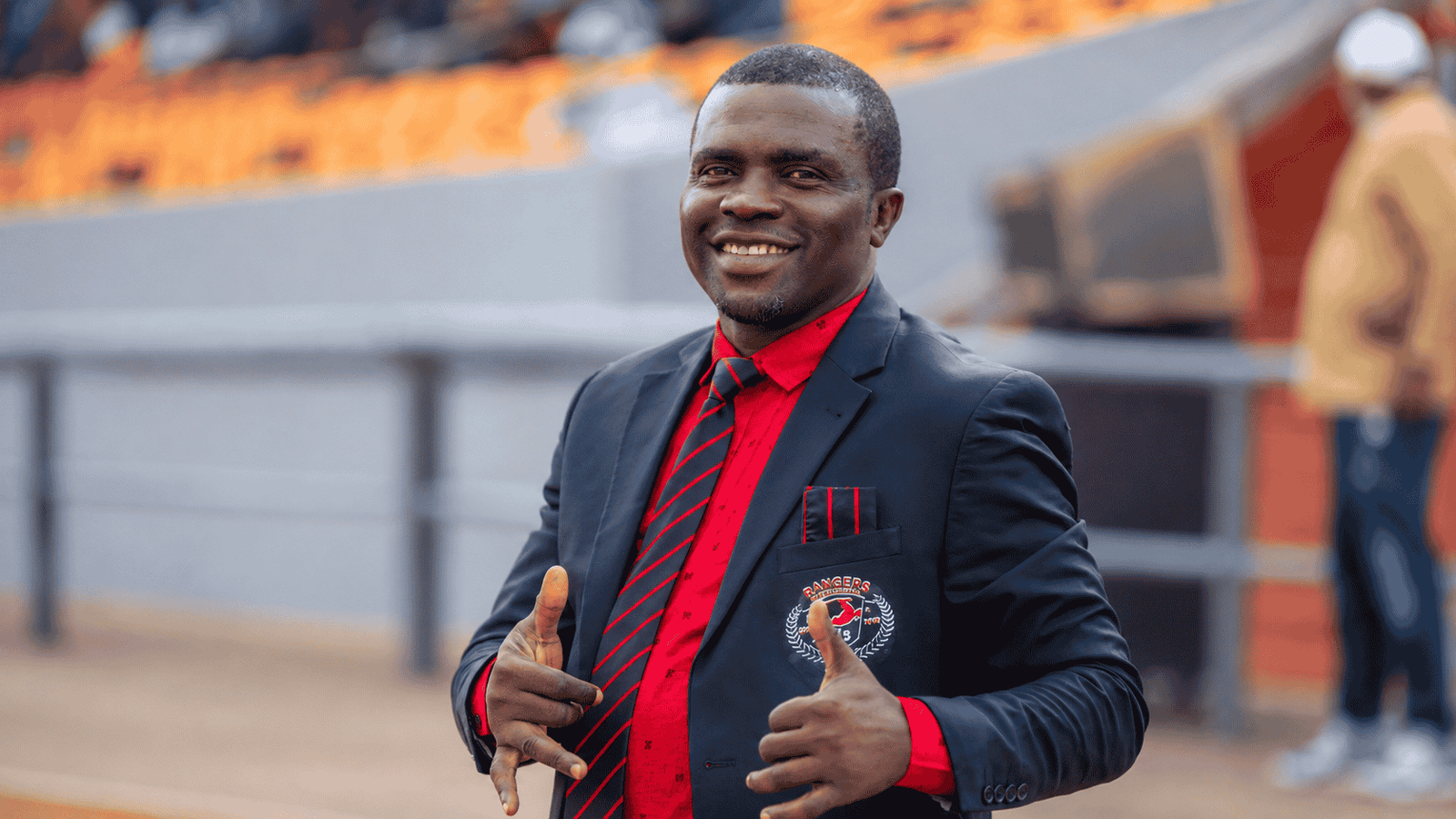
Enugu Rangers technical manager Fidelis Ilechukwu
His appointment by Rangers in July 2023 was therefore viewed as an ambitious statement by a club desperate to reconnect with its glorious past. What followed arguably exceeded even the expectations of those who championed his arrival. In his very first season, Ilechukwu guided Rangers to the NPFL title, ending years of frustration and restoring belief among supporters. Rather than allowing that success to become a one-off achievement, he followed it up by delivering another league crown, further strengthening his position among the elite coaches of his generation.
What makes those achievements particularly significant is the environment in which they were accomplished. Rangers remain one of the biggest names in Nigerian football, but they do not operate with unlimited resources, nor do they possess the financial muscle enjoyed by some clubs across the continent. Much of their recent success has been built upon intelligent recruitment, strong organization, effective player management and a clear footballing identity built by Amobi Ezeaku. Those qualities have become synonymous with Ilechukwu’s coaching philosophy and are visible throughout the current Rangers structure.
READMORE: Why Ilechukwu stayed: Rangers boss reveals transfer plans after signing new deal
His contribution has also extended well beyond results on the pitch. Across numerous interviews since arriving in Enugu, Ilechukwu has consistently spoken about foundations rather than short-term victories, often placing greater emphasis on structures, youth development and sustainability than on trophies alone. His vision for Rangers has repeatedly centered on creating pathways for young players, establishing systems that can survive beyond individual personalities and ensuring that future generations inherit a stronger institution than the one that exists today.
When viewed through that broader lens, the debate surrounding his contract becomes even more compelling. This is no longer simply a coach who has delivered silverware. It is a coach who has helped shape the direction of the club itself. For that reason, there is a legitimate argument that Ilechukwu has already earned the kind of long-term commitment usually reserved for managers regarded as transformative figures within an institution’s history.
Is the one-year arrangement protecting Rangers, protecting Ilechukwu, or both?

The most intriguing aspect of the latest contract extension is that neither side appears dissatisfied with the arrangement. There has been no public disagreement over terms, no visible tension during negotiations and no indication that either Rangers or Ilechukwu feels short-changed by the outcome.
Instead, both parties appear comfortable with an agreement that, from the outside, feels surprisingly short-term given the success they have enjoyed together.
That reality invites another interpretation of the situation. Rather than viewing the one-year extension as evidence of hesitation from either side, it may instead represent a level of flexibility that suits both parties at this stage of the project.
Throughout his managerial career, Ilechukwu has repeatedly demonstrated that financial considerations are rarely the primary factor influencing his decisions. When he accepted the Rangers job in 2023, he openly admitted that more lucrative opportunities existed elsewhere. His decision was driven by his belief in the club’s direction and by the people leading it. A similar pattern emerged when Plateau United attempted to lure him back to Jos with enticing project and reported crazy offers. Despite his history with the club and the attraction of returning to familiar surroundings, he once again chose continuity over convenience.
What stands out when listening to Ilechukwu discuss his career is the consistency of the themes he returns to. He speaks frequently about trust, leadership, structure and long-term vision. He talks about foundations, institutional growth and creating something that can endure. Contract duration, by contrast, rarely appears among his priorities.

Amobi Ezeaku and Technical coach Fidelis Ilechukwu
There are also clues that the coach remains conscious of his own personal development beyond immediate football ambitions. Earlier this year, he spoke candidly about his desire to pursue further education and eventually take time away to broaden his professional horizons. Those comments suggested a man who continues to think beyond the next contract cycle and who remains open to personal growth whenever the appropriate moment arrives.
READMORE: NPFL champions Rangers handed land certificates in fulfilment of governor’s pledge
Viewed from that perspective, the latest agreement begins to make more sense. Rangers retain the services of their most successful coach, while Ilechukwu preserves the flexibility to reassess his future when the current phase of the project reaches its natural conclusion. The arrangement may not provide the long-term certainty that supporters crave, but it could well represent a compromise that both sides consider practical and beneficial.
How important is the Amobi Ezeaku factor in this story?
If there is one thread that runs consistently through every discussion about Ilechukwu’s future at Rangers, it is the influence of General Manager Amobi Ezeaku. While contract figures, performance targets and competitive ambitions naturally form part of the conversation, the relationship between the two men appears to have become one of the defining pillars of the club’s recent progress.
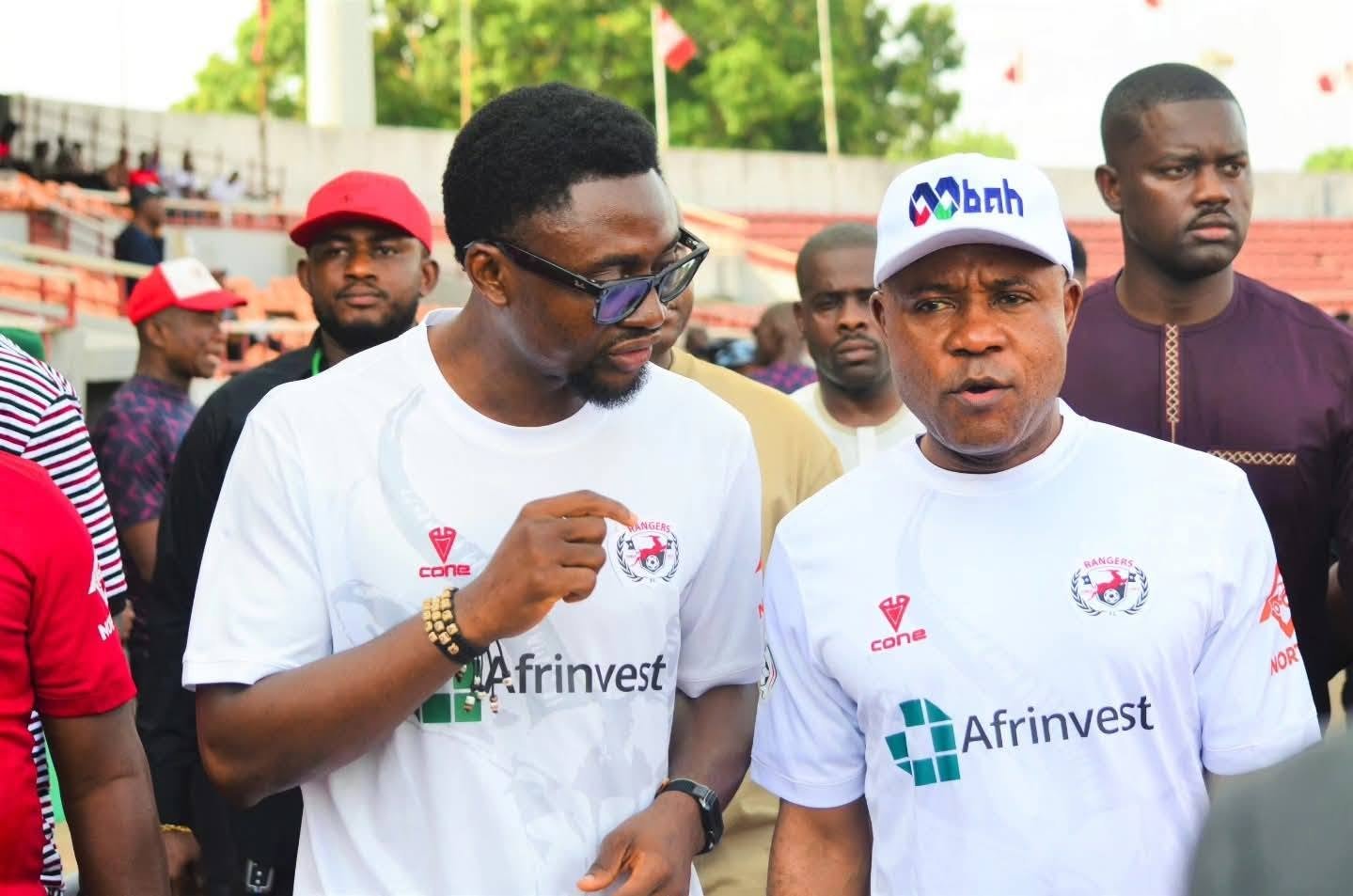
Enugu Rangers GM Amobi Ezeaku and Enugu state governor Peter Mbah
Perhaps the clearest indication of that connection came from Ezeaku himself while reflecting on a previous contract renewal. According to the Rangers chief executive, Ilechukwu’s first concern was not related to salary, bonuses or improved terms. Instead, he asked a simple question: “Boss, are you staying?”
Those four words offer a remarkable insight into how the coach views his future. They suggest that his commitment to Rangers is closely linked to the broader vision being pursued by the club’s leadership and to the trust he has developed in the people responsible for implementing that vision.
The evidence supporting that interpretation can be found in several of Ilechukwu’s own public comments. When explaining why he rejected an approach from Plateau United, he repeatedly praised Ezeaku’s leadership and spoke passionately about the foundations currently being established at Rangers. His focus was not on immediate success or short-term achievements. Instead, he emphasized continuity, institutional growth and the importance of leaving behind structures capable of surviving long after individual personalities have moved on.
Over time, the relationship between coach and general manager appears to have evolved into something that extends beyond a conventional professional arrangement. There is a shared philosophy regarding player development, recruitment and long-term planning. There is a common belief in where Rangers should be heading as an institution. Most importantly, there appears to be a level of trust that has allowed both men to navigate difficult periods without publicly questioning each other’s commitment to the project.
That reality may ultimately explain more about Ilechukwu’s decision-making than any contractual detail ever could. As long as he remains convinced that the Rangers project is moving in the right direction under the current leadership, the attraction of staying may continue to outweigh opportunities elsewhere.
What happens if the architect of the project eventually leaves?
Every successful football project eventually reaches a moment when attention shifts from what has been built to whether it can survive without the people who built it. Rangers may not have reached that point yet, but the question is no longer hypothetical enough to ignore.

Enugu Rangers’ GM Barr Amobi Ezeaku
Much of the conversation surrounding Fidelis Ilechukwu’s future naturally centers on the coach himself, yet there is another figure whose long-term future could prove equally significant to the direction of the club. Over the past three years, Amobi Ezeaku has emerged as one of the most influential administrators in Nigerian football, overseeing a period of transformation that has extended far beyond results on the pitch.
Under his leadership, Rangers have pursued a modernization agenda rarely associated with government owned clubs. New sponsorship agreements have been secured, international partnerships have been established, youth development structures have expanded, and a deliberate effort has been made to reduce dependence on government funding through alternative revenue streams. The club has spoken openly about strategic planning, sustainability and long-term institutional growth, language that until recently was rarely heard within Nigerian football administration.
READMORE: “We were thinking they will slip up in Bayelsa” – Finidi George reveals Rivers United’s hope during Rangers’ title charge
Those achievements have not gone unnoticed. Within football circles, Ezeaku’s profile has grown considerably, with many viewing him as part of a new generation of administrators attempting to redefine what is possible within the domestic game. Ambitious and innovative administrators tend to attract opportunities, and while there is currently no indication that Ezeaku is preparing to leave Rangers, it would be naïve to assume that his work will not continue attracting attention beyond Enugu.
That possibility raises an uncomfortable but important question. If Rangers have spent the last three years building a project around a particular vision, can that vision remain entirely unchanged if the man driving much of it eventually moves on? More importantly, what effect might such a departure have on a coach who has repeatedly cited trust, leadership and institutional direction as key reasons for remaining at the club?
The answers remain unknown today. Yet the further Rangers progress under the current leadership structure, the more relevant those questions may become.
Could Rangers face the prospect of losing both Ezeaku and Ilechukwu?
At first glance, the suggestion sounds dramatic. Rangers have just secured another contract extension from their title-winning coach, while the club’s leadership continues to publicly project stability and confidence. There is no evidence of internal unrest, no visible fractures within the organization and no indication that either Fidelis Ilechukwu or Amobi Ezeaku is actively seeking an exit.
Yet football history repeatedly shows that successful partnerships rarely remain static forever.
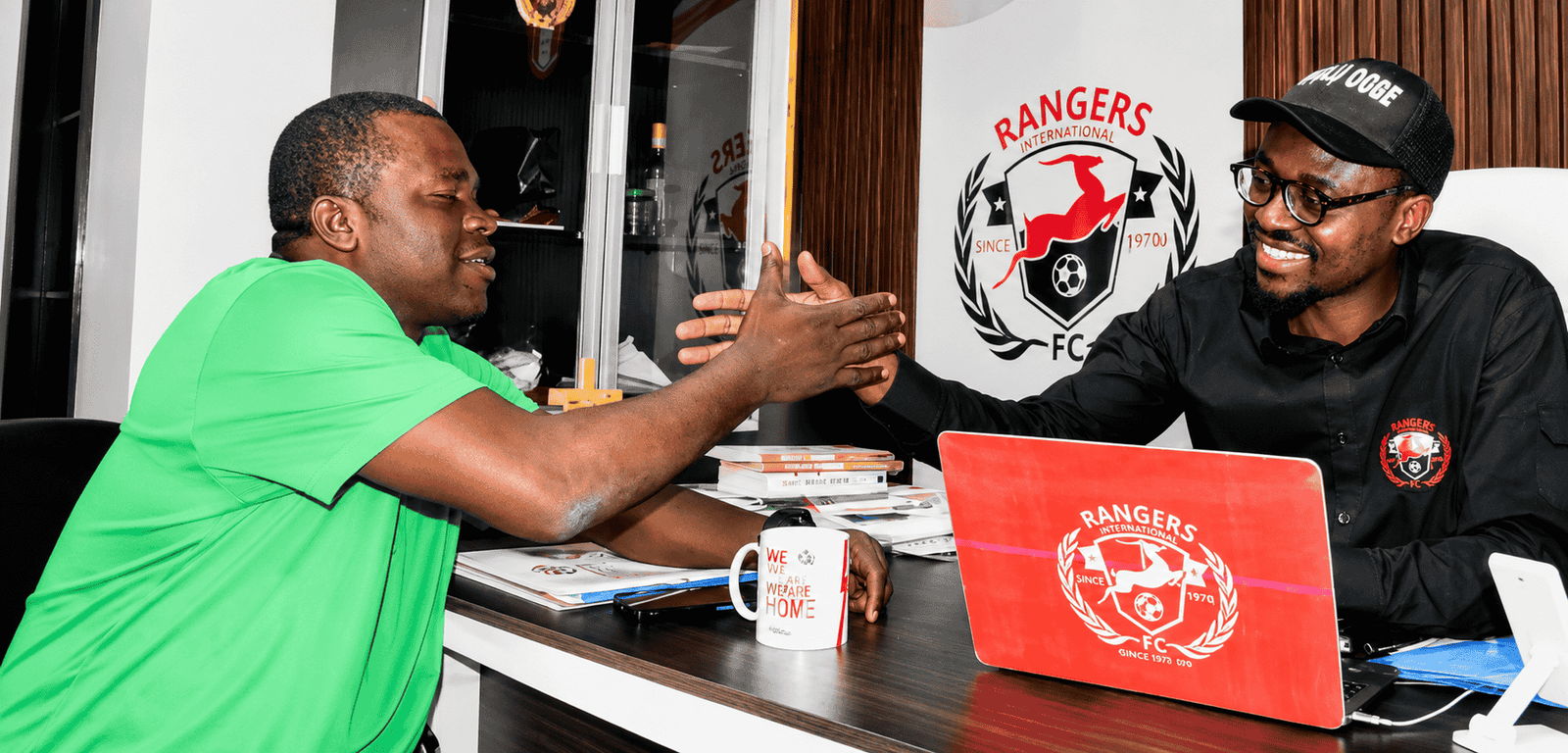
Enugu Rangers Barr Amobi Ezeaku and Technical Manager Fidelis Ilechukwu
One of the unintended consequences of sustained success is increased visibility. The stronger Rangers become, the more valuable the individuals responsible for that success become. In Ilechukwu’s case, continued domestic achievements and his growing role within the Super Eagles setup only enhance his reputation. In Ezeaku’s case, the club’s institutional progress continues to strengthen his standing as one of the country’s most progressive football executives.
What makes the situation particularly fascinating is how closely their stories have become intertwined since 2023. While Ilechukwu has overseen football matters on the pitch, Ezeaku has managed the broader transformation taking place behind the scenes. Together, they have helped deliver league titles, restore credibility to the Rangers brand and establish a clearer long-term identity for the club.
The relationship appears to extend beyond a standard employer-employee dynamic. Numerous comments from both men suggest a level of mutual trust and shared vision that has become central to Rangers’ recent resurgence. It is therefore reasonable to ask whether the future of one could eventually influence the future of the other.
READMORE: Amobi Ezeaku resigns as NPFL Club Owners Association secretary amid uncertainty over Rangers future
Within Enugu football circles, it is not difficult to find people who believe the partnership itself has become one of the club’s most valuable assets. If that assessment is correct, Rangers may eventually face a challenge that goes beyond replacing a coach or replacing an administrator. They may one day have to replace a partnership that has come to define an era.
Perhaps that possibility explains why the latest contract extension feels less like the conclusion of a long-running story and more like the continuation of one whose final chapter has yet to be written.
Is continental success the final unfinished chapter?
If there is one objective that could ultimately determine how long both Fidelis Ilechukwu and Amobi Ezeaku remain at Rangers, it may be the challenge that now lies beyond Nigeria’s borders because the domestic boxes have largely been ticked.

Enugu Rangers Barr Amobi Ezeaku and Technical Manager Fidelis Ilechukwu celebrating 2024 NPFL triumph.
Since arriving in Enugu in 2023, Ilechukwu has delivered two league titles in three seasons, restoring Rangers to the summit of Nigerian football and re-establishing the club as a genuine force after years of inconsistency. For a coach whose reputation was already built through impressive spells at MFM, Plateau United and Heartland, success at Rangers has elevated him into an even higher category within the Nigerian game.
Yet the coach himself has repeatedly hinted that his attention is now fixed on a different frontier.
During his recent contract extension media session, Ilechukwu spoke extensively about recruitment, squad depth and the demands of continental competition. His comments painted the picture of a manager who understands that winning the NPFL and competing successfully in Africa are entirely different assignments.
He openly admitted that Rangers would require significant reinforcement, particularly in midfield and attack, while stressing the importance of recruiting players capable of coping with the physical, tactical and psychological demands of continental football. He spoke about the possibility of adding as many as ten quality players, revealed that recruitment efforts were already underway and even suggested that Rangers could explore foreign markets such as Ghana and Côte d’Ivoire in search of the right profiles.
Those are not the comments of a coach whose work is complete. They are the comments of a coach already planning the next phase of a project.
READMORE: “Give me three weeks” – Rangers GM breaks silence on future amid family concerns and lucrative offers
The reality is that Rangers’ recent continental campaigns have often ended on the margins. Ilechukwu himself referenced previous experiences where qualification was lost through narrow defeats and away-goal situations. Such disappointments appear to have left a lasting impression on him, and they may explain why he is approaching this next campaign with such urgency.
For Ezeaku, continental progress would represent validation of much of the work that has taken place away from the pitch.
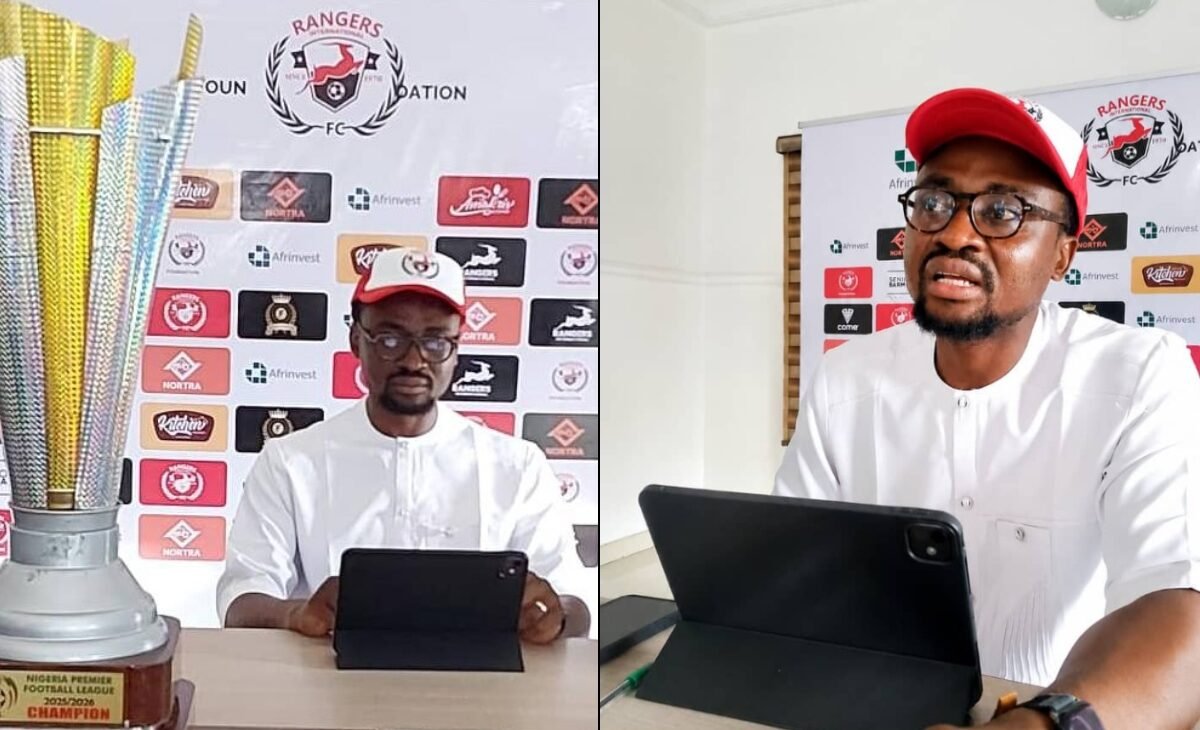
Rangers GM Barr. Amobi Ezeaku. Photocredit: TheAthleticNG
The Rangers general manager has spent the last three years talking about institutional growth, international partnerships, youth development, improved welfare structures and financial sustainability. He has repeatedly emphasised that Rangers should not merely compete domestically but should evolve into a modern football institution capable of standing alongside the continent’s most respected clubs.
A strong CAF Champions League campaign would provide tangible evidence that those ambitions are moving from vision to reality.
Success in Africa would enhance Rangers’ reputation, increase commercial opportunities, attract greater sponsorship interest and further strengthen the club’s position as one of Nigeria’s leading football brands. It would also provide the type of legacy defining achievement that administrators and coaches are remembered for long after they leave office.
Viewed from that perspective, perhaps the timing of this one-year extension begins to make more sense.
READMORE: ‘Challenge us to win it’ – Rangers set CAF Champions League title target after NPFL triumph
Perhaps neither Rangers nor Ilechukwu wanted to commit their entire future to a document when there remains a major chapter still waiting to be written.
The next twelve months may offer answers that neither side possesses today. A deep continental run could strengthen the case for a longer partnership.
A breakthrough season in Africa could create new opportunities for both coach and club. Equally, it could elevate the profiles of Ilechukwu and Ezeaku to levels that make retaining either man even more difficult.
The contract is signed, but the bigger questions remain
Officially, the story appears simple. Fidelis Ilechukwu has signed a new one-year contract extension and will remain Rangers Technical Adviser until 2027. the headlines celebrate continuity, stability and another show of faith in a coach who has delivered unprecedented success since arriving at the Cathedral.
Beneath the surface, however, the extension raises almost as many questions as it answers could solve.
It rewards achievement yet short of offering the long-term security many supporters expected. It keeps Rangers together for another season yet leaves the future beyond 2027 largely undefined.
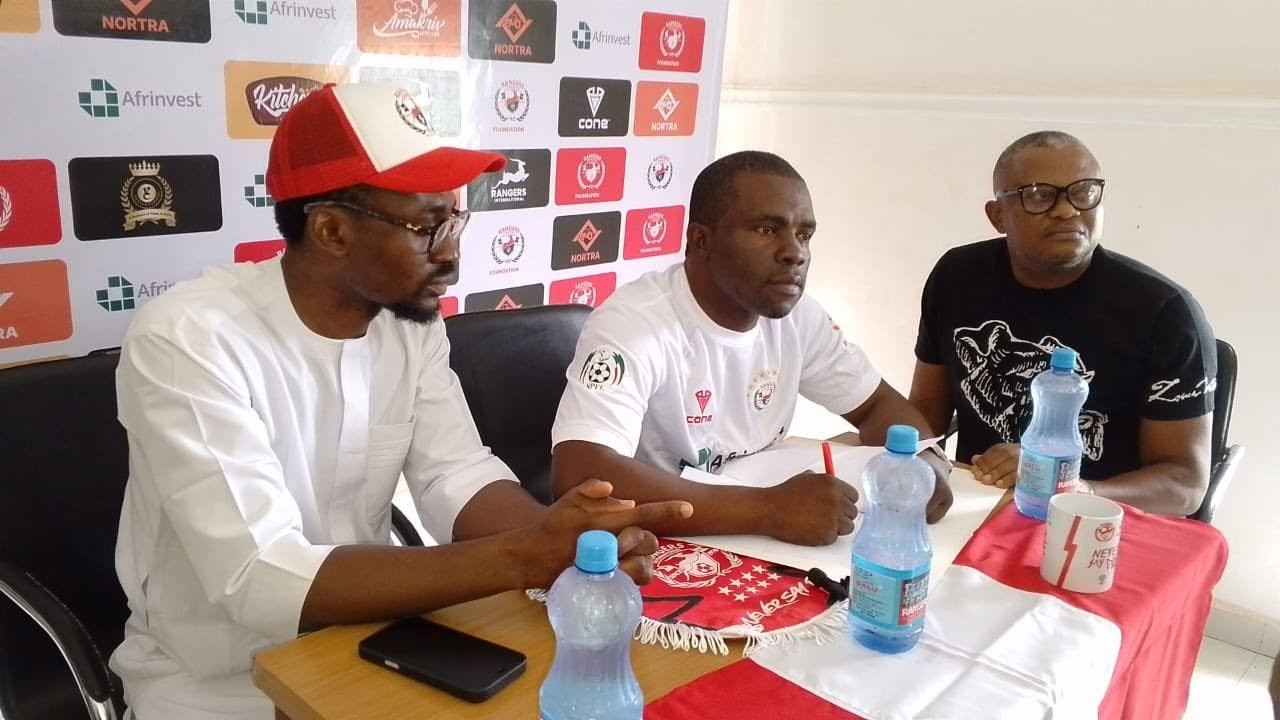
Supporters will understandably welcome the outcome. The club has retained arguably the most successful coach currently working in the NPFL. The man who delivered the eighth and ninth league titles remains in charge. Rangers will enter another domestic campaign and a return to continental football with familiar leadership and a clear sense of direction.
Yet questions surrounding the duration of the contract, the long-term intentions of both coach and club, the future of Amobi Ezeaku and the sustainability of the current project will inevitably resurface as the season unfolds.
READMORE: Enyimba, Remo Stars confirmed as first NPFL beneficiaries of FIFA’s expanded World Cup fund
The truth is that Rangers have reached a fascinating stage in their evolution. for the first time in many years, the club possesses a respected coach, an ambitious administrator, a defined strategic vision and the support of a state government that appears increasingly willing to invest in the project but probably haven’t done enough in financial support.
When 2027 eventually arrives, Ranger’s supporters may find themselves asking whether the club can retain the two men who have become the central figures of its revival.
Will Ilechukwu still be leading the team from the touchline? Will Ezeaku still be driving the broader vision from the boardroom? Or will the achievements of the past few years have opened doors too attractive for either man to ignore?
CLICK HERE TO JOIN ATHLETIC NG WHATSAPP CHANNEL NOW!
At this moment, nobody can answer those questions with certainty. what can be said is that this latest contract extension feels less like the final chapter of a successful partnership and more like the calm before the storm.
The uncertainty surrounding what comes next may be significant excruciating and that is precisely why the story of Fidelis Ilechukwu and the general manager Amobi Ezeaku at Rangers feels far from finished.