After days of mounting criticism over several contentious refereeing decisions involving Argentina at the 2026 FIFA World Cup, football’s highest refereeing authority has finally responded.
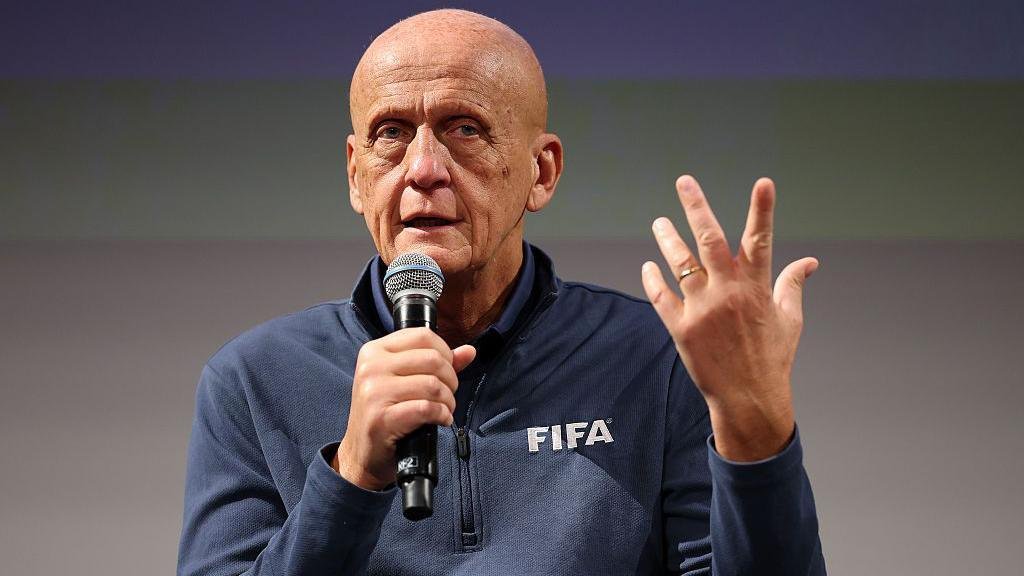
Pierluigi Collina, chairman of FIFA’s Referees Committee, has delivered the governing body’s strongest defence yet of tournament officials, dismissing suggestions that referees have favoured the reigning world champions or been influenced by FIFA’s leadership.
The intervention comes after a wave of criticism from coaches, former players, journalists and supporters, with Egypt’s dramatic Round of 16 defeat to Argentina becoming the focal point of a growing debate over officiating standards.
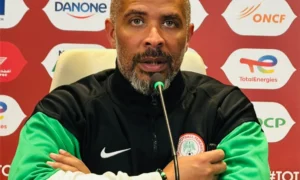
Egypt head coach Hossam Hassan accused his side of suffering “injustice” after the 3-2 defeat, while the Egyptian Football Association reportedly called for the officiating team to be removed from the remainder of the tournament.
The controversy has since evolved beyond one match, with previous decisions involving Lionel Messi, Argentina’s disciplinary record and several VAR calls all coming under intense scrutiny.
Now, Collina has moved to defend both the integrity of FIFA referees and the decision-making process behind the tournament’s most controversial incidents.
‘Nobody can influence FIFA referees’
Speaking amid increasing speculation over Argentina’s treatment at the World Cup, Collina firmly rejected claims that FIFA officials operate under external pressure.
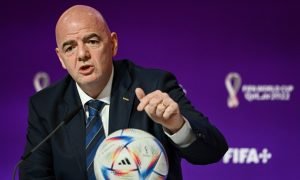
“No one can claim that FIFA refereeing can be influenced by anyone, not even FIFA President Gianni Infantino,” Collina said.
According to the legendary former Italian referee, Infantino has consistently respected the independence of match officials throughout the tournament.
“He has always shown his full support to the tournament referees, trusting that we are operating completely independently.”
Collina stressed that referees approach every match with professionalism and honesty, insisting mistakes should never be confused with bias.
“Match referees make their decisions with integrity, and like players and coaches, they always try to give their best.”
While acknowledging that football will always generate debate over refereeing decisions, he warned against accusations made without evidence.
“Constructive debate about decisions will always be part of football, but baseless claims have no place in our sport.”
RAEDMORE: Messi, Argentina and the bias FIFA debate: What does the evidence really say?
He also revealed that personal attacks on referees have become an increasing concern during the tournament.
“Nobody can question the integrity of World Cup referees. When that happens, it can lead to backlash that threatens referees and their families, which is unacceptable.”
Collina explains why Egypt’s goal was ruled out
Beyond defending his officials, Collina also addressed the specific VAR decision that triggered Egypt’s anger against Argentina.
Mostafa Zico believed he had doubled Egypt’s advantage before VAR intervened to review the attacking sequence.
Following an on field review, the goal was disallowed after Marwan Attia was judged to have fouled Lisandro Martinez earlier in the move.
According to Collina, the decision followed established VAR protocol.
“After every goal, the VAR checks the entire attacking possession phase. If a violation is found in the build-up and it affected the goal, the referee is advised to review it on the monitor.”
He explained that there is no restriction on how far back officials can review play if the infringement forms part of the same attacking phase.
“There is no limit on the distance from goal or the time between the incident and the goal.”
Collina insisted the footage clearly showed Attia stepping on Martinez’s foot.
“Marwan Attia clearly stepped on Lisandro Martinez’s foot. A violation is a violation. If the referee misses it on the field, VAR can intervene.”
“If no offence is detected in the attacking build-up, VAR confirms the goal.”
Why Salah was not awarded a penalty
Another flashpoint arrived late in the match when Mohamed Salah appealed for a penalty after a challenge involving Julian Alvarez.
The incident was waved away by both the referee and VAR, prompting further frustration from the Egyptian bench.
Collina explained the reasoning behind that decision by distinguishing between a genuine foul and unavoidable contact that naturally occurs during challenges.
“Stepping on an opponent’s foot is a foul. However, when a defender wins the ball first and the contact that follows is natural football contact, it may not be a violation.”
Applying that interpretation to the Salah incident, Collina maintained that officials believed Alvarez’s challenge fell into the latter category.
“The late incident involving Mohamed Salah and Julian Alvarez was considered natural football contact by both the referee and VAR.”
He admitted that some incidents will always remain open to interpretation but insisted FIFA is satisfied with the consistency shown throughout the tournament.
“There will always be an element of personal judgement in some decisions, but we’re pleased with how this principle has been applied throughout the tournament.”
FIFA attempts to draw a line under the controversy
Collina’s intervention represents FIFA’s clearest attempt yet to calm the storm surrounding Argentina’s path to the quarterfinals.
Whether his explanation will convince critics remains uncertain.
For supporters of Egypt and those who have questioned several officiating decisions involving Argentina, the debate is unlikely to disappear overnight.
CLICK HERE TO JOIN ATHLETIC NG WHATSAPP CHANNEL NOW!
The governing body maintains that its referees remain fully independent, that VAR has been applied according to established protocol, and that while individual decisions may continue to divide opinion, allegations of institutional bias have no place without evidence.